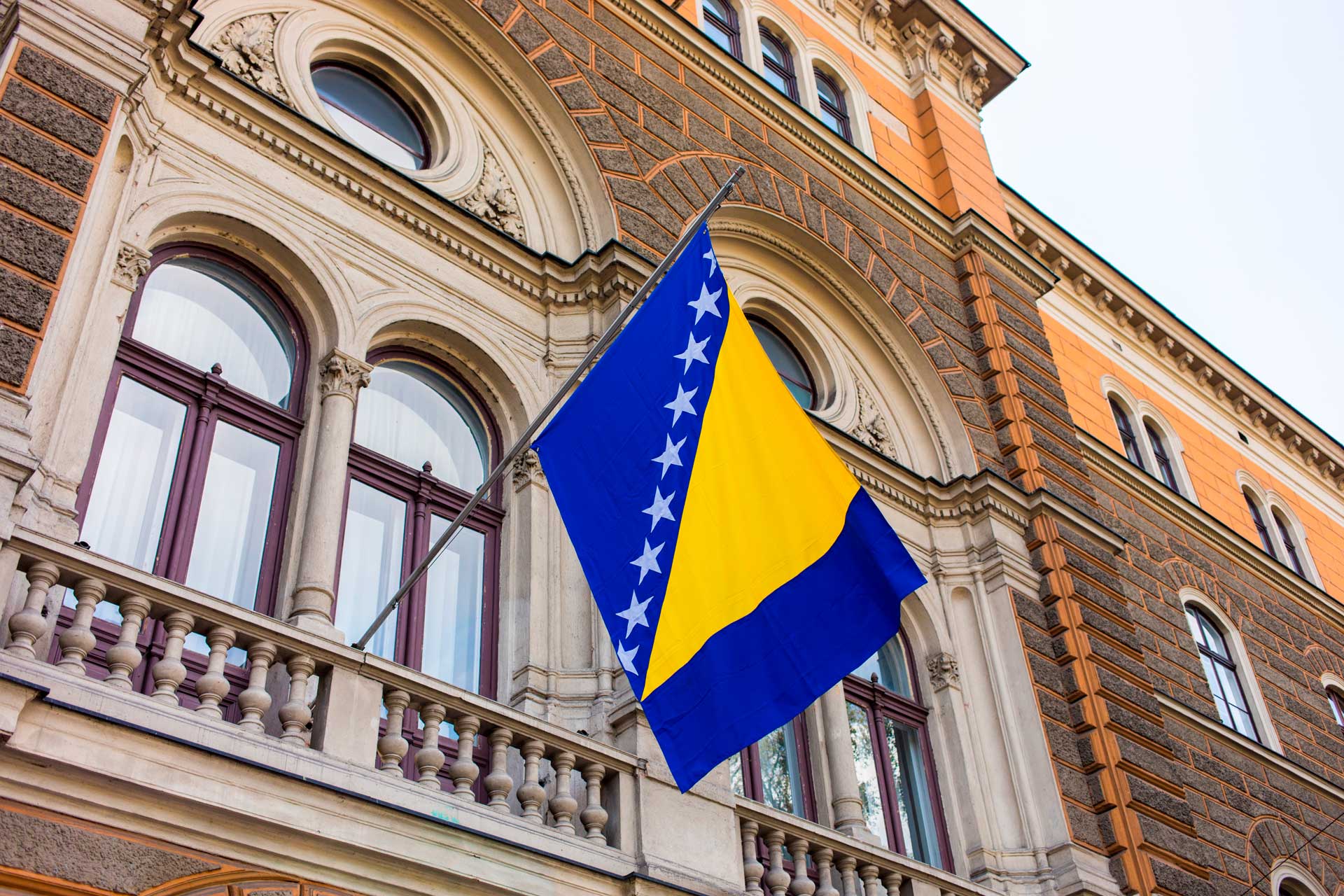
Citizenship of Bosnia and Herzegovina is a stable public-law relationship between an individual and the state of Bosnia and Herzegovina, under which the person is recognized as its citizen, enjoys the rights and freedoms established by the Constitution and legislation, bears the obligations prescribed by law, and is under the legal and diplomatic protection of the state.
Citizenship of Bosnia and Herzegovina is governed by state law and the legislation of the two entities — the Federation of Bosnia and Herzegovina and Republika Srpska. This two-tier system affects the jurisdiction of the authorities, the application procedure, and the practical process of obtaining citizenship.
The law provides for the acquisition of citizenship by descent, by birth in certain cases, through adoption, naturalization, marriage, restoration of status, and on special grounds. The requirements depend on the applicant’s category: in some cases, family ties are decisive, while in others, the determining factors are the length of residence, permanent residence status, income, and compliance with security requirements.
Particular attention should be paid to the issue of retaining previous citizenship. The rules vary depending on the legal ground, the applicant’s citizenship, and the existence of an international agreement with Bosnia and Herzegovina. It is equally important to identify the competent authority correctly and prepare foreign documents in accordance with translation and legalization requirements.
Below, we will examine the legal framework, available grounds, application procedure, timelines, costs, and the most common mistakes made by applicants.
Legal Framework and What Changed in 2026
The citizenship regime is based on the Law on Citizenship of Bosnia and Herzegovina, secondary legislation and ministerial instructions, as well as the rules of the entities — the Federation of BiH and Republika Srpska — which must comply with state law. The law expressly provides that all citizens of the Federation of BiH and Republika Srpska are automatically citizens of Bosnia and Herzegovina, and that changing citizenship from one entity to the other does not affect BiH citizenship itself. This is a rare two-tier structure in Europe, which is why citizenship cases often involve both the state and entity levels.
Looking specifically at amendments to the state law, the last major wave of changes occurred in 2013, after which a consolidated text was published in 2016. Among other things, those amendments clarified the rules for children born abroad to one parent who is a BiH citizen, reduced the permanent-residence requirement for ordinary naturalization to three years, strengthened requirements concerning security, income, taxes, and a declaration accepting the legal system, and removed the former model of automatic loss of citizenship “by operation of law.” No new comprehensive state law that would rewrite the citizenship system appears in open official sources for 2026; instead, the development of implementation practice, digital services, and coordination on dual citizenship and prevention of statelessness is visible.
Procedural rules are also important. State law divides competence as follows:
- Most decisions on naturalization, marriage, children, emigrants, restoration, and termination of citizenship are made by the competent entity authorities.
- Decisions on renunciation applications, meaning voluntary renunciation of citizenship due to living abroad, as well as deprivation of citizenship, are handled by the Ministry of Civil Affairs of BiH.
- Admission to citizenship of persons who represent a “special benefit” to the country is carried out by the Council of Ministers of BiH by consensus.
An application is submitted directly to the competent authority or, if the applicant lives abroad, through a diplomatic or consular mission of BiH.
In practice, two trends are noticeable in 2025–2026:
- Work on applying bilateral agreements on dual citizenship, primarily with Serbia.
- Further reduction of the risk of statelessness.
In 2025, the Ministry of Civil Affairs explicitly reported coordinating with Serbia on matters of dual citizenship and the protection of stateless persons. In 2026, UNHCR reported that by the end of 2025, only 17 people in Bosnia and Herzegovina were known to be stateless or at risk of statelessness, demonstrating significant progress in this area.
If you plan to obtain citizenship of Bosnia and Herzegovina by descent, naturalization, marriage, or on another legal basis, it is important to verify in advance that you meet all statutory requirements. Leave a request for a consultation to receive a personalized legal assessment and an individual citizenship application plan.
Get a free consultation on the Bosnia and Herzegovina citizenship application process
Fill in the short form below and Mycitizenagency specialist will contact you as soon as possible
Grounds for Acquiring Citizenship
Below is a brief comparative overview of the main routes.
| Ground | Who It Suits | Key Conditions | Residence Requirement | Previous Citizenship |
|---|---|---|---|---|
| By descent | Children of BiH citizens | One or both parents are BiH citizens; for some children born abroad, registration before the age of 23 is required | None | Not applicable |
| By birth in BiH | Children at risk of statelessness | Parents are unknown, stateless, or the child would otherwise remain stateless | None | Not applicable |
| By adoption | Children under 18 | Full adoption by a BiH citizen | None | Not applicable |
| Ordinary naturalization | Foreign nationals with a stable connection to BiH | 18+, permanent residence for at least 3 years, language, income, taxes, security, no serious convictions, etc. | Yes, 3 years of permanent residence | Renunciation is usually required if there is no agreement or objective impossibility |
| Marriage to a BiH citizen | Spouses of BiH citizens | Marriage for at least 5 years, valid at the time of application, permanent residence, no security threat | Yes, permanent residence | Renunciation is usually required unless an agreement or exception applies |
| Emigrants and descendants | Returning emigrants, children, and grandchildren | Return to BiH; for a spouse, marriage for 5 years | Relaxed | Renunciation is not required under Article 13 for the relevant categories |
| Restoration | Former BiH citizens | Previously lost citizenship because of acquiring another; naturalization conditions apply, but without the age requirement and without 3 years of permanent residence; 1 year of temporary residence or permanent residence is sufficient | Yes, at least 1 year of temporary residence or permanent residence | Renunciation of the new citizenship is often required if there is no agreement |
| Special benefit to BiH | Investors, athletes, and other persons in the special interests of the state | Recommendation by an authorized authority, evidence of benefit, and background checks | Flexible route | Renunciation is usually not required to the same extent as in ordinary naturalization |
By Birth and Descent
A child acquires BiH citizenship by descent if both parents were BiH citizens at the time of birth, regardless of the place of birth. If only one parent was a BiH citizen, citizenship is also acquired when the child was born in BiH. For a child born abroad to one parent who is a BiH citizen, the law provides two important scenarios: citizenship arises if the child would otherwise remain stateless, or, if the child has another citizenship, provided that an application for registration of BiH citizenship is submitted before the child reaches the age of 23. This age limit is one of the most common practical pitfalls for diaspora families.
The law also protects against statelessness children born or found in BiH if both parents are unknown, of unknown citizenship, stateless, or if the child would otherwise become stateless. In addition, a child under 18 acquires BiH citizenship through full adoption by a BiH citizen.
For many adult applicants from the diaspora, another detail from the ministry’s official FAQ is important: persons born before 1 January 1998 may, in certain cases, later register the fact of birth and citizenship in civil-status records under the former rules of the Republic of Bosnia and Herzegovina. The ministry specifically emphasizes that the absence of a record does not mean the absence of citizenship if the right arose at birth.
Ordinary Naturalization
Ordinary naturalization in BiH is moderately demanding in terms of the residence period but quite strict in terms of documentation. The law requires the applicant to be at least 18 years old, to have had permanent residence in BiH for at least three years before applying, to have sufficient knowledge of the language and script of one of the constituent peoples, to have no valid expulsion measure, to have no serious sentence for an intentional criminal offense exceeding three years during the eight years before applying, to pose no security threat, to have a stable source of income, to have paid taxes and other financial obligations, and to sign a declaration accepting the legal system and constitutional order of BiH. In addition, the applicant must generally renounce previous citizenship or prove that renunciation is impossible or cannot reasonably be required.
In its practical document list, the Federal Ministry of the Interior includes a typical package: a birth certificate, proof of citizenship of the country of origin, a document proving language knowledge, a criminal record certificate, a certificate confirming that no criminal proceedings are pending, a copy of the passport, a family-status document, evidence of income, tax certificates, a certified declaration accepting the legal order, and proof of payment of the administrative fee. Some checks, including data on permanent residence, expulsion, security, and local convictions, are obtained by the authority ex officio. In the Federation, the fee for a decision on admission to citizenship is BAM 450, and for certain categories of minors it is BAM 100.
Marriage to a BiH Citizen
A spouse of a BiH citizen may use facilitated naturalization. The law establishes four main conditions: the marriage must have lasted at least five years before the application and must continue to exist at the time of application, the applicant must have permanent residence in BiH, must not pose a security threat, and, as a general rule, must terminate previous citizenship before acquiring BiH citizenship, unless otherwise provided by a bilateral agreement or unless renunciation is objectively impossible or unreasonable.
In practice, the document package is simpler than for ordinary naturalization: it usually includes a birth certificate, marriage certificate, proof of the applicant’s citizenship, proof of the Bosnian spouse’s citizenship, a copy of the passport, and proof of payment of the fee; the remaining checks, including permanent residence and security, are obtained through official channels. This is one of the clearest routes, but it does not eliminate the immigration stage: first the applicant must have lawful residence, then permanent residence, and only after that may citizenship be requested.
Emigrants, Restoration, and Special Benefit
The law is considerably more flexible for returning emigrants and first- and second-generation descendants. Such persons may acquire citizenship by application without meeting the three-year permanent-residence requirement and without mandatory renunciation of previous citizenship. A separate benefit applies to the spouse of an emigrant: if the marriage has lasted at least five years and the other conditions are met, the residence requirement is relaxed. In practice, the applicant must prove emigrant status or descent from an emigrant, as well as the fact of return and registration of stay in the Federation or another competent entity.
Restoration of citizenship is intended for former BiH citizens who previously renounced it or were released from it in order to acquire another citizenship. There is no requirement to be over 18 and no standard three-year permanent-residence period, but the applicant must either have had temporary residence in BiH for at least one year immediately before the application or already have permanent residence. The Ministry of Civil Affairs separately clarifies that if the former citizen acquired citizenship of a country with which BiH has no dual-citizenship agreement, restoration will usually require renunciation of that citizenship.
The route for persons of “special benefit” is the most discretionary. The application is submitted to the Council of Ministers through the Ministry of Civil Affairs, and the applicant must attach not only personal documents but also a recommendation stating that admission of the particular person is of special benefit to BiH. Such a recommendation may be issued, for example, by a competent ministry of BiH, the entity governments, chambers of commerce, the Olympic Committee of BiH, or registered sports associations at the BiH level. The ministry’s document list includes a birth certificate, proof of citizenship of the country of origin, documents on marital status, proof of registered stay in BiH, criminal record certificates and certificates confirming that no proceedings are pending, evidence of knowledge of one of the officially used languages, and proof of compliance with tax obligations.

Find out how to obtain citizenship faster
Dual Citizenship and Termination of Citizenship
Formally, the law states that citizens of Bosnia and Herzegovina may hold the citizenship of another country if a bilateral agreement approved by Parliament exists between BiH and that country. The Ministry of Civil Affairs publishes a list of agreements in force: with Croatia, Serbia, and Sweden. This is why the issue of previous citizenship is usually handled differently for applicants from those countries and applicants from all other countries in naturalization and restoration cases.
However, the practical reality is more complex than the formula “an agreement exists or does not exist.” The ministry’s official FAQ expressly states that acquisition of another state’s citizenship does not result in automatic loss of BiH citizenship “by operation of law,” referring to a decision of the Constitutional Court. At the same time, the same ministry confirms that, for example, there is no dual-citizenship agreement between BiH and Germany, and that a former citizen seeking restoration of BiH citizenship after having renounced it may be required to give up German citizenship. In other words, the current dual-citizenship regime in BiH is neither fully liberal nor fully prohibitive: it is more flexible for existing BiH citizens, but stricter for foreign nationals entering the country’s citizenship.
BiH citizenship terminates in four ways: renunciation, release, deprivation, and an international agreement.
- Renunciation is intended for adult citizens living abroad who already hold another citizenship or have a guarantee of acquiring it.
- Release applies to persons living in BiH if they meet the conditions, including the absence of outstanding obligations and possession of another citizenship or a guarantee of acquiring it.
- Deprivation is possible, among other things, if citizenship was obtained through fraud, concealment of material facts, certain threats to the vital interests of the state, or unlawful acquisition of citizenship without meeting statutory conditions.
In all cases, the law prohibits loss of citizenship if this would result in statelessness, except in specifically defined fraud cases.
For renunciation of citizenship, the ministry’s official procedure requires a personal application to the Ministry of Civil Affairs in Sarajevo or through a BiH consulate, proof of another citizenship or a guarantee of its acquisition, evidence of residence abroad, current Bosnian civil-status documents, a certificate of BiH citizenship, copies of the passport and ID card, and payment of a state fee: BAM 200 for those who hold or acquire citizenship of former SFRY states, and BAM 800 for those who hold or acquire citizenship of other countries. Foreign documents may require translation, an apostille, or full legalization; bilateral agreements on recognition of public documents apply to certain countries.
Rights and Duties of Citizens
A citizen of Bosnia and Herzegovina enjoys the same fundamental rights and freedoms throughout the country regardless of entity citizenship, as expressly provided by the citizenship law. In practice, this means the right to Bosnian documents, the right to enter and reside in the country, the right to prove citizenship with a certificate of BiH citizenship or a BiH passport, and access to rights connected with citizenship, including political rights.
Political rights include participation in elections, including from abroad. The Central Election Commission of BiH operates an electronic registration system for voting outside the country, and the official instructions for 2024 and 2026 separately regulate applications by BiH citizens residing abroad. This is particularly important for the diaspora given its size — approximately 2.2 million people.
Consular assistance is another real advantage of citizenship. The Ministry of Foreign Affairs of BiH maintains a consular network and expressly lists consular services for citizens at diplomatic and consular missions, including issuance and replacement of passports, legal authentication of documents, and other actions. For applicants living abroad, this is also important because some citizenship applications may be submitted through BiH diplomatic and consular missions.
As for duties, the citizenship law itself provides few details, but several practical points are nevertheless important. Military service in BiH is organized as professional service through open recruitment rather than as automatic civilian conscription under the citizenship law; at the same time, in 2024 the Ministry of Defense separately reminded citizens of BiH residing in BiH, including dual citizens, that they are prohibited from performing compulsory service and recruit training in the armed forces of other states. Social benefits and insurance in BiH do not arise automatically solely from citizenship: they largely depend on registration, place of residence, employment, insurance status, and the decentralized system of entities and cantons.
Obtaining citizenship of Bosnia and Herzegovina requires careful preparation of documents and full compliance with all procedural requirements. Leave a request for a consultation, and an immigration lawyer will assess your situation, answer your questions, and help you complete the process as quickly and smoothly as possible.
Get a free consultation on the Bosnia and Herzegovina citizenship application process
Fill in the short form below and Mycitizenagency specialist will contact you as soon as possible
Application Procedure
The main procedural rule is to identify the correct ground first and only then collect the relevant documents. An error at this stage can be costly: many applicants try to proceed through ordinary naturalization even though they actually qualify through descent, status as a descendant of an emigrant, or restoration of citizenship. The law expressly provides that most grounds are decided by entity authorities, while special benefit and renunciation of citizenship are handled at the state level.
Practical Checklist
| Stage | What to Check | What Is Usually Prepared |
|---|---|---|
| Choosing the ground | Whether descent, restoration, or descendant-of-emigrant status applies instead of ordinary naturalization | A brief legal assessment of family history and immigration status |
| Checking residence | Whether permanent residence or the required period of temporary residence exists | Residence card, proof of address, movement certificate |
| Personal civil records | Whether the first name, surname, and date of birth match in all documents | Birth certificate, marriage/divorce certificate, citizenship certificate |
| Foreign documents | Whether an apostille or full legalization is required | Originals, translations, apostille/legalization |
| Criminal record and security | Whether there are pending proceedings, serious convictions, or security issues | Criminal record certificate, certificate confirming no criminal proceedings |
| Income and taxes | Whether there is a provable source of funds and tax compliance | Employment contract, salary/pension certificate, tax certificates |
| Submission | Which authority handles the specific route | Entity authority, Ministry of Civil Affairs, or BiH diplomatic/consular mission |
| After the decision | How quickly proof of citizenship and identity documents can be obtained | Citizenship certificate, registry entry, passport |
The law establishes a 60-day period for deciding a properly submitted and complete application. A refusal must be in writing and reasoned, and the applicant may initiate an administrative dispute. This is a useful benchmark, but it should be understood as a formal period beginning after the application is recognized as complete: if documents contain errors, different spellings of the name, or require international legalization, the actual process often becomes longer even before full consideration begins.
Statistics, Comparison, and Typical Mistakes
According to the latest officially confirmed data, the 2023 Migration Profile of Bosnia and Herzegovina reports that 538 people acquired citizenship of Bosnia and Herzegovina. The same document states that Serbian citizens accounted for 82% of all new citizenship acquisitions over the previous two years. Official migration profiles and the government portal for the diaspora estimate the Bosnian diaspora at approximately 2.2 million people. For a country whose population stood at 3.53 million according to the 2013 census, this highlights the importance of descent, restoration of citizenship, and the registration of children born abroad in citizenship practice.
Bosnia and Herzegovina Compared with Its Neighbors
| Country | Ordinary Naturalization | Marriage to a Citizen | Approach to Dual Citizenship |
|---|---|---|---|
| Bosnia and Herzegovina | Permanent residence for at least 3 years | Marriage for at least 5 years + permanent residence | Nuanced regime; agreements with Croatia, Serbia, and Sweden; no automatic loss upon acquisition of another citizenship |
| Croatia | 8 years of continuous residence + permanent residence status | Facilitated routes exist, but rules depend on the category | Ordinary naturalization usually requires renunciation of previous citizenship, although exceptions exist |
| Serbia | 3 years of permanent residence | Marriage for at least 3 years + permanent residence | Flexible regime; retention of previous citizenship is permitted in many cases |
| Montenegro | 10 years of lawful and continuous residence | Marriage for at least 3 years + permanent residence | Stricter regime; standard naturalization requires release from previous citizenship |
In practice, applicants are most often prevented from obtaining Bosnian citizenship not by the “major” statutory requirements but by minor procedural errors. The most common problems are:
- Failure to register a child born abroad in time.
- Choosing the wrong legal ground.
- Applying without the required residence status.
- Absence of an apostille or full consular legalization.
- Differences in the spelling of first names and surnames in records issued by different countries.
- Failure to provide proof of income or tax compliance.
- An incomplete package for marriage or restoration cases.
- Ignoring the requirement for the consent of a child over 14.
- Incorrect expectations regarding dual citizenship, especially among applicants from countries with which BiH has no bilateral agreement.
Before submitting your application, it is important to verify not only that you formally meet the requirements of the chosen eligibility category, but also that you are applying to the competent authority, satisfy the residence requirements, understand whether you must renounce your previous citizenship, and have properly prepared any foreign documents. Choosing the wrong procedure or submitting an incomplete application may result in delays or a refusal.
To assess your chances in advance and avoid procedural mistakes, leave a request for a consultation. An immigration lawyer will evaluate your situation, determine the most appropriate legal basis for obtaining citizenship, and help you prepare your documents in accordance with the current legal requirements.
Frequently Asked Questions About Bosnian Citizenship
We have compiled answers to the most common questions about obtaining Bosnian citizenship. If you did not find the information you were looking for or want to learn more about the requirements, timelines, and benefits of Bosnian passport, contact us for a free consultation.
Yes. The main route is citizenship by descent from one or both parents who are BiH citizens; for some diaspora applicants, the rules for children born abroad and the possibility of later registration of citizenship are also important, especially for persons born before 1998.
Under state law, at least three years of permanent residence in BiH before the application is submitted.
No. In addition to a marriage lasting at least five years, approved permanent residence in BiH is required, as well as the absence of a security threat and, as a rule, resolution of the issue of previous citizenship.
Yes. Former citizens may request restoration if they meet the statutory conditions and have either at least one year of temporary residence in BiH immediately before applying or permanent residence.
There is no special “golden visa” in the citizenship law, but a discretionary route exists for persons whose naturalization is considered of special benefit to BiH. It requires a recommendation from an authorized authority and additional evidence of benefit to the state.
The fee depends on the route and the level of the procedure. In the Federation, a decision on admission to citizenship costs BAM 450 under the tariff, and for certain minor categories BAM 100; renunciation of BiH citizenship through the Ministry of Civil Affairs costs BAM 200 for cases involving citizenship of former SFRY states and BAM 800 for other countries.
Yes. The law expressly allows an application to be submitted through a diplomatic or consular mission of BiH if the applicant lives abroad.
By law, 60 days from receipt by the competent authority of a complete and properly prepared application.
The applicant may initiate an administrative dispute against the refusal decision.
Yes, but only in cases prescribed by law, for example fraud, concealment of material facts, certain threats to the vital interests of the state, and some serious criminal offenses.
Yes. Special routes apply to minors by descent, adoption, and derivative naturalization; if the child is already 14 years old, the child’s own consent is required in certain procedures.
For ordinary naturalization, yes. The law requires sufficient knowledge of the language and script of one of the constituent peoples of BiH, and the Federation’s practical rules list acceptable evidence, including education in BiH, study under a program in one of the languages used in BiH, or a document confirming at least B1 level.
It depends on the legal basis for acquiring citizenship and on the applicant’s current citizenship. Under ordinary and facilitated naturalization, applicants are often required to renounce their previous citizenship if there is no bilateral agreement between Bosnia and Herzegovina and the relevant country, and the applicant cannot demonstrate that renunciation is objectively impossible or cannot reasonably be required. Separate exceptions are provided for emigrants and certain categories of their descendants.