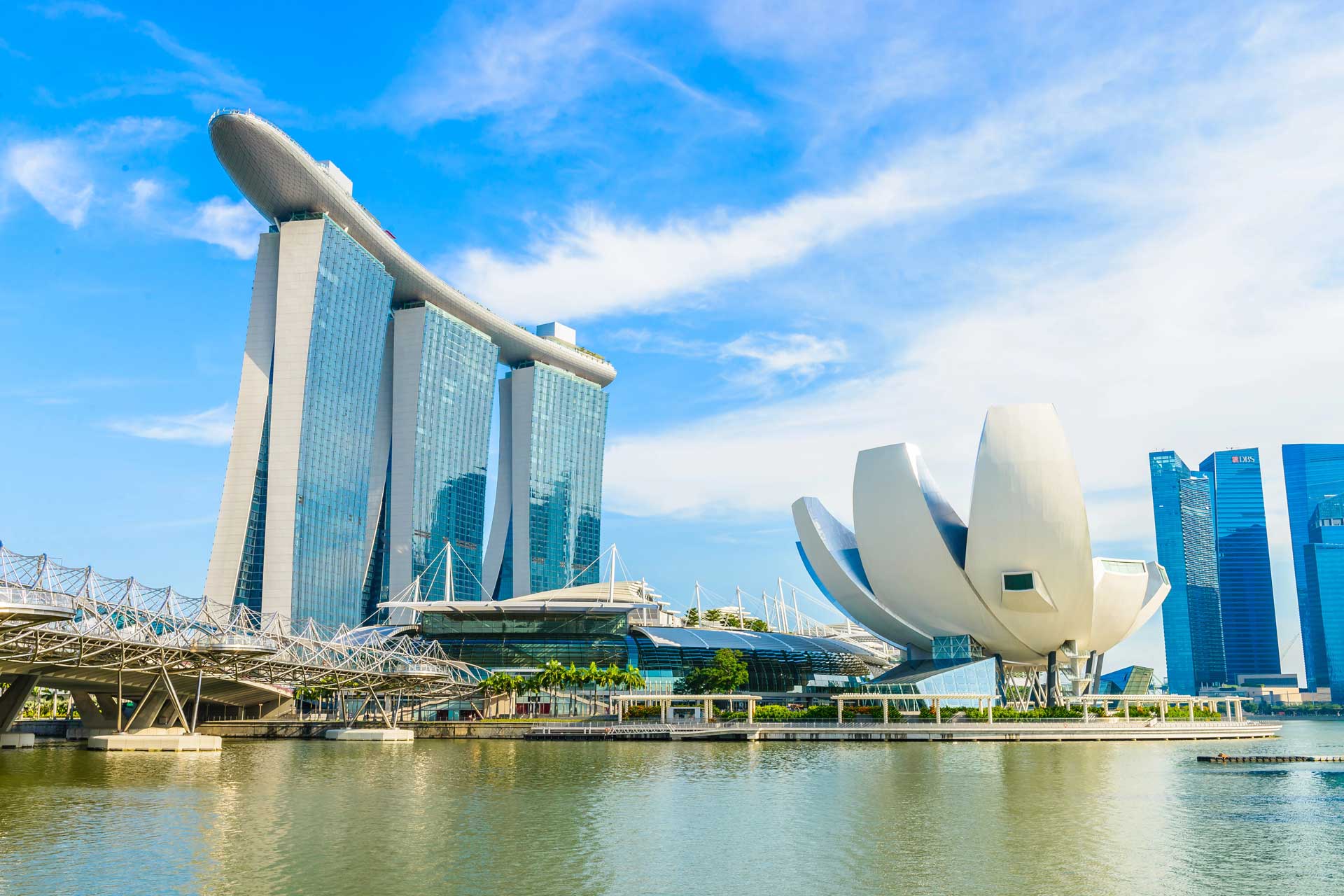
Singapore citizenship is the full legal status of a citizen of the Republic of Singapore. It differs from Permanent Residence (PR) and provides, among other things, the right to a Singapore passport, political rights subject to electoral requirements, and access to a number of government programmes intended specifically for citizens. The main citizenship rules are set out in the Constitution of Singapore, while applications are administered in practice by the Immigration & Checkpoints Authority (ICA).
For most adult foreigners, the practical route is as follows: obtain PR → reside as a permanent resident for at least two years → apply for citizenship. Meeting the minimum PR period does not mean automatic approval: ICA considers family ties to Singapore, economic contributions, qualifications, age, family profile, length of residence, ability to integrate and the intention to make Singapore a long-term home. ICA does not publish a fixed minimum income that guarantees citizenship.
Marriage to a Singapore citizen does not in itself grant citizenship. Under the current rules, a foreign spouse generally must have held PR for at least two years and have been married to a Singapore citizen for at least two years; the citizen spouse sponsors the application.
Birth in Singapore also does not mean that every child automatically acquires citizenship. The constitutional model is not unconditional jus soli: for modern births, the citizenship of the parents is of fundamental importance, subject to specific constitutional exceptions. Children born outside the country to a Singapore citizen parent may acquire citizenship by descent if the established conditions are met.
There is no direct “citizenship by investment” programme in Singapore. The Economic Development Board’s Global Investor Programme (GIP) gives qualifying investors an opportunity to apply for Permanent Residence rather than a passport directly; any subsequent acquisition of citizenship takes place under the general ICA rules.
ICA aims to process standard citizenship applications within 12 months where the documents are complete and properly prepared; some cases take longer. For certain children of Singapore citizens born overseas, the processing time for a complete application is about one month. The standard application fee for adult PRs is S$100; after approval, S$70 is generally charged for the citizenship certificate and S$10 for an identity card for persons aged 15 and above.
Singapore follows a restrictive policy on dual citizenship. The Constitution allows an adult citizen who voluntarily acquires a foreign citizenship to be deprived of Singapore citizenship, while minors holding multiple citizenships must regularise their status within the prescribed period after reaching the age of 21.
According to Population in Brief 2025, the latest annual official publication available as of 2026, Singapore granted citizenship to 22,766 people in 2024, excluding 1,409 overseas-born children who acquired it by descent. In June 2025, the country had approximately 3.66 million citizens and 544,000 PRs. The preliminary resident TFR for 2025 fell to a record low of 0.87, making demographics an important backdrop to immigration policy, but this does not mean an automatic easing of citizenship criteria.
Ways to Obtain Singapore Citizenship and Requirements
Legally, the Constitution of Singapore distinguishes several grounds for acquiring status: citizenship by birth, by descent, by registration, registration of minors, and naturalisation. In everyday usage, the entire process of moving from PR to a passport is often referred to as naturalisation, but under Singapore law registration and naturalisation are separate legal mechanisms. The current Citizenship Rules expressly provide for applications under the relevant Articles of the Constitution.
| Route | Who it is for | Main requirements in 2026 |
|---|---|---|
| By birth | A child born in Singapore | Birth in the country is not in itself a sufficient ground: the constitutional rules, in particular, exclude automatic citizenship where neither parent is a citizen, subject to certain government decisions. |
| By descent | A child born outside Singapore to a Singapore citizen | Article 122 of the Constitution applies; in some cases where the parent is himself or herself a citizen by descent, the length of that parent’s residence in Singapore is relevant. |
| For an adult PR | The main route for employed foreigners and other permanent residents | Age 21 or above and PR status for at least two years. A PR spouse and unmarried children under 21 may be included subject to ICA requirements. |
| Through marriage | A PR married to a Singapore citizen | Generally requires at least two years of PR and at least two years of marriage; the citizen spouse sponsors the application. Citizenship does not arise automatically from marriage. |
| For a citizen’s child | An unmarried child under 21 | The child must have been born within a legal marriage to a Singapore citizen or legally adopted by a citizen. |
| For a student | A young PR who has studied in Singapore for an extended period | Residence in the country for more than three years is required, including at least one year as a PR, and at least one national examination — PSLE, GCE N/O/A Levels — or enrolment in the Integrated Programme. |
| For an elderly parent | A parent of an adult citizen | The parent must hold PR; the sponsoring child must be a Singapore citizen aged at least 21. |
| Constitutional naturalisation | A separate legal category under Article 127 | Age 21 or above; requirements apply to the period of residence, intention to reside permanently in Singapore, good character, knowledge of the national language and taking an oath. Article 127 requires at least 10 years of residence in aggregate out of the 12 years immediately preceding the application, including the immediately preceding 12 months. |
| Re-acquisition after renunciation of citizenship | A former citizen | There is no special automatic “reinstatement” after voluntary renunciation. The Ministry of Home Affairs states that a former citizen must submit a new citizenship application and undergo assessment again. |
An important practical distinction is that, despite the existence of the constitutional naturalisation category, ICA’s current public-facing process for most adult foreigners is centred on the PR route. The official demographic report likewise states that all new adult citizens come from the pool of permanent residents; the small number of new citizens who were not PRs mainly consists of children and dependants.

Find out how to obtain citizenship faster
Citizenship by Birth
Singapore does not follow a model of unconditional jus soli under which merely being born in the country is enough for any child to acquire citizenship automatically. Article 121 of the Constitution sets out the rules on citizenship by birth and the applicable exceptions, including those relating to the status of the parents. In particular, birth in Singapore does not by itself confer citizenship where neither parent is a citizen, although the Constitution allows the state to grant citizenship in certain circumstances.
For this reason, foreign parents should not regard the birth of a child in Singapore as a standalone immigration route. The documents depend on the circumstances of the birth and usually include the birth certificate, the parents’ documents and evidence of their civil status. ICA may request additional evidence. Foreign documents must be accompanied by an acceptable official English translation.
Citizenship by Descent
Article 122 governs the acquisition of citizenship by a child born outside Singapore. For births on or after 15 May 2004, it is important whether the father or mother is a Singapore citizen and how that parent acquired citizenship. Where the parent is a citizen by descent, additional requirements concerning the parent’s period of lawful residence in Singapore before the child’s birth may apply. An overseas birth must also be registered within the prescribed period or within any additional period allowed by the competent authority.
The current ICA page states that an application for a child born overseas to a Singapore citizen is usually processed within one month if the documents are complete and in order. For certain overseas births — for example, where the gestational mother is a Singapore citizen or the citizen father was married to the gestational mother at the time of birth — the fee is S$18, including the Citizenship Certificate; an Identity Card for a new citizen aged 15 or above costs an additional S$10.
One common mistake is to assume that a parent’s citizenship is always passed automatically to a child regardless of the place of birth, the way in which the parent acquired citizenship, and compliance with registration deadlines. Article 122 must be analysed in relation to the particular family.
Citizenship by Registration
This is the most important practical category for many immigrants. ICA allows an adult to apply if the person:
- is at least 21 years old;
- has been a Singapore Permanent Resident for at least two years.
The application may include a PR spouse and unmarried children under the age of 21 who were born within a legal marriage or were legally adopted. ICA assesses the family and each applicant according to the circumstances of the case.
A separate practical category applies to the spouse of a citizen: the applicant must have been a PR for at least two years and married to a Singapore citizen for at least two years; the citizen spouse sponsors the application. Marriage itself does not automatically confer citizenship.
Article 123 of the Constitution contains more detailed registration requirements, including criteria relating to residence, character, intention to reside permanently in the country and knowledge of one of the prescribed languages, while also giving the state a degree of discretion in relation to residence conditions. ICA’s “two years of PR” threshold should therefore be understood as eligibility to enter the current administrative application process, not as automatic fulfilment of all criteria for approval.
Citizenship by Naturalisation
Naturalisation is expressly provided for by Article 127 of the Constitution. The constitutional text includes, among other things, requirements relating to residence, good character, an intention to reside permanently in Singapore and sufficient knowledge of the national language. The general constitutional residence criterion is at least 10 years in total during the 12 years immediately preceding the application, including the 12 months immediately preceding it.
Singapore’s national language is Malay, while Malay, Mandarin, Tamil and English are official languages.
However, ICA does not present Article 127 today as a separate mass-market immigration route with its own public processing-time calculator, approval rate and separate fee schedule. For an ordinary foreign adult, the practical route more often begins with PR and an application under the current ICA categories. It is therefore an oversimplification to state either that a foreigner must necessarily live in Singapore for exactly ten years or, conversely, that exactly two years are sufficient without regard to the legal basis.
A separate official success rate for naturalisation is not published. Open government data contains the number of citizenships granted, but without the total number of comparable applications it is impossible to calculate correctly the probability of success for a particular applicant. For example, in May 2026 MHA stated that, from 2015 to 2025, an average of 12,063 people aged 18–45 were granted citizenship each year, but these data are not an approval rate.
Citizenship through Adoption
Adoption should not be viewed as a separate automatic ground equivalent to unconditional acquisition of citizenship. The basic constitutional routes are birth, descent, registration and naturalisation; at the same time, ICA allows a Singapore citizen to sponsor an application for his or her legally adopted, unmarried child under the age of 21.
For relevant cases, the documentary package must include adoption documents. ICA may also require a birth certificate, passports, civil-status documents and additional evidence.
Students, Parents and Special Cases
A PR student may apply if he or she has resided in Singapore for more than three years, including at least one year as a PR, and has passed at least one national examination — PSLE, GCE N/O/A Levels — or is enrolled in the Integrated Programme. A separate current category applies to an elderly parent: the parent must hold PR, while his or her child must be a Singapore citizen aged at least 21 and sponsor the application.
The Constitution also contains special discretionary provisions, including the registration of minors and the issue of certificates of citizenship where there is doubt about status. Such mechanisms should not be regarded as an open alternative to the ordinary PR requirements.
There is no direct programme in these rules allowing a person to “buy Singapore citizenship.” Economic contributions may be considered by ICA as part of the overall assessment, but a high salary, business ownership or investments do not by themselves create a guaranteed right to a passport: ICA expressly lists economic contributions as only one of several factors, alongside family ties, qualifications, age, length of residence and integration.

Documents, Fees and Processing Times for a Singapore Passport
Citizenship applications are submitted through ICA’s electronic services. Singpass is required for the relevant categories; obtaining access to Singpass after registration may take approximately two to five working days, so ICA recommends resolving this before starting the main application.
What Documents Are Usually Required
The basic official checklist depends on the applicant’s family and professional profile. Documents that may be required include: a current digital photograph in the prescribed format; passport/travel document; birth certificate or household register if the birth is not registered in Singapore; marriage, divorce or spouse’s death certificates; name-change documents; adoption and guardianship documents; diplomas, academic transcripts and professional qualifications; and National Service documents.
For an employed applicant, relevant documents include an employer’s letter issued no more than three months earlier and stating the position, employment start date and salary details, as well as payslips for the most recent six months. For persons working abroad, ICA may require income-tax assessments or receipts for the previous three years. Self-employed applicants are required to provide ACRA business-registration documents and financial statements for the previous three years.
Documents not in English must be accompanied by an acceptable official translation. ICA accepts translations made or certified by organisations permitted under its rules and reserves the right to request additional documents; an incomplete or unsuitable package may result in the application not being accepted for normal processing or in additional action being required.
How Much Does Citizenship Cost?
For most adult PRs and PR children, the current ICA fee structure provides for a S$100 application fee. After approval, S$70 is charged for the Singapore Citizenship Certificate and, for a new citizen aged 15 or above, an additional S$10 for the Singapore Identity Card. All principal application fees are non-refundable.
For a particular category of children born overseas to a Singapore Citizen parent, a S$18 fee applies and includes the citizenship certificate; when the relevant age is reached, S$10 is added for the identity card. For other children, the standard S$100 + S$70 applies and, where necessary, S$10. The exact category should be checked immediately before filing, as it depends on the circumstances of birth and the parents’ citizenship.
How Long Does It Take to Obtain Citizenship?
For a complete standard application, ICA states a processing time of up to 12 months, although individual cases may take longer. The decision is sent by email, and the application status can be monitored through MyICA/e-Service.
Approval is initially granted as In-Principle Approval (IPA). Applicants aged 16–60 must complete the mandatory Singapore Citizenship Journey. Once the necessary conditions are fulfilled, the formalities are completed, including the settlement of previous citizenship where required, and registration as a citizen.
ICA has a separate electronic service for appeals following the refusal of citizenship, PR or LTVP. Each appeal is considered individually; ICA reassesses family ties to citizens, economic contributions, qualifications, age, family profile and length of residence. New documents may be submitted in support of the review. The official page does not specify a fixed appeal-processing period.
Get a free consultation on the Singapore citizenship application process
Fill in the short form below and Mycitizenagency specialist will contact you as soon as possible
Singapore Citizenship Application Process and Requirements
The practical process under the current ICA procedure is as follows:
- Check that there is a legal basis for obtaining Singapore citizenship.
- Confirm that you have Permanent Resident (PR) status. If the required status is not in place, first obtain PR on an appropriate basis.
- Accumulate the required period of residence as a PR.
- Prepare Singpass and the required set of documents.
- Submit the citizenship application to ICA and pay the prescribed fee.
- Undergo ICA assessment. The assessment takes into account family ties, economic and social contributions, qualifications, age, length of residence and level of integration in Singapore.
- Receive ICA’s decision. If the application is refused, assess any new circumstances and whether an appeal or a new application in the future is appropriate.
- After Approval-in-Principle, fulfil ICA’s conditions.
- Complete the Singapore Citizenship Journey where applicable. For applicants aged 16–60, this is a mandatory part of the process.
- Resolve the issue of foreign citizenship where required under ICA instructions and the law of the relevant country.
- Complete registration of Singapore citizenship and obtain the citizen’s documents.
For Employment Pass or S Pass holders, it is important to remember the intermediate stage: holders of these passes fall within categories that may apply for PR, and only after obtaining PR and completing the required period of residence can they apply for citizenship. ICA gives an indicative processing time of up to six months for a complete PR application, but both PR and citizenship are assessed on the basis of a combination of factors.
A similar logic applies to investors. EDB expressly characterises the Global Investor Programme as a route to PR rather than the sale of citizenship. According to current information, GIP has high business or investment thresholds: for example, Option A requires at least S$10 million in a Singapore business, Option B requires S$25 million in a selected GIP fund, and Option C relates to a family office with AUM of at least S$200 million and at least S$50 million placed in EDB-prescribed investments. Even meeting the GIP requirements does not create an automatic right to citizenship.
Requirements for Singapore Citizenship Applicants
To obtain Singapore citizenship, an applicant must meet the basic criteria of the chosen category; however, satisfying the formal requirements gives the person the right to have the application considered rather than guaranteeing approval. In reaching a decision, the authorities assess the circumstances as a whole, including the length of residence in the country, economic contributions, qualifications, family ties and other factors, namely:
- Age. For the principal independent application of an adult PR, the minimum age is 21. Children under 21 and certain students have separate categories.
- Residence period. The best-known practical threshold for an adult applicant is two years of PR. However, this is the minimum point at which an application may be submitted, not an optimal or guaranteed approval period: ICA expressly treats the overall length of residence as an assessment factor.
- Employment and income. On its current page, ICA does not specify a single salary threshold such as “at least S$X per month.” Instead, it considers economic contributions and qualifications, while the documentary checklist requires, where applicable, details of the employer, position, basic and gross salary, as well as payslips for the most recent six months. Corporate and financial documents are required for self-employed applicants.
- Good character and accuracy of information. Article 127 expressly requires good character for naturalisation, and the Constitution allows citizenship obtained through fraud, a false statement or concealment of a material fact to be revoked. Information concerning identity, family, education, employment, criminal records and other material circumstances must therefore be consistent and verifiable.
Is an English-Language Exam Required?
There is no separate mandatory English-language examination or standard citizenship test of the kind used, for example, in some English-speaking countries. In an official parliamentary reply dated 7 July 2026, the Ministry of Home Affairs expressly confirmed that there is currently no prescribed assessment of knowledge of Singapore or of English proficiency before citizenship is granted.
This does not, however, mean that the law contains no language requirements at all. Article 123 of the Constitution on registration provides for elementary knowledge of one of four listed languages — Malay, English, Mandarin or Tamil — while Article 127 requires sufficient knowledge of the national language; the Constitution defines Malay as the national language. Current administrative practice, however, does not use a separate mandatory standardised English examination as a precondition for the grant of citizenship.
After In-Principle Approval, applicants aged 16–60 must complete the Singapore Citizenship Journey. It includes an online module with quiz components on history, institutions, citizens’ responsibilities, values and social norms, experiential learning and a Community Sharing Session. MHA describes this as an integration programme rather than a separate preliminary pass/fail language test.
Rights and Obligations of a Singapore Citizen
Citizenship creates a substantially stronger legal bond with Singapore than PR status, but it also creates obligations that are particularly important to assess before applying.
Right to Vote
A Singapore citizen may be entered in the register of electors if he or she is at least 21 years old, meets the statutory requirements and has the required registered address. For qualified electors, participation in elections is not only a right but also a compulsory civic duty: the Elections Department expressly states that voting in Singapore is compulsory. PRs do not have voting rights.
Singapore Passport
Passports are issued to Singapore citizens. Since 1 October 2021, a passport issued to a citizen aged 16 or above is valid for 10 years; for persons under 16, the validity period is five years. As of 2026, an online application costs S$70, while filing at ICA or an overseas mission costs S$80. For an ordinary application in Singapore, processing takes approximately one to two weeks, although some cases take longer.
It is important to distinguish the concepts: a person becomes a citizen after completing the relevant citizenship formalities, and the passport is subsequently issued as a separate travel document.
National Service for Men
This is one of the most important issues for families. All male Singapore citizens and PRs are subject to National Service unless an exemption applies. Registration takes place from the age of 16.5, and enlistment may occur from age 18. Full-time National Service generally lasts two years, after which the person becomes an Operationally Ready National Serviceman; the relevant obligations continue until age 40 for most servicemen and until age 50 for officers and certain categories.
A rule of particular importance for immigrant families is that males who obtained SC or PR as foreign students or under their parents’ sponsorship are liable for NS. MINDEF permits deferment to complete certain levels of pre-university education but does not provide a standard deferment for university studies.
For boys living overseas, Exit Permit requirements and security obligations may also arise from a certain age. Holding another citizenship does not cancel National Service obligations: CMPB specifically emphasises that a minor’s dual citizenship status does not exempt him from the relevant duties.
Taxes
Singapore generally does not tax an individual on worldwide income merely because the person holds a Singapore passport. The IRAS tax regime is determined primarily by tax residence and the source of income. A citizen or PR who ordinarily resides in Singapore is treated as a tax resident; foreigners may also acquire tax-resident status if the relevant time-based criteria are met.
Income derived in Singapore is generally taxable. Foreign income of an individual is usually not subject to Singapore tax when received in Singapore, although IRAS provides exceptions for particular circumstances. A change of citizenship should therefore be analysed separately from a change of tax residence.
CPF, Healthcare and Government Support
The Central Provident Fund applies to both citizens and PRs, although special graduated contribution rates apply to new PRs. In 2026, CPF tables separately set out rates for citizens and PRs in their third year and thereafter, as well as transitional rates for the first and second years of PR.
At the same time, citizenship provides access to a number of programmes intended specifically for Singapore Citizens. For example, in 2026 the GovBenefits portal lists the Cost-of-Living Special Payment, CPF top-ups, U-Save, CDC Vouchers and other schemes, each with its own citizenship, age, income and household criteria. Citizenship does not mean automatic entitlement to every benefit: each programme has separate conditions.
In healthcare, some subsidies are available to both citizens and PRs, but the level of support may differ. For example, following changes from July 2026, the maximum subsidy for certain residential long-term care services may be up to 75–80% for eligible citizens and up to 50% for PRs, with the actual percentage determined by means testing.
Get a free consultation on the Serbian citizenship application process
Fill in the short form below and Mycitizenagency specialist will contact you as soon as possible
Why Can Citizenship Be Refused?
ICA generally does not provide the applicant with a detailed reason for refusal. The Ministry of Home Affairs has explained that detailed grounds are not disclosed and that applications and appeals are assessed on their merits with the relevant factors taken into account. A refusal therefore cannot reliably be reduced to a single reason such as salary, age or occupation.
However, the officially published criteria make it possible to identify the main risk areas:
- Very limited ties to Singapore. ICA considers the length of residence and the applicant’s degree of rootedness in Singapore.
- Limited economic or professional ties. Economic contributions and qualifications are explicitly included among the assessment factors.
- Weak family or social ties. Family ties and integration are also taken into account when assessing an application.
- Incomplete documentation. Failure to provide the required documents may result in ICA not accepting the application for processing.
- Inconsistencies in application forms and supporting documents. Providing false or inaccurate information may have serious legal consequences.
- Unresolved National Service (NS) obligations. For male applicants, the consequences of failing to meet National Service obligations may extend far beyond the current citizenship application.
- No significant new circumstances when appealing. An appeal involves a new individual assessment of the case and is not an automatic “second chance.”
The most serious mistakes are documentary and legal in nature: concealing another citizenship, providing inaccurate information about family, employment or residence, and ignoring National Service obligations. The constitutional rules provide for the subsequent deprivation of certain categories of acquired citizenship if it was obtained through fraud.
An appeal is available only in respect of an application that has already been refused and must be submitted through ICA’s electronic service; in-person submissions, ordinary email or postal submissions are not prescribed channels. New documents and information may be attached to the appeal. If there is no refused application, the normal new-application procedure is used. The processing time for an appeal depends on the individual case.
In practice, an appeal is more meaningful where a material new circumstance has arisen after the initial application that could affect the factors used by ICA — for example, a significant change in family profile, period of residence, education or economic contributions. Simply repeating the previous application without new circumstances does not create a new formal factor in favour of approval; this is an inference from ICA’s published model of individual assessment, not an official guarantee of the outcome.
Dual Citizenship
For adults, Singapore does not follow the Australian model under which multiple citizenship is expressly permitted. Article 134 of the Constitution of Singapore allows the Government to deprive of citizenship a person who, from the age of 18, voluntarily and formally acquires foreign citizenship or continues to retain certain foreign citizenship acquired earlier; additional provisions regulate the exercise of the rights of a foreign citizen.
Children may have a transitional period. A person who acquired Singapore citizenship by descent or by registration as a minor must, after reaching the age of 21 and before turning 22, take the Oath of Renunciation, Allegiance and Loyalty and satisfy the requirements for renouncing foreign citizenship. If the required steps are not completed, Singapore citizenship may cease automatically at the age of 22.
A person may generally renounce Singapore citizenship voluntarily from the age of 21 if he or she has full legal capacity and another citizenship. ICA publishes a fee of S$35 and an indicative processing time of about three months for a complete application. For men with outstanding National Service obligations, the Government may refuse to register the renunciation of citizenship.
Citizenship may also be lost other than voluntarily. The Constitution allows citizenship acquired by registration or naturalisation to be revoked if it was obtained through fraud, false representation or concealment of a material fact; there are also separate grounds connected with foreign citizenship and certain acts committed abroad.
Citizenship Statistics and Outlook for 2026–2031
As of 10 September 2026, Population in Brief 2025 remains the latest annual demographic publication posted on Singapore’s official portal. According to it, in June 2025 the country’s population was approximately 6.11 million, including about 3.661 million citizens, 543,800 permanent residents and around 1.907 million non-residents. The citizen population grew by approximately 0.7% over the year.
In 2024, 22,766 people were granted citizenship, excluding citizenship by descent, which is shown separately under the latest methodology. A further 1,409 children born overseas acquired Singapore citizenship by descent. The average number of new citizens in 2020–2024 was approximately 21,300 per year, compared with around 20,500 in 2015–2019.
The published trend in citizenship grants also shows gradual growth after 2020: 19,741 in 2020, 20,297 in 2021, 21,802 in 2022, 22,140 in 2023 and 22,766 in 2024. These figures should be treated as a record of past decisions, not as a quota or a forecast of the probability of approval for a particular application.
The demographic backdrop remains important. The share of citizens aged 65 and above reached approximately 20.7% in 2025, compared with 13.1% in 2015; the official projection is about 23.9% by 2030. At the same time, the preliminary resident total fertility rate for 2025 was only 0.87, down from 0.97 in 2024 and reaching a new low.
These data do not support the conclusion that “citizenship will become easier to obtain” in 2026–2031. A more cautious conclusion is that population ageing and low fertility preserve the structural role of controlled immigration, while ICA continues to emphasise economic contributions, family ties, integration and the intention to put down roots in Singapore. This is an analytical conclusion based on demographic and migration data, not a government-announced forecast of future approval levels.
In practical terms, this means that over the 2026–2031 horizon, the strongest strategy remains not to search for a “secret threshold,” but to build a consistent record of residence, lawful status, employment or other economic activity, reliable documentation and genuine ties to Singapore. It is the combination of these circumstances that corresponds to ICA’s published assessment model.
The main myths are: “two years of PR guarantee a passport,” “marriage automatically grants citizenship,” “birth in Singapore automatically makes a child a citizen,” “a large investment allows you to buy a passport,” and “a very high salary is enough.” None of these statements corresponds to the published system: ICA applies category-specific minimums and then assesses the applicant as a whole. Before finalising the process, you need to assess the legal, tax, inheritance and family consequences of renouncing existing foreign citizenship; the requirements depend not only on Singapore but also on the country of current citizenship.
The principal legal risk is to treat compliance with minimum criteria as a right to a positive decision. In Singapore, citizenship remains a selective status: ICA assesses the applicant as a whole rather than on the basis of salary, profession, marriage or length of PR alone. At the same time, the most predictable part of the process is under the applicant’s own control: the completeness and accuracy of documents, compliance with immigration rules, a consistent employment and family history, and advance assessment of the consequences of National Service and renunciation of a second citizenship.
Before applying, verify the criteria, fees and forms directly on the current ICA Singapore Citizenship page and, for the investment route, in the Singapore EDB Global Investor Programme materials. If the case involves multiple citizenships, minor children, National Service, a previous renunciation of Singapore citizenship or a complex family history, it is advisable to obtain an individual consultation with an immigration specialist before taking irreversible steps.
Frequently Asked Questions About Singapore Citizenship
We have compiled answers to the most common questions about obtaining Singapore citizenship. If you did not find the information you were looking for or want to learn more about the requirements, timelines, and benefits of Singapore passport, contact us for a free consultation.
An Employment Pass or S Pass does not convert directly into citizenship. Holders are among the foreigners who may apply for PR; the standard citizenship route for an adult then generally requires at least two years of PR.
ICA does not list the purchase of property as an independent ground for citizenship. Even the official GIP investment programme provides qualifying investors with a route to PR rather than direct citizenship.
Not automatically merely because of the place of birth. The Constitution links modern citizenship by birth to the status of the parents and provides for specific exceptions and discretionary provisions.
There is no single “from entry to passport” period. For the standard adult ICA category, at least two years of PR are required before applying, but PR must first be obtained and there is no guaranteed timeframe for this after the initial arrival. The citizenship application itself is generally processed within 12 months.
Yes, but not automatically. The current ICA category requires the foreign spouse to have been a PR for at least two years and married to a Singapore citizen for at least two years. The application is sponsored by the citizen spouse.
Not always. Singapore does not grant unconditional citizenship to every child solely on the basis of place of birth. The parents’ citizenship and status and the rules of Article 121 of the Constitution must be taken into account.
For adults, no. MHA expressly states that an adult Singapore citizen who holds multiple citizenships must renounce the foreign citizenship in order to retain Singapore citizenship; otherwise, deprivation proceedings may be possible.
For an adult PR, the standard application fee is S$100. After approval, S$70 is charged for the Citizenship Certificate and S$10 for the Identity Card for a new citizen aged 15 or above. All application fees are non-refundable, and ICA may advise of additional applicable charges in a particular case.
ICA states a processing time of up to 12 months for standard complete applications, although some cases take longer. For children born overseas to Singapore citizens, the current indicative processing time is one month where the documents are complete.