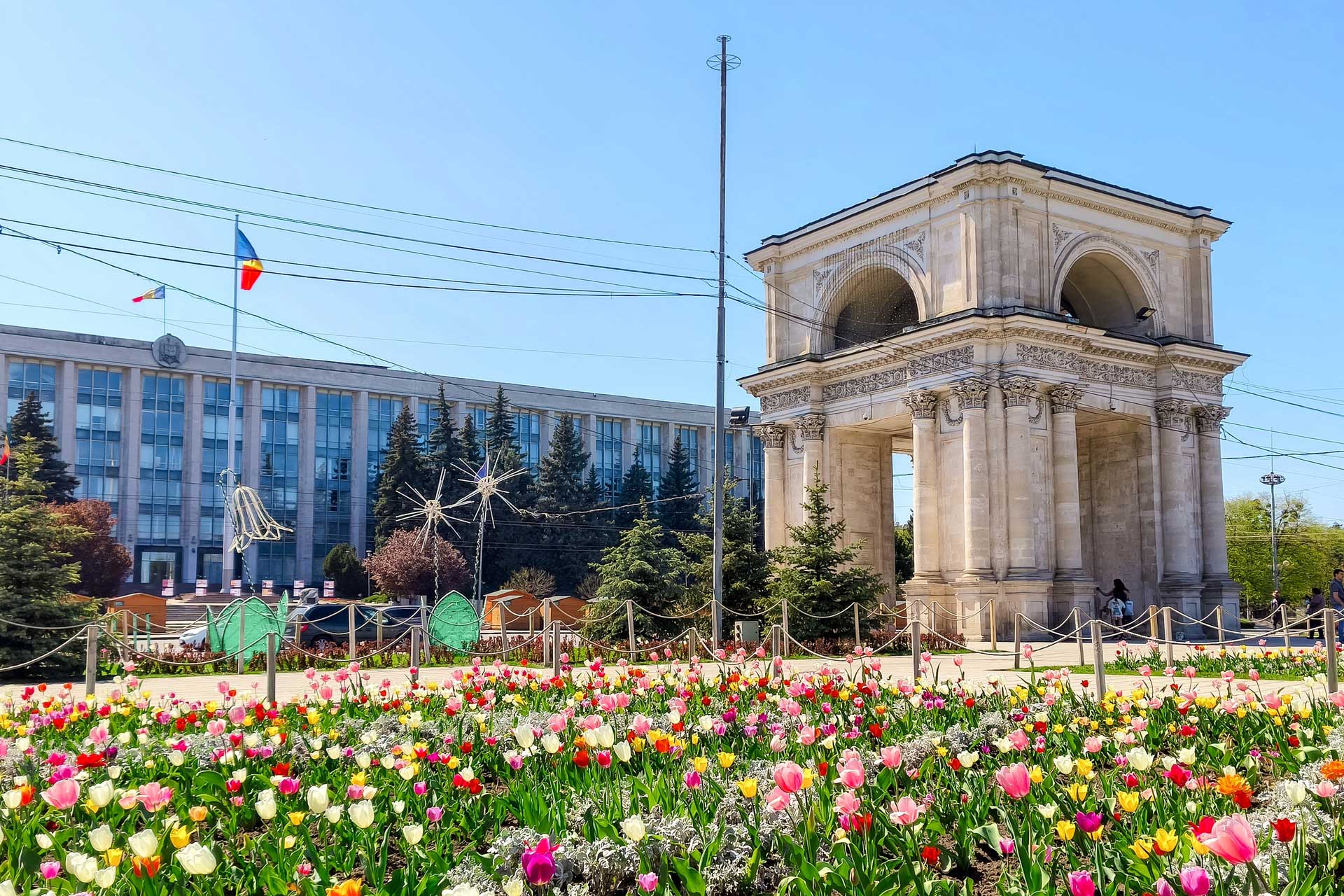
Moldova citizenship is a stable legal and political bond between a person and the state, from which mutual rights and obligations arise. In practice, this means the right to Moldovan documents, participation in political life, access to consular protection and the obligation to comply with the country’s laws.
In 2026, citizenship of the Republic of Moldova is regulated by the new law, Ley nr. 253/2025, which was published in Monitorul Oficial and entered into force on 24 December 2025. In parallel, the new governmental procedural regulation, HG nr. 804/2025, is in effect, while the main practical instructions for submitting applications are published by Agenția Servicii Publice and the Ministry of Foreign Affairs of Moldova.
Most applicants have six realistic scenarios for obtaining Moldovan citizenship:
- by birth,
- by recognition of a connection with Moldova,
- through naturalization,
- through marriage as a preferential form of naturalization,
- through restoration after renunciation of citizenship,
- in certain cases, through the establishment of belonging to citizenship, if a person was considered a citizen by law but did not complete the documents on time.
For standard procedures, the ASP publishes a single basic review period of up to 1 year for recognition, naturalization and restoration, with a possible extension of up to another 6 months for document verification or correction of inconsistencies; for the establishment of belonging, the period is usually up to 1 month. The basic state fee for the three main routes within Moldova is 6,650 lei.
For most adult applicants, the key requirements today are knowledge of the Romanian language, knowledge of the Constitution, personal filing, transparency of biography and sources of income, as well as stricter security and document authenticity checks. The government directly explained the 2025 reform by the need to strengthen control, reduce the risk of fraud and protect national security.
Below is a practical guide to what Moldovan citizenship means, who can qualify for it, how the timelines and fees work, where applicants most often make mistakes and what the real filing process looks like.
What Moldova Citizenship Means
From the point of view of the law, Moldovan citizenship is not simply a passport, but a legal connection with the state. In the old and new official wording, the essence is the same: this connection is permanent and creates mutual rights and obligations between a person and the Republic of Moldova. At the same time, the state also considers cases of multiple citizenship: for example, upon recognition, the applicant must submit documents confirming each existing citizenship, while in the case of restoration after voluntary renunciation, the person may keep foreign citizenship if he or she wishes.
This allows for a practical conclusion: Moldova allows dual and multiple citizenship, at least in the sense that official services work with such applicants and do not require a general renunciation of other citizenships for recognition or restoration. However, there is one important nuance: having a second citizenship does not cancel the obligation to comply with Moldovan laws inside Moldova and to correctly disclose information about all citizenships in the biography and file.
It is separately important to distinguish between three similar but not identical mechanisms:
| Concept | What it means in practice | Who it suits | Official basis |
|---|---|---|---|
| Citizenship by birth | A child is considered a citizen automatically by law if the conditions were met on the date of birth | Children of Moldovan citizens and certain other categories | A child whose at least one parent was a citizen of Moldova on the date of birth is considered a citizen of Moldova |
| Establishment of belonging to citizenship | A person was already considered a citizen by law, but did not complete the documents on time; the state officially confirms this | Adults born in certain periods or categories, but without Moldovan documents | ASP usually reviews such cases within up to 1 month; the service is free |
| Recognition of citizenship | Citizenship is acquired upon application on the basis of birth in Moldova or descent from ancestors connected with the territory of Moldova | Adult applicants with a provable family or territorial connection | Article 10 of the law and the ASP page on recognition |
That is why, in everyday speech, people often say “citizenship by roots” or “by descent,” while in Moldovan administrative logic this is usually formalized through recognition or, if the right arose automatically at the moment of birth, through the establishment of belonging.

Find out how to obtain citizenship faster
Who Can Obtain Moldova Citizenship
By birth
The most direct route is citizenship by birth. The ASP explains that a child born to parents of whom at least one was a citizen of Moldova on the date of birth is considered a citizen of Moldova. If the child was born abroad, the parents usually first need to transcribe the child’s birth certificate into Moldovan civil status records and then obtain Moldovan documents.
For those who were born earlier and never completed Moldovan documents, there is the procedure constatarea apartenenței — establishment of belonging to citizenship. The ASP indicates that this procedure checks whether the person fell under the citizenship rules in force on the date of birth and whether the person later lost it; the public review period is up to 1 month, and the service is free.
By descent and recognition
For adult applicants with Moldovan roots, the main route today is recognition of citizenship. According to the official ASP page, persons over the age of 18 who know the Romanian language and the Constitution and do not have proof of already completed Moldovan citizenship may submit an application if they:
- were born on the territory of Moldova;
- were born abroad but have at least one parent, grandparent or great-grandparent born on the territory of Moldova;
- themselves or their ancestors were born and lived before 28 June 1940 in Bessarabia, Northern Bukovina, the Hertsa region or the Moldavian ASSR;
- themselves or their ancestors were deported or became refugees from the territory of Moldova starting from 28 June 1940.
For recognition, the ASP publishes a period of up to 1 year with a possible extension of another 6 months, and the state fee within Moldova is 6,650 lei. The application is submitted either to an ASP subdivision or, if the person is abroad, to a Moldovan diplomatic mission or consulate. In this case, the date of acquisition of citizenship is the date of approval of the conclusion by the director of the ASP, not the moment of taking the oath before the president.
The typical set of documents for this route usually includes an identity document, civil status documents, an autobiography, proof of the required family or territorial connection, as well as documents for all existing citizenships. If the documents are not in Romanian, they must be accompanied by an official translation certified in accordance with Moldovan law or international treaties.
The common mistakes here are almost always the same: a weak evidentiary chain through the ancestor’s line, discrepancies in the spelling of names in civil status records, lack of transcription of foreign documents and submission of an incomplete chain of documents at once. In the most complex cases, it is precisely the archival and family evidence base that determines the outcome. This is especially noticeable in cases where the connection goes through a grandmother, great-grandfather or pre-war document.
If you plan to obtain Moldova citizenship by descent, it is important to check the entire chain of kinship and the documents of each generation in advance. In practice, errors in archival certificates, civil registry certificates or differences in surname spelling are among the most common reasons for delays in the procedure. Before filing, it makes sense to conduct a legal review of the documents and determine whether the available evidence is sufficient for the chosen ground.
Through marriage
There is no separate “automatic” citizenship through marriage in Moldova. Marriage works as a preferential ground for naturalization. According to the official ASP page, a foreigner may apply if he or she has been married to a Moldovan citizen for at least 3 years and has had continuous legal residence in Moldova during the last 3 years. The other general requirements remain in force: age 18+, permanent legal stay on the filing date, knowledge of Romanian and the Constitution, legal income and absence of grounds for refusal.
This is an important practical point: marriage by itself does not replace immigration history. If a person is married to a citizen of Moldova but does not have the required period of lawful continuous residence in the country, it is too early to apply under the preferential marriage route.
Through naturalization
Naturalization is the standard route for foreigners who have lived in the country for a long time and legally. According to the ASP, the usual basis is as follows:
- 10 years of continuous legal residence in Moldova — the general case;
- 8 years — for stateless persons and persons with international protection or political asylum;
- 5 years of residence in Moldova before reaching the age of 18;
- 3 years — for those married to a citizen of Moldova;
- 3 years — for those who live at the domicile or temporary residence of parents or children who are citizens of Moldova.
There is an important clarification here: on the filing date, the applicant must have a permanent legal history in Moldova. In other words, in the general case this is not merely about physical presence in the country, but about proper immigration status. The official procedure today requires personal filing with the ASP, publishes a period of up to 1 year, allows an extension of up to another 6 months and indicates a state fee of 6,650 lei.
After a positive naturalization decision, citizenship must still be formally “completed”: the 2025 regulation directly states that after the issuance of the presidential decree, the applicant is notified of the need to take the oath, and the date of acquisition of citizenship by naturalization is the date of taking the oath, not the date of the decree.
Through restoration
If a person previously voluntarily renounced Moldovan citizenship, he or she may apply for its redobândire — restoration. The ASP explains that such an applicant must know the Romanian language and the Constitution, must not fall under the grounds for refusal and, if desired, may keep foreign citizenship. The same public period is indicated — up to 1 year with a possible extension of up to 6 months, and the state fee is 6,650 lei. The date of restoration, as with naturalization, is the date of taking the oath.
This is one of the most practical routes for former citizens of Moldova who have lived abroad for many years and have already obtained another citizenship. Filing is possible both in Moldova, if the person is lawfully present, and through a diplomatic mission or consulate when residing abroad.
Through investment
As of 2026, Moldovan official materials do not present an active publicly available “citizenship by investment” route. In 2020, the parliament officially introduced a moratorium on accepting new applications under the citizenship by investment program, while the current 2025 law and the list of current ASP services do not publish a separate active investment filing. However, before relying on any investment route, it makes sense to recheck the current register of services and regulatory acts.
Comparison of the Main Routes
| Route | Who it suits | Residence requirement | Language/Constitution | Public timeline | Public fee | Main risk |
|---|---|---|---|---|---|---|
| By birth | A child whose at least one parent is a citizen of Moldova on the date of birth | None | Not for the child | Not as “citizenship review,” but as registration of status/documents | Not specified | Foreign birth certificate not transcribed |
| Establishment of belonging | A person who was already considered a citizen by law but did not complete the documents | None | Legal status is checked, not classic naturalization | Up to 1 month | Free | Wrong route chosen instead of recognition or naturalization |
| Recognition | Persons born in Moldova or persons with parents/grandparents/great-grandparents born in Moldova, as well as certain pre-war/deportation categories | No separate residence period as in naturalization | Yes | Up to 1 year + possibly up to 6 months | 6,650 lei | Weak chain of proof of kinship/descent |
| Naturalization | Standard route for foreigners | Usually 10 years; 8/5/3 in preferential cases | Yes | Up to 1 year + possibly up to 6 months | 6,650 lei | Errors in calculating continuous residence and status on the filing date |
| Through marriage | Spouse of a citizen of Moldova | Marriage from 3 years + 3 years of continuous legal residence | Yes | Processed as naturalization | 6,650 lei | Belief that marriage alone is enough without residence |
| Restoration | Former citizens who renounced citizenship | No classic naturalization residence period, but filing depends on place of residence | Yes | Up to 1 year + possibly up to 6 months | 6,650 lei | Previous status not proven or grounds for refusal under art. 19 exist |
| Investment | No public active route is currently visible | Not applicable | Not applicable | Not applicable | Not applicable | Reliance on outdated materials about the old program |
If you are not sure which method suits you specifically, you should not rely only on the general requirements of the law. In many cases, the same applicant may have several possible grounds for obtaining citizenship at once, but the timelines, volume of documents and probability of a positive decision will differ. A preliminary consultation allows you to choose the fastest and safest option before you begin preparing the file.
Get a free consultation on the Moldovan citizenship application process
Fill in the short form below and Mycitizenagency specialist will contact you as soon as possible
Rights and Obligations of Moldova Citizenship Holders
Only citizens of Moldova have the right to vote, be elected, hold positions connected with the exercise of public authority and participate in referendums in the manner established by law. Electoral legislation also directly establishes citizens’ participation in elections on the basis of universal, equal, direct, secret and free voting. In practice, this means that citizenship is not only a document, but also entry into a political and legal status that is not available to a holder of only a residence permit or permanent residence permit.
Consular support is another practical advantage of citizenship. The website of the Moldovan MFA separately structures consular services, assistance in emergency situations, the work of diplomatic missions and consular offices, as well as the citizenship area. This does not mean that the state will solve all private issues abroad for a citizen, but citizen status does indeed give access to Moldovan consular protection and assistance mechanisms.
Of the obligations that foreigners often underestimate, the most sensitive one is military duty. Under the law on preparing citizens for the defense of the homeland, military service is mandatory for male citizens of Moldova who have reached the age of 18; conscription is held twice a year, while women with the necessary specialized training may perform military service under contract. For most naturalizing adults, this does not mean an immediate problem, but for young men the issue should be assessed in advance.
Dual citizenship
From the point of view of filing practice, Moldova works with dual and multiple citizenship. This is evident from at least two official elements: the ASP requires applicants for recognition to submit documents for other citizenships as well, if they have any, while restoration directly allows foreign citizenship to be kept. At the same time, within the file, the applicant usually discloses all of his or her citizenships in detail in the autobiography.
What this means in practice:
- having a second citizenship does not by itself block recognition or restoration;
- it is better to disclose all passports and citizenships in the file immediately;
- the absence of a separate public obligation to provide general notification of each new citizenship does not release a person from the obligation to be fully honest in the specific citizenship procedure.
Taxes and citizenship
The most important tax principle is simple: citizenship and tax residency are not the same thing. For tax purposes, Moldova primarily looks at residency criteria, not merely the possession of a passport. The Tax Code gives its own definition of a resident, while the SFS separately indicates that for foreign citizens and stateless persons one of the practical criteria is staying in Moldova for more than 183 days during the relevant tax year — these are precisely the types of evidence requested when issuing a tax residency certificate. The SFS usually issues the certificate within 3 working days after submission of the full set of documents.
This means that a person may be a citizen of Moldova but not be its tax resident in a particular year if his or her actual life and tax connection are in another country. Conversely, a foreign citizen may become a tax resident of Moldova without having Moldovan citizenship. That is why tax matters must be checked not only against the citizenship law, but also against the Tax Code, the actual days of stay, the center of vital interests and applicable international agreements.
Moldova has an extensive network of double taxation treaties; the list of treaties is maintained by the State Tax Service. For international cases, this is especially important because the treaty determines where and how income from work, dividends, interest, royalties or the sale of assets will be taxed.
International exchange of tax information should also be taken into account. The SFS reports that Moldova received a positive assessment on the legal and protective parameters for the automatic exchange of information on financial accounts of non-residents; the OECD describes CRS as the standard for the annual automatic exchange of such information between jurisdictions. If a person has a connection with the United States, FATCA creates a separate level of risk: the IRS directly indicates that the rules may require reporting on foreign financial accounts and assets for persons subject to the U.S. tax regime. In other words, a Moldovan passport does not by itself create “double tax,” but an international asset structure and several tax connections can create reporting obligations in several countries at once.
Renunciation, Revocation and Loss of Citizenship
Losing Moldova citizenship automatically “by itself” because of residence abroad is not provided for. The main officially formalized options are voluntary renunciation and revocation of citizenship on the grounds provided by law. The 2025 regulation directly states that, in the case of renunciation, a person must have either another citizenship already or a guarantee of obtaining one; at the same time, the date of loss of citizenship is the date of entry into force of the presidential decree approving the renunciation.
There is also an important guarantee against statelessness. If a person’s renunciation was approved but, contrary to the guarantee, he or she did not obtain another citizenship and became stateless, the person may request cancellation of the presidential decree on renunciation. This is a very practical protection mechanism for those building a multi-step exit from one citizenship into another and facing a failure on the side of the second state.
As for revocation of citizenship, the regulation directly describes a separate procedure: the competent authority may, on its own initiative or based on materials from law-enforcement authorities, establish grounds for revocation under art. 22 of the law, collect data, obtain conclusions from the Ministry of Internal Affairs and the SIS and submit the matter for consideration with a subsequent presidential decree. The explanatory materials to the 2025 reform show that one of the law’s goals is to strengthen filters against fraud and security threats. This allows one to say cautiously but reasonably that document fraud and violations of public order/security are at the center of attention when decisions on citizenship and its challenge are made.
Check your chances of getting a passport in chosen country free of charge
Leave a request for a free consultation with an immigration specialist at your convenient time
How to Submit an Application in Practice
Before proceeding to filing, it is worth knowing two things. First, the ASP requires prior appointment booking for citizenship services — through the website, the service appointment section, or by the specified telephone number. Second, the Moldovan MFA indicates that persons with lawful stay in Moldova submit files to the ASP, while applicants located abroad submit them to Moldovan diplomatic missions and consulates.
Step-by-step checklist
The basic procedure for most adult applicants looks as follows:
- Determine the exact route: birth, recognition, establishment of belonging, naturalization, preferential naturalization through marriage or restoration.
- Check whether the substantive conditions are met regarding the residence period, marriage, the existence of a citizen ancestor or the fact of previous Moldovan citizenship.
- Collect identity documents, civil status documents, a biography, proof of the route and, if necessary, documents regarding all existing citizenships.
- Bring the documents into an acceptable form: if they are not in Romanian, obtain an official translation and proper certification.
- For routes where this is required, pass the Romanian language and Constitution exam in advance or confirm a ground for exemption, if provided by law; the public ASP pages confirm the general examination criterion, while ANCE publishes examination schedules.
- Book an appointment and submit the application in person; in the 2025 reform, the state separately emphasized the rejection of the model of filing through authorized intermediaries so that the process would be as personal as possible.
- Wait for interagency checks and, if necessary, an additional request or interview; the government directly wrote that the authorities received expanded powers to verify and summon the applicant.
- After a positive decision on naturalization or restoration, take the oath and receive the confirming document; for recognition, citizenship is recorded as of the date of approval of the conclusion by the ASP director.
Approximate timelines for naturalization
There are no official governmental timelines “from the first day of residence to the passport,” because much of this path depends on the applicant’s personal history. But the working template looks as follows:
| Stage | What happens | Realistic benchmark according to official data |
|---|---|---|
| File preparation | Collection of records, archival documents, translations, certificates | Depends on the country and archive; not publicly standardized |
| ANCE exam | Submission 2 days before the exam date; in 2026, ANCE published regular sessions, including 16 September, 14 October, 11 November and 2 December | According to the ANCE schedule |
| Administrative review | ASP and interagency checks | Up to 1 year + possibly up to 6 months |
| Final formalization | Presidential decree, oath, confirmation of status | After a positive decision; the citizenship date is the day of the oath for naturalization and restoration |
This table follows from the official 2025 regulation: in naturalization, the case goes through the ASP and relevant conclusions, then the matter goes to the president, and the date of acquisition of citizenship becomes the day of taking the oath. For ordinary filing, the administrative stage itself is publicly indicated as up to 1 year, plus a possible extension of 6 months.
Cost of Obtaining Moldova Citizenship
In addition to the state fee, applicants usually have to consider related expenses for preparing documents. The final cost of the process depends on the chosen ground (recognition, naturalization, restoration), the country where the documents were issued and the complexity of the specific case.
| Expense item | Approximate amount |
|---|---|
| State fee for recognition, naturalization or restoration of citizenship | 6,650 lei |
| Translation of documents into Romanian | Depends on the number of documents and the translator’s rates |
| Notarial certification of translations and copies | Paid separately according to current notary tariffs |
| Apostille or consular legalization of foreign documents (if required) | The cost depends on the country where the document was issued and the applicable procedure; Moldova has separate state apostille tariffs |
| Archival certificates, duplicate civil registry certificates | The amount of fees is determined by the archive or registration authority of the relevant country |
| Romanian language and Constitution exam (if mandatory) | Administrative expenses may apply depending on the examination procedure |
| Legal support | Paid separately and depends on the scope of work: analysis of grounds, search for archival documents, preparation of the file and support during the procedure |
It is important to understand that the state fee is only part of the total costs. In citizenship-by-descent cases, a significant part of the budget may consist of searching for archival documents, obtaining duplicate certificates, translations and legalization of foreign documents. If documents were issued in different countries or there are discrepancies in surnames, dates of birth or civil status records, the expenses and preparation timelines may increase substantially.
Before starting the procedure, it is recommended to calculate the full budget in advance. An individual consultation makes it possible to determine which documents will actually be needed in your specific case, avoid unnecessary expenses and properly plan the process of obtaining citizenship.
Comparison with Romania, Bulgaria and Serbia
Below is a practical comparison not of “where it is easier,” but of how the models differ.
| Country | Dual citizenship | Residence requirement for ordinary naturalization | Language/constitutional test | Public timeline | Route by descent |
|---|---|---|---|---|---|
| Moldova | Yes, at least in the practice of recognition and restoration; multiple citizenships are disclosed in the file, and foreign citizenship can be kept upon restoration | Usually 10 years; 8/5/3 in preferential cases | Yes | Up to 1 year + up to 6 months extension | Yes, through recognition and establishment of belonging |
| Romania | Yes; in the general set of conditions under art. 8 there is no general requirement to renounce previous citizenship | Usually 8 years, or 5 years if married to a Romanian citizen | Yes, including language, basics of culture, the Constitution and the anthem for ordinary naturalization | A single public timeline was not indicated in the reviewed official materials | Yes, an official procedure under art. 11 exists at the ANC |
| Bulgaria | Partly: the system allows benefits and exceptions; official pages separately highlight descent and certain facilitated categories | In official materials, the model depends on the article of the law; for certain preferential categories, periods of 3–5 years are visible, while persons of Bulgarian descent benefit from simplification | Interview and filing in Bulgarian are directly indicated in the official procedure | A single public timeline was not indicated in the reviewed official materials | Yes, a separate official route exists for persons of Bulgarian descent |
| Serbia | Partly: ordinary naturalization usually requires release from foreign citizenship, but dual citizenship is allowed for emigrants, descendants and certain other categories | 3 years of continuous permanent residence for ordinary naturalization | In the reviewed official MFA reference, a separate language test is not emphasized | A single public timeline is not indicated | Yes, descendants and emigrants have a separate route |
Obtaining Moldova citizenship in 2026 remains a fully realistic procedure, but the requirements for applicants have become significantly stricter. State authorities pay more attention to verifying descent, the authenticity of documents, the legality of residence, knowledge of the Romanian language and national security issues.
At the same time, the same route does not suit everyone. For some, recognition of citizenship by descent will be the optimal option; for others, naturalization after long-term residence; while former citizens of the country may use the restoration procedure. Choosing the correct ground is often what makes it possible to shorten the processing time and avoid resubmission of documents.
Before you begin collecting certificates, arranging translations, and obtaining archival records, it is important to determine the route that best suits your particular circumstances. The most effective way to do this is through an individual consultation with a specialist in Moldovan citizenship matters. This will allow you to assess your chances of obtaining citizenship in advance, identify weaknesses in the supporting evidence, and avoid mistakes that could delay the consideration of your case for many months.
Frequently Asked Questions About Moldovan Citizenship
We have compiled answers to the most common questions about obtaining Moldovan citizenship. If you did not find the information you were looking for or want to learn more about the requirements, timelines, and benefits of Moldovan passport, contact us for a free consultation.
Yes, official ASP procedures work with multiple citizenship: the applicant discloses existing citizenships, and upon restoration the previous foreign passport may be kept.
No. Marriage does not grant automatic citizenship. It only shortens the naturalization period provided that there are 3 years of marriage and 3 years of continuous legal residence in Moldova.
Usually 10 years, but there are preferential options of 8, 5 or 3 years for certain categories.
For adult routes of recognition, naturalization and restoration, public ASP pages confirm the requirement to know the Romanian language and the Constitution; ANCE publishes examination sessions.
Yes, if a grandfather, grandmother, great-grandfather or great-grandmother was born on the territory of Moldova, this may lead to recognition of citizenship if there is a documentary chain of proof.
Yes, if at least one parent was a citizen of Moldova on the child’s date of birth. But for practical document formalization, transcription of the birth record is usually required.
As of 2026, ASP websites publish a fee of 6,650 lei for these three main procedures within Moldova.
For recognition, naturalization and restoration — up to 1 year; if checks are necessary, an extension of up to 6 months is possible. For establishment of belonging — usually up to 1 month.
For recognition — from the date of approval of the conclusion by the ASP director. For naturalization and restoration — from the date of taking the oath.
Yes, but usually it is necessary to prove the existence of another citizenship or a guarantee of obtaining it; loss of citizenship occurs from the date of entry into force of the presidential decree on renunciation.