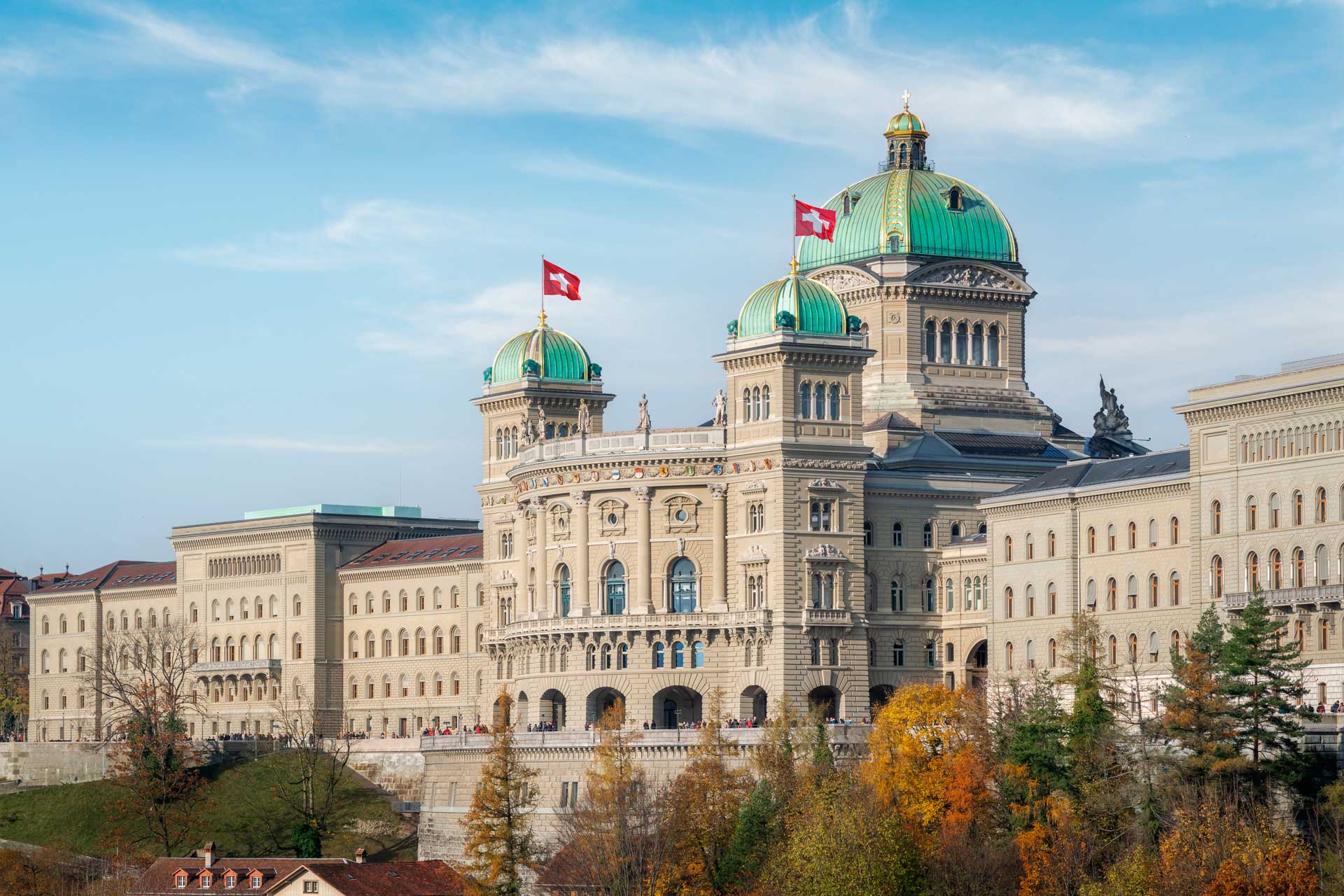
Swiss citizenship is considered one of the most desirable in the world thanks to the country’s high stability and quality of life. Holders of the red-and-white passport receive the full set of rights of a citizen (including voting rights) and can live in Switzerland permanently without any restrictions. At the same time, citizenship also imposes obligations — for example, for men this includes military service or the payment of a military tax. In this article, we will help you understand how a foreigner can obtain Swiss citizenship in 2026, what paths to naturalization exist, how long the process takes, what requirements apply, and how citizenship differs from residence permit (temporary) and permanent residence status.
Switzerland is not part of the European Union, however, the Swiss passport is in no way inferior in value to EU passports. The country is renowned for its very high income levels, reliable economy, high-quality healthcare and education. Unlike a residence permit (temporary) or even permanent residence, citizenship provides lifelong guarantees and protection from deportation, and it opens access to political rights and consular protection. This status is particularly attractive to wealthy businesspeople (for unrestricted business activity and stability of the banking system), families with children (for education and safety), students and highly qualified specialists, as well as immigrants who value social guarantees and freedom of travel.
Advantages of Swiss Citizenship
- Freedom of travel. A Swiss passport grants the right to visit around 170–180 countries without visas, including all Schengen states and many other distant countries. Among them are states with traditionally strict visa regimes: for example, to enter the USA and Canada, Swiss citizens only need an electronic authorization (ESTA, eTA), without an interview at the consulate. In fact, the Swiss passport gives its holder the same travel opportunities as EU citizenship, ranking among the top 10 strongest passports in the world.
- Right to live and work in Europe. Switzerland is part of the unified European space under agreements with the EU, so Swiss citizens can freely live and work in almost any EU country on equal terms with local residents. This opens access to a larger labor market and business environment, which is especially appreciated by entrepreneurs. A Swiss citizen can also acquire real estate in the Confederation without additional permits (whereas foreigners with a residence permit face restrictions) and conduct business with simplified taxation in a number of cantons.
- Social guarantees and quality of life. By obtaining Swiss citizenship, you become part of one of the most prosperous countries in the world. Switzerland regularly tops global quality-of-life rankings. Citizens have access to a first-class healthcare and education system on preferential terms. For example, Swiss citizens can enroll in public universities in Switzerland and many European countries free of charge or for a symbolic fee. They also have access to pensions and social security according to Swiss standards — among the highest benefits and pension payments in the world. At the same time, the Swiss pension system allows citizens to receive their pension even while living abroad (provided they have sufficient employment history), which is important for those who plan to spend their retirement in a warm climate.
- Family and descendants. Swiss citizenship is passed on to children by descent. If at least one parent is a Swiss citizen, the child usually receives citizenship automatically by the right of blood, regardless of the place of birth. This means that your children and grandchildren will enjoy all the above-mentioned benefits. In addition, having a Swiss passport makes it easier to arrange family reunification: your spouse and children can obtain permanent residence, and later citizenship, more quickly if integration requirements are met.
- Dual citizenship. Switzerland recognizes dual citizenship — when obtaining a Swiss passport you are not required to renounce your existing citizenship. This allows you to use the advantages of two (or more) countries at once. For example, many immigrants consider the Swiss passport as a second citizenship for themselves while keeping the citizenship of their country of birth. It is important to take into account whether your home country allows dual citizenship — if not, naturalizing in Switzerland may result in the automatic loss of your original passport (as happens, for example, with citizens of China, India, and several other states). However, most CIS countries allow two passports.
- Safety and stability. Switzerland is a neutral state with a low crime rate and a high level of personal safety. Citizens feel protected both in everyday life and abroad: the country’s strong economy and diplomatic authority help in crisis situations. According to the Global Peace Index, Switzerland ranks among the ten most peaceful countries, and the cities of Zurich, Geneva, Lugano, and Bern consistently appear in the top safest cities worldwide. In unforeseen situations abroad, a Swiss citizen can count on the assistance of Swiss embassies.
Overall, possessing a Swiss passport means having access to all the benefits of one of the most developed states — from freedom of movement and entrepreneurship to social benefits and legal protection. It is no surprise that despite the complexity of naturalization, many immigrants strive to obtain a second passport from this particular country.
Get a free consultation on the Swiss citizenship application process
Fill in the short form below and a Mycitizenagency specialist will contact you as soon as possible
Who Can Apply for Swiss Citizenship
Swiss legislation provides a limited set of grounds for obtaining citizenship. In general, the following categories of persons may apply for a Swiss passport:
- Those born to Swiss citizens. Descendants of Swiss citizens have the right to citizenship by origin (jus sanguinis). A child’s citizenship is determined by the citizenship of the parents, not by the place of birth. That is, children whose mother or father is a Swiss citizen automatically become citizens (provided that the necessary registration formalities are completed). This also applies to adopted children: if a Swiss family officially adopts a foreign child under the age of 18, he or she also acquires citizenship. It is important to note that being born on the territory of Switzerland does not automatically grant citizenship if the parents are foreigners (the right of soil does not apply). An exception is made in cases where a child is born in Switzerland to stateless persons — in that case, citizenship may be granted so that the child does not remain an apatride.
- Foreigners who have lived in the country for the required period (naturalization). Most immigrants obtain Swiss citizenship through naturalization. This is possible after long-term legal residence in the country (usually at least 10 years) and fulfillment of a number of conditions, which are described in more detail below. Highly qualified specialists, entrepreneurs, refugees, and other categories who have managed to obtain a residence permit and integrate into Swiss society may be naturalized. It is also worth mentioning children of immigrants who were born and grew up in Switzerland: there is a simplified “third-generation” procedure for them. Grandchildren of immigrants who were born on Swiss soil can apply for citizenship through a simplified scheme — they need only 5 years of residence, provided they are well integrated.
- Spouses of Swiss citizens. A foreigner who is married to a Swiss citizen has the right to simplified naturalization through marriage. For this, the marriage must have lasted at least 3 years, and the foreign spouse must have lived in Switzerland for at least 5 years (with the last year before applying being continuous). It will also be necessary to confirm language proficiency and integration into the life of the country. If the conditions are met, the procedure for husbands and wives of Swiss citizens is significantly faster than the standard one.
- Investors and economically significant individuals. It is not possible to buy Swiss citizenship directly — the “citizenship by investment” program does not exist. Wealthy foreigners can only obtain a residence permit in exchange for significant contributions to the economy. In particular, the well-known program for financially independent persons requires paying a fixed annual tax (from 450,000 francs per year) in exchange for the right to reside in the country. Such a residence permit can be obtained in 6 months, but it gives no advantages in naturalization timelines — you will still need to live 10 years and meet the requirements. Thus, investments only indirectly help by opening the path to permanent residence, and Swiss citizenship is not sold in either 2025 or 2026.
- Special merits, sports, science. Swiss legislation does not contain a separate clause for special merits, but theoretically the Federal Council may petition to grant citizenship on an individual basis to persons who have made an outstanding contribution to the country. Such cases are extremely rare. Unlike in some countries (such as EU states), Switzerland practically does not use the practice of naturalizing well-known athletes or investors “bypassing” standard rules. Nevertheless, having notable achievements may help an applicant make a good impression during consideration of the case at the municipal and cantonal level.
To summarize: one can obtain Swiss citizenship either “by right” (birth, origin, descent) or through the process of naturalization (standard or simplified). For everyone undergoing naturalization, long-term residence, integration, and compliance with the law play the key role. Below, we will examine specific ways of obtaining citizenship in more detail.
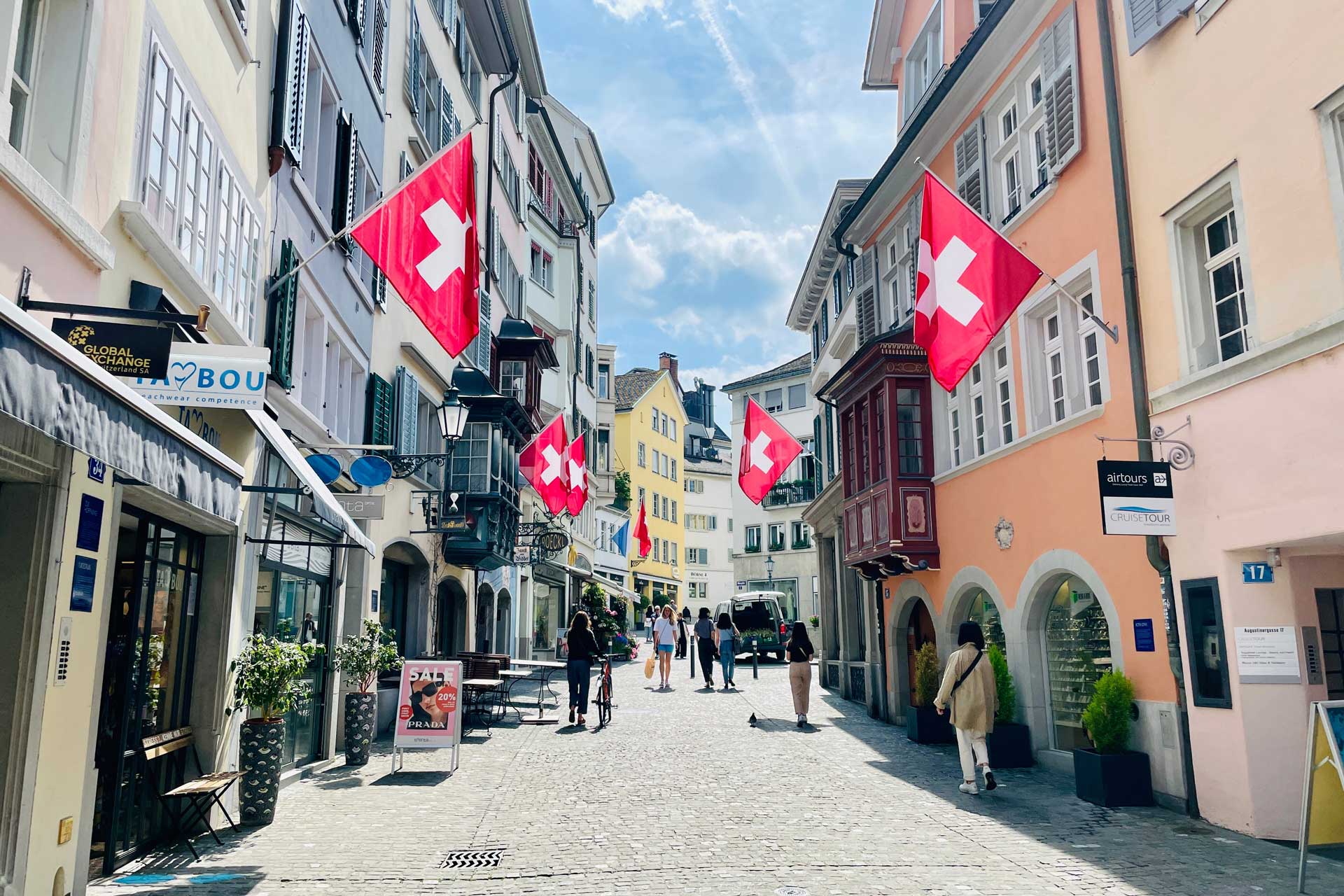
Ways to Obtain Swiss Citizenship
- Citizenship by birth (right of blood). Switzerland adheres to the principle of jus sanguinis: citizenship is passed on by descent. If at the moment of a child’s birth his or her mother or father holds Swiss citizenship, then the child also becomes a citizen of Switzerland. It does not matter where the child was born — even outside the country. What matters is the fact of the parent’s citizenship. This also applies to adopted children: a minor adopted by Swiss citizens acquires the citizenship of the Confederation automatically. Such transmission of status by blood is the simplest method, requiring no exams, years of residence, etc. However, there are nuances for descendants living abroad: if a Swiss citizen gives birth to a child abroad, it is necessary to register the child at the consulate in a timely manner, otherwise by the age of 22–25 the descendant may lose the right to citizenship. Also, if there were breaks in the family line (an ancestor voluntarily renounced citizenship), the “chain” may be interrupted. Overall, children of Swiss citizens have the highest chances of becoming citizens through a simplified procedure for restoring citizenship, even if the family has lived outside Switzerland for generations.
- Naturalization (through residence). Standard naturalization is the main path for foreigners. One must live in the country for at least 10 years on legal grounds before applying. Years of residence under various types of residence permits are counted, and for children aged 8–18 each year counts as two (but still at least 6 years). A mandatory requirement is holding a permanent residence permit (Permis C) at the moment of application. That is, a foreigner must first obtain a temporary residence permit (for example, a work contract with a Permis B or a financially independent residence permit), then after 10 years obtain permanent residence (Permis C), and only then can apply for a passport. The naturalization process is multi-level: your candidacy is approved successively by the commune (municipality), the canton, and the federal authorities. Interviews may be conducted, knowledge of the language and basic information about the country may be checked, and references may be requested. Despite fulfilling the formal conditions, citizenship is not guaranteed (about 20% of applications receive a refusal or remain unprocessed).
- Simplified naturalization through marriage. If you are officially married to a Swiss citizen, the law allows you to naturalize more quickly. The main requirements are: the marriage must have lasted at least 3 years, and you must have lived in Switzerland for at least 5 years, with the last year before applying being continuous. It is also necessary to prove your proficiency in one of the national languages and your integration into the life of the country. During the procedure, the foreign spouse may be asked questions about the family and about Switzerland, and the sincerity of the marriage may be checked. If everything is in order, naturalization through marriage takes less time (about 2–3 years instead of 4–6 under the standard procedure) and is cheaper in terms of state fees. In recent years, thousands of foreigners have taken advantage of this option, although fictitious marriages are strictly prosecuted.
- Repatriation by origin. Switzerland has no classical repatriation program based on ethnic roots (such as the Polish Card for descendants of Poles). Nevertheless, people who have Swiss ancestors in their family line may attempt to restore the citizenship of their forebears. If you had a grandfather or grandmother who were Swiss citizens, or if you yourself were born to Swiss parents while living abroad, there is a possibility of simplified acquisition of status if there is a “close connection with Switzerland.” Usually, it is required to spend some time living in the country, have relatives or property there, and know the language and culture. The Swiss Citizenship Act of 2018 introduced the concept of renaturalization — the restoration of lost citizenship. For example, if a Swiss citizen previously renounced the passport and now has changed his or her mind, he or she may apply to have the status returned. Descendants of Swiss citizens born abroad who did not receive a passport in childhood may also request citizenship through a simplified procedure up to the age of 35, provided they can prove their connection with their historical homeland. Each such case is considered individually.
- Citizenship through investment (financially independent persons). There is no direct “citizenship by investment” program in Switzerland. Neither major investment in the economy nor the purchase of real estate grants a passport by itself. However, wealthy foreigners may obtain a residence permit under a special tax system and then, after the required period, naturalize on general grounds. This refers to a residence permit for financially independent persons who agree to pay a fixed annual tax to the canton (from 450,000 francs per year, depending on the region). This tax replaces the declaration of income. In return, the investor receives a Swiss residence permit without the right to employment but with the right to reside. After 10 years, one may qualify for permanent residence, and then for citizenship — however, the investor receives no preferential treatment regarding deadlines or requirements. They must learn the language, integrate, and have no issues with the law, just like everyone else. Essentially, this is not the purchase of a passport but the “purchase” of residency, which merely initiates the long immigration process. Therefore, some people prefer faster alternatives — for example, obtaining EU citizenship through the investment programs of Malta or the Caribbean countries within 1–2 years, and then living in Switzerland freely with that passport. But if your goal is specifically a Swiss passport, you will need to go through the full legalization cycle.
- Exceptional cases (sports, science, national interest). The constitution provides that citizenship may be granted individually by the Federal Assembly “in exceptional circumstances.” In Swiss history, there have been cases of naturalizing certain foreign citizens for special merits — for example, outstanding scientists or cultural figures whose work is of significant importance to the country. However, these are isolated examples. For instance, if a foreign athlete has lived in Switzerland for many years and brings the country medals, cantonal authorities may accelerate granting him citizenship, but they will not exempt him from the basic requirements. In general, one should not rely on a passport through exception. Practically all applicants must meet the standard conditions and undergo the usual procedure.
Check your chances of getting a passport in Switzerland free of charge
Leave a request for a free consultation with an immigration specialist at your convenient time
Procedure for Obtaining Swiss Citizenship
Let us move on to the practical part — how to obtain Swiss citizenship step by step. Let us assume that you already have a basis (10 years of residence, marriage to a Swiss citizen, or another). In general terms, the procedure looks as follows:
- Verification of grounds and collection of documents. First, make sure that you meet all the criteria: sufficient length of residence, the required category of residence permit (usually permanent residence), language proficiency at the required level, etc. Next, the document package is prepared. It usually includes: a completed application form, a valid foreign passport, a C residence permit (permanent), a birth certificate, a marriage certificate (if applicable), a criminal record certificate, proof of tax payments and absence of debts, documents confirming income or employment, a language certificate (minimum A2 written / B1 spoken), proof of integration (for example, recommendations from the local community, membership in clubs, participation in volunteer projects), as well as a statement from the commune confirming your continuous residence in the given canton. All documents must be either in one of the official languages of Switzerland (German, French, Italian) or accompanied by a notarized translation. Keep in mind that the list of documents may vary slightly in different cantons.
- Taking a language exam (and possibly a basic knowledge test). One of the key requirements is proficiency in the official language of your region at a level not lower than B1 (spoken) and A2 (written). If you do not have a valid certificate (for example, Goethe-Zertifikat, DELF, PLIDA, etc.), you will have to take the fide test directly in Switzerland. Many cantons also conduct an exam or interview to test knowledge of the basics of Swiss history, geography, and the political system. For example, at the municipal level you may be asked about local holidays, cuisine, traditions — there are known cases when candidates were refused due to not knowing, for example, the names of Swiss cheese varieties. Therefore, prepare in advance: study the booklet for naturalization candidates, attend integration courses if needed.
- Submitting the application and paying the fee. The completed dossier is submitted to the canton’s migration office or directly to the municipality — the procedure varies. In some places, the application is accepted at the commune level, while in others the canton handles it from the start. In several cities, electronic portals through which documents can be submitted online are already available, but most often personal submission or at least physical presence at one of the stages (for identity verification, interview) is required. At the same time, the state fee for naturalization is paid, the amount of which varies across cantons. On average, the fee ranges from 600 to 2,000 euros (or the equivalent in francs). If the application is submitted for a family (spouses and children), the total payment may be slightly higher, but usually the rates for children are reduced. In addition, municipal-level expenses are possible — for example, the commune may set its own administrative fee, and the issuance of the passport and ID card is paid separately later.
- Review and interviews. After submission, the waiting period begins. The case undergoes review at three levels: the commune (local community), the canton, and the Confederation. First, your integration is evaluated at the local level. An interview with the communal commission may be scheduled, or even a local residents’ vote (a rare case today, but similar practices existed in small Swiss communities). Then, cantonal authorities check the documents, legality of residence, absence of a criminal record and debts. Finally, the federal authority (the State Secretariat for Migration, SEM) assesses whether the applicant poses any security threat and issues the final decision. In total, the review of a citizenship application takes from several months to about two years. On average, the period often cited is 12–24 months, although in practice everything is individual: somewhere they complete it within a year, and elsewhere the process drags on longer (especially if additional information is required or delays arise at the municipal stage). During this time, you can track the status — some cantons issue the applicant a unique number for online monitoring of the case’s progress.
- Approval and issuance of the passport. If all levels say “yes,” you receive a notice of being granted Swiss citizenship. Many cantons invite new citizens to a ceremonial oath-taking event. This is a touching moment when you officially pledge to uphold the Constitution and laws of the Confederation. After that, you are considered a full Swiss citizen. You will be issued a naturalization certificate, on the basis of which you can apply for a Swiss passport and internal ID. To obtain the passport, a separate application must be submitted to the passport office or local administration (this is a purely technical procedure, taking 10–30 days). The biometric passport is produced in approximately two weeks and sent by mail; the internal ID card is issued in the same way (or handed over in person). From this moment on, you are a citizen of Switzerland with full rights.
If at any stage the applicant is refused, the reasons are usually provided in writing. The most common grounds for refusal are: insufficient integration (for example, inadequate language proficiency or lack of knowledge of local specifics), the presence of a criminal record or serious offenses, prolonged receipt of social benefits, submission of incomplete or false information in the documents. The refusal can be appealed through an administrative court, but in practice only a few appeals succeed. It is permitted to reapply after a certain period (usually 1–2 years), or after eliminating the reasons for refusal.

Find out how to obtain citizenship faster
Requirements for Naturalization
To increase the chances of a positive decision, it is important to meet all the requirements of the Swiss Citizenship Act. The key criteria for applicants for citizenship are as follows:
- Long-term residence in the country. The minimum required period is 10 years of continuous residence in Switzerland. Moreover, during the last 5 years, you must have physically spent at least 3 years in the country (without long trips of more than 2–3 months). A mandatory condition is having permanent resident status (Permis C). If you only have a temporary residence permit (Permis B, L, etc.), wait until you receive permanent residence. For some categories, the period is reduced: spouses of citizens — 5 years of residence, “third-generation” children — 5 years (if born and schooled in Switzerland), persons aged 18–25 may naturalize after 6 years thanks to double counting of childhood years. But the general rule is ten years of living in the country.
- Residence in a specific canton. Switzerland is a confederation, and each canton sets its own requirement for local residency. Typically, you must live in the canton where you are applying for citizenship for 2 to 5 years. For example, the canton of Zurich requires at least 2 years of residence in the commune before submitting the application, while Geneva requires 5 years. If you move to another region shortly before applying, the countdown begins anew at your new place of registration. Therefore, plan naturalization in advance and try not to change your place of residence in the final years of the process.
- Integration into society. The applicant must demonstrate that he or she is successfully integrated into Swiss life. This includes knowledge of one of the official languages at a sufficient level (usually at least A2 written and B1 spoken), understanding of Swiss culture and values, respect for local laws and traditions. You must not pose a threat to the internal or external security of the country. It is desirable to have a social circle of local residents, participate in community life (for example, be a member of professional unions, hobby groups, volunteer). In many cities, candidates are visited by commune employees or the police for informal assessment — whether neighbors know you, whether you lead an orderly lifestyle. If you have integration problems (for example, you live in isolation and do not speak the local language), it is better to postpone the application and address these issues.
- No violations of the law. A clean criminal record is required. Having a criminal conviction virtually guarantees refusal. Only minor fines (for example, for speeding) are tolerated, but even these are better avoided. Debts and financial discipline are also checked — you need certificates confirming the absence of tax arrears and unpaid financial obligations. If you have declared bankruptcy or failed to pay bills, this is a negative factor. Lawfulness is a cornerstone of candidate evaluation.
- Financial self-sufficiency. An immigrant must prove that he or she is able to support themselves and will not become a burden to the state. It is desirable to have a stable income or savings, a job, or your own business. It is checked whether you have received social benefits in recent years. If you have, this is not an automatic refusal, but the authorities may require proof that you are now financially independent, or that you have repaid the assistance received. For example, one requirement is a certificate from the social welfare office for the past 3 years. If you recently received social benefits, you will most likely be asked to postpone citizenship until the funds are repaid or your financial situation improves. Timely payment of taxes and insurance contributions is also considered.
- Housing and registered address. You must have an official address in Switzerland, preferably permanent and stable (rented or owned — it does not matter). If you have changed housing frequently, this complicates the verification of residency. By the time of application, all registration data must be in order. Owning real estate is not mandatory, but it is a plus, showing your connection to the country.
- Renunciation of previous citizenship is not required. Switzerland does not require you to renounce your original citizenship. However, if your home country prohibits dual citizenship, you will have to choose. For example, a citizen of Ukraine (as of 2025, Ukraine de jure does not recognize dual citizenship) theoretically must renounce Ukrainian citizenship upon receiving a Swiss passport. In such cases, candidates act differently: some officially renounce their previous citizenship, others keep two passports (realizing that in their home country the second passport will not be recognized). Everything is individual; it is important to know the laws of your country. Switzerland itself, to reiterate, allows having an unlimited number of citizenships.
Separately for men: after naturalization before the age of 25, you will be registered for military service and must undergo military service or alternative civilian defense service. If you receive citizenship after the age of 25, you will no longer be conscripted, but you will have to pay a military tax of 3% of income until the age of 30. This must be taken into account as a specific requirement/obligation for new male citizens.
In recent years, requirements for candidates have only tightened. With the entry into force of the new Citizenship Act in 2018, the criteria across the country were unified (for example, a single language threshold and the requirement of permanent residence status were introduced). A trend toward strengthening the integration filter is observed: for example, some cantons are discussing raising the bar for language proficiency and community participation. Attention is also paid to the applicant’s reputation: if there is information about involvement in corruption schemes or ties to organized crime, the case may be suspended. In 2025 in the canton of Zug, the issue of introducing even stricter naturalization rules was raised. Therefore, approaching 2026, immigrants should treat compliance with all requirements extremely seriously — Swiss authorities check each applicant very thoroughly.
Thinking about obtaining Swiss citizenship? The process is complex and the requirements are strict — even a small mistake can lead to a refusal. Our legal team will help assess your chances, prepare your documents, and guide you through the procedure with minimal risk. Leave a request — we will advise you and recommend the optimal path to a Swiss passport.
Timeframes and Cost of Obtaining Citizenship
How long do you have to wait for a Swiss passport? In the most optimistic scenario (a simplified procedure through marriage or for the third generation), the entire process takes about 5–6 years of residence plus 1–2 years for application processing. In standard cases — 10 years of residence and approximately 2 years for the procedure. That is, if you arrive today, becoming a citizen is realistically possible around 2036, provided all conditions are met. Many immigrants actually live even longer than the minimum term before submitting their documents — on average, applicants spend 12–15 years in Switzerland before naturalization in order to feel confident.
The processing times for the application itself vary by canton. Legally, no specific timeframe is fixed; in practice, authorities try to complete the process within 12 months, but often the procedure is extended to 18–24 months. If additional verification is required or the candidate takes a long time to provide missing documents, the period may stretch to 3–4 years. Therefore, it is better to submit as complete a package as possible to avoid delays. In some cantons, the number of applicants also affects waiting times — for example, in Zurich or Geneva, which are popular among immigrants, the commissions may have a higher workload.
The cost of obtaining citizenship consists of several components:
- State fee for naturalization. This is the main payment. It includes fees at the commune, canton, and confederation levels. In total, the price of Swiss citizenship for one adult applicant ranges from 500 to 2,000 CHF (Swiss francs), depending on the region. For example, the federal fee is fixed — 100 francs, cantonal fees may range from 500 to 1,000 francs, and municipal fees also amount to several hundred. Families often receive discounts: less is charged for children and spouses. For simplified naturalization (through marriage or origin), the fees are usually lower: around 500–800 francs, since the procedure is less labor-intensive for the authorities.
- Issuance of the passport and ID card. After obtaining citizenship, you will need a Swiss international passport and an internal identity card. Their issuance is also paid, but the amounts are relatively small. The standard biometric passport costs around 140 francs for an adult and ~60 francs for a child. The ID card (analog of an internal passport) costs approximately 65 francs for an adult and 30 francs for a child. Additionally, postal delivery costs 5–10 francs. These expenses occur once when the documents are issued for the first time and then every 5–10 years during renewal.
- Translations and notarial services. A significant portion of the expenses concerns document preparation. Translations of all certificates into one of the official languages are required. Notarial certification of a translation costs around 50–100 francs per page, depending on the agency’s rates. Apostille on foreign documents (for example, a birth certificate) costs another 30–50 francs per document. Notarized copies may also be needed. In total, collecting the dossier may cost from several hundred to a couple of thousand francs, especially if you have many documents from your home country.
- Medical certificates, photos, travel. Although a medical examination is not required as it is for a residence permit, a general health certificate may be requested (if you have health issues affecting social aid). Passport photos are standard expenses (~20 francs for a set). If you do not live in a city, include travel expenses to the cantonal center for document submission or interviews.
- Legal assistance (optional). Many applicants use immigration lawyers or specialized agencies to help with the citizenship process. The cost of services varies greatly — from consultations costing 200–500 francs to full “turnkey” support costing several thousand. In Switzerland, the process is fairly transparent, so with careful preparation, you can complete it independently. However, if you have a complicated case (non-standard documents, a previous refusal, need for exemptions), professional assistance may increase your chances and save time.
It is important to understand that you cannot buy Swiss citizenship, but financial expenses are still required — in the form of fees and related costs. On average, the total cost of obtaining Swiss citizenship for one person is around 2,000–3,000 francs (including all documents and state fees, excluding lawyer services). For a family of three or four people — approximately 3,000–5,000 francs. These expenses seem insignificant compared to the value of the Swiss passport and the investments (time and effort) you have already made by living in the country for 10+ years.
Dual Citizenship in Switzerland
Switzerland allows dual citizenship without requiring new citizens to renounce their previous nationality. Moreover, since 1992, the country has completely removed restrictions on multiple citizenship. In practice, most foreigners who obtain a Swiss passport keep their original one as well. This gives a person expanded opportunities — for example, one can simultaneously have a Swiss passport for traveling in Europe and an American passport for living in the United States.
However, when obtaining a second citizenship, it is important to take into account the laws of the country of origin. Some states do not recognize dual citizenship for their citizens. For instance, a citizen of China or Saudi Arabia who decides to become Swiss automatically loses their first citizenship, as it is prohibited there. Other countries allow dual citizenship only with certain states on the basis of treaties (in such a case, this refers specifically to “dual” citizenship in the legal sense). For example, Spain allows dual citizenship only with a number of Latin American countries under agreements. Switzerland has no such treaties, so Swiss citizens may have as many passports as they wish, but each of them will be considered separately, without any special privileges between the countries.
The possible risks of dual citizenship are mainly associated with legal conflicts between states. First, the state of original citizenship often considers the person solely its own citizen. Second, obligations of both countries may apply — the classic example is military service. Switzerland exempts dual citizens from military duty if they have already served in another country. But not all states have such agreements. Sometimes dual citizens have to pay taxes in two countries (although Switzerland has double taxation avoidance agreements with many states). Difficulties may also arise with employment in government institutions — for example, certain positions may require exclusively citizens without a second passport (usually regarding national security).
In general, for Switzerland, holding a second citizenship is a normal practice. About 20% of Swiss citizens have two or more passports. If your home country has no objection, you can freely use both statuses. If it does object, the choice is yours: either renounce the first citizenship, or de facto keep two (but one of them will not be recognized at home). A major advantage of Swiss legislation is its liberal approach: for example, a Swiss citizen living abroad can freely acquire citizenship of another country and will not lose their Swiss passport. Swiss citizenship can be revoked only in exceptional cases (for example, proven fraud during naturalization). The mere fact of obtaining a second passport does not harm your status in Switzerland in any way.
Obtaining Swiss citizenship is a difficult and lengthy task, but entirely achievable with the right approach. Switzerland rigorously protects the “privilege” of its citizenship, carefully selecting new members of its society. Therefore, it is necessary to prepare for naturalization in advance: learn the language to the required level, obey the laws, and integrate into the local culture. You should apply only when you are confident that you meet all the criteria — otherwise, you risk wasting time and money by receiving a refusal.
The benefits of holding a Swiss passport are enormous: from visa-free travel around the world to stable living in one of the most prosperous countries. It is an investment in the future of your family and descendants. But it is incorrect to think that a passport can be bought or obtained automatically. A common mistake made by immigrants is underestimating the integration stage. It is not enough simply to live the required number of years; it is important to become “part of” the local community. Therefore, the advice is — start by analyzing your grounds. Find out how many years you still need to live, which documents to collect, improve your language skills. It is advisable to consult an immigration lawyer, especially if there are non-standard circumstances in your biography. A specialist can help you prepare for the interview, review your dossier, and identify weak points.
Remember that the procedure may differ in details across cantons. You should study the requirements of your specific canton of residence. Official information can be found on the websites of cantonal migration offices or on the portal of the State Secretariat for Migration (SEM).
Ultimately, thousands of people successfully become citizens of Switzerland every year. With sufficient persistence and adherence to the rules, you can very well join their ranks and obtain the long-awaited Swiss passport. This will open truly limitless prospects for you and your family — both in Europe and around the world.
Are you considering obtaining a second citizenship? This is an important step, and it is absolutely normal to have questions or doubts. Our lawyers will review your situation, explain where to begin, and help you avoid mistakes. Leave a request — we will provide a free consultation and suggest the best immigration pathway for you.
Frequently Asked Questions about Swiss Citizenship
We have compiled answers to the most common questions about obtaining Swiss Citizenship. If you did not find the information you were looking for or want to learn more about the requirements, timelines, and benefits of a Swiss passport, contact us for a free consultation.
It is not yet possible to obtain Swiss citizenship entirely online, but digital services are gradually being introduced. At the federal level, naturalization applications are submitted through cantonal migration offices, and the process includes in-person stages (interview, oath ceremony). However, in some cantons and cities electronic services are available: for example, some documents can be filled out and submitted online. Certain municipal administrations accept online applications for issuing passports and ID cards. But in any case, you will have to appear in person at least for the interview and the ceremony. Thus, online submission only simplifies bureaucracy but does not replace the essential parts of the process.
Yes, passing exams is a standard requirement. A language exam in one of the official languages — German, French, Italian (depending on the canton) — is mandatory. The minimum level is A2 written and B1 spoken. You can confirm it with a certificate or take the fide test in Switzerland. In addition to language, knowledge about the country is checked almost everywhere. Usually, this is not a separate written exam but questions during the interview: you may be asked about the political system, your civic duties, geography, holidays, traditions of your canton.
Swiss authorities take the completeness of the dossier very seriously. If you are missing any required document (for example, a birth or marriage certificate, a criminal record certificate from your home country), take care of this in advance. Usually, you must obtain duplicates in your country through the consulate or a direct request. All foreign documents must have an apostille and a certified translation. If obtaining a document is completely impossible (for example, you have refugee status and no contact with your home country), inform the migration office — in some cases it is allowed to replace a document with a written explanation or a certified declaration of certain facts. But these are exceptions. The standard advice is not to submit the application until all documents from the list are collected. Otherwise, your application will simply not be accepted for processing or will be put on hold until you provide the missing information.
No, once you have become a citizen, Switzerland does not require permanent residence on its territory. A citizen has the right to freely move to another country and still keep their Swiss passport for life (unless they voluntarily renounce it). Restrictions on prolonged stays abroad, which apply to holders of permanent residence permits, do not apply to citizens.
You cannot buy Swiss citizenship directly. Unlike some other states, Switzerland does not have a program that grants a passport in exchange for a one-time payment or investment in the economy. The closest analogue is permanent residence by investment: a wealthy individual may obtain a residence permit in exchange for an annual large tax payment (from 450,000 francs per year) without the right to work. But even with such a residence permit, you must live for 10 years and meet all standard requirements before applying for citizenship. This type of residence permit only removes the need to work in Switzerland but does not speed up naturalization by a single day.
It depends on the canton and family size, but many expats consider around CHF 80,000–100,000 per year for a single person and CHF 120,000+ for a family as a baseline for a comfortable (not luxurious) standard of living in major cities like Zurich or Geneva.
In most cases, no. The standard requirement is 10 years of legal residence. It can be shorter only in specific simplified cases (e.g. spouses of Swiss citizens or certain “third-generation” residents).