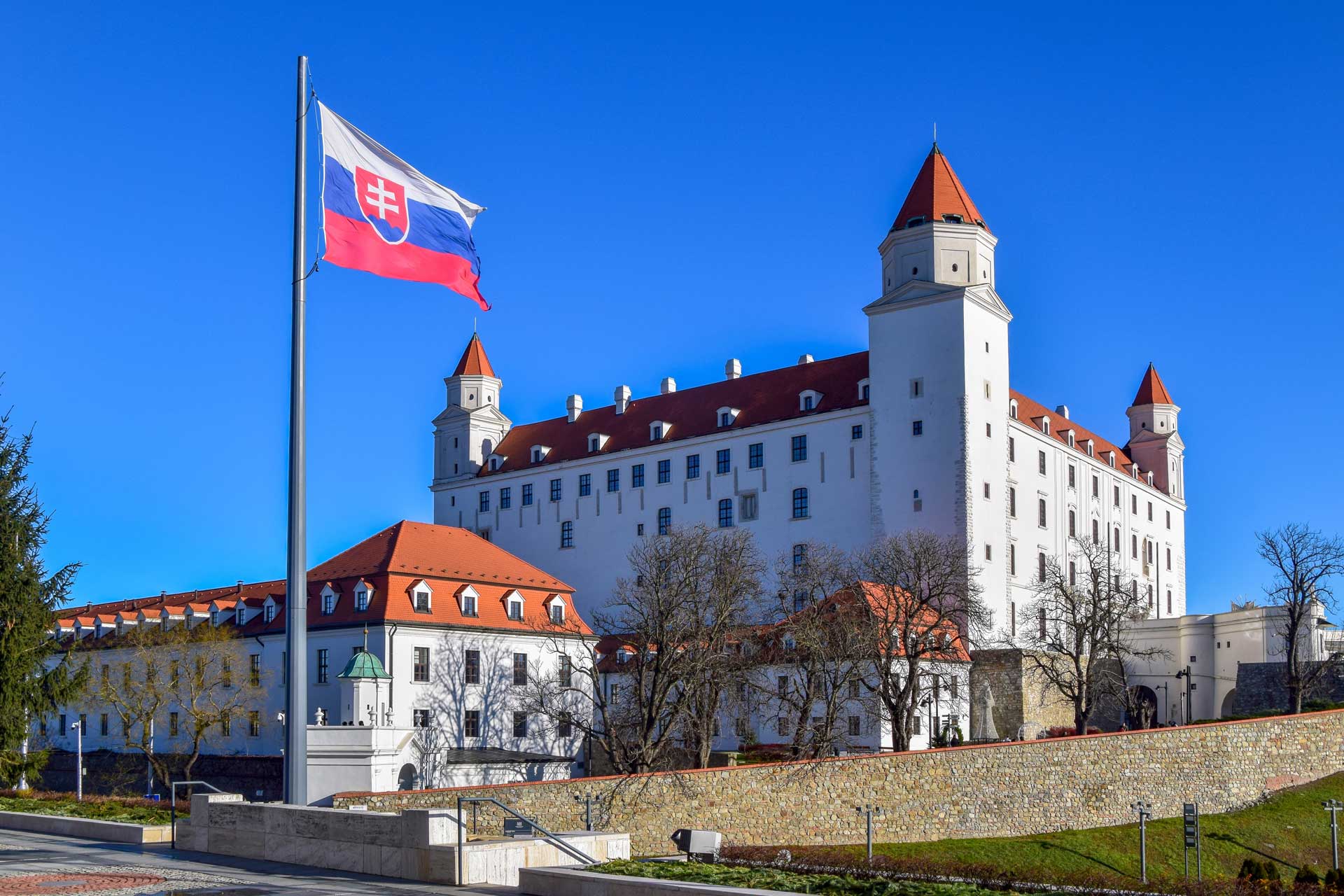
Slovak citizenship is attracting more and more foreigners seeking to take advantage of European Union citizenship status. Slovak citizenship provides a full range of rights — from freedom of movement across Europe to social protection and the ability to participate in the country’s political life. In this article, we will explain who is granted a Slovak passport, how to obtain it legally, and how long the process takes in 2026. We will also compare citizenship with other statuses (temporary residence permit and permanent residence) and explain why the Slovak passport is so highly valued. This material will be useful for businesspeople, families, students, and anyone planning immigration to Slovakia.
Advantages of Slovak Citizenship
A holder of a Slovak passport gains a wide range of rights and privileges. Below are the key advantages provided by a Slovak citizen’s passport:
- Freedom of movement and residence. Slovak citizenship automatically makes you a citizen of the EU. You can live and work in any European Union country without additional permits. Unlike holders of a temporary residence permit or even permanent residence, a citizen is not limited by length of stay and is not tied to a single country. This opens access to the entire EU labor market and gives priority in employment over foreigners with temporary statuses.
- Visa-free travel worldwide. A Slovak passport provides visa-free or simplified entry to more than 170 countries. These include all European states, many countries in Latin America, the Caribbean, Oceania, and Asia. For travel to the United States and Canada, it is sufficient to obtain electronic authorization (ESTA/ETA). Thus, Slovak citizenship significantly expands travel opportunities.
- Social benefits and healthcare. Slovak citizens enjoy full state protection and are entitled to social security. You will have access to social benefits, allowances, and pensions provided by law, as well as the public healthcare system. In addition, as an EU citizen you can obtain a European Health Insurance Card, which allows you to receive medical care in any EU country (as well as in the United Kingdom, Switzerland, Norway, Iceland, and Liechtenstein).
- Education and children’s development. Citizens have access to European universities on equal terms with local students. Slovakia offers relatively low tuition fees with high-quality education, and a Slovak passport increases the chances of admission to leading universities. Children of Slovak citizens automatically receive Slovak citizenship at birth, which means the ability to pass all these advantages on to future generations.
- Business and banking services. With Slovak citizenship, you can freely establish business projects in any EU country. You can choose the jurisdiction with the most favorable taxation for your business. It is also easier for citizens to use the banking system: opening accounts with major banks, obtaining loans on favorable terms, and investing throughout Europe.
- Political rights and security. Citizens have the right to vote in elections and referendums, as well as to run for elected office in Slovakia. A Slovak passport provides access to consular protection and assistance abroad. In addition, citizenship status is permanent and does not depend on conditions like temporary or permanent residence. It is difficult to lose, which ensures greater legal security. For example, if a permanent resident leaves the country for a long time, their status may be revoked, while Slovak citizenship is retained for life (except in cases of voluntary renunciation).
Overall, Slovak citizenship provides all the rights of native residents of the country and the entire EU. Unlike temporary or permanent residence, a Slovak passport opens truly unlimited opportunities for living, working, studying, and traveling.
Get a free consultation on the Slovak citizenship application process
Fill in the short form below and a Mycitizenagency specialist will contact you as soon as possible
Who Is Eligible for Slovak Citizenship?
The Slovak Citizenship Act defines the categories of persons who have the right to apply for naturalization or to obtain citizenship on other legal grounds. Below are the main categories of applicants:
- Children born to Slovak citizens. Any child with at least one parent who is a citizen of Slovakia automatically acquires Slovak citizenship by birth, regardless of the place of birth. This is the principle of citizenship by descent (jus sanguinis), which guarantees the transfer of citizenship to children of Slovak citizens. In addition, children born on the territory of Slovakia to foreign parents may also acquire citizenship by place of birth, but only in special cases — if the child’s parents are unknown or if neither parent holds any citizenship. For example, a newborn found on Slovak territory with unidentified parents automatically becomes a citizen of the country. However, simply giving birth in Slovakia does not grant citizenship to foreigners; the specified conditions must be met.
- Descendants of Slovaks (by origin). Persons of Slovak origin are entitled to apply for citizenship. This applies to descendants of former citizens of Czechoslovakia or Slovakia. If an applicant can prove that their parent, grandparent, or great-grandparent was a citizen of Czechoslovakia and was born on the territory of present-day Slovakia, this constitutes grounds for obtaining citizenship by origin. Citizenship may also be restored under a simplified procedure for individuals who previously held Slovak citizenship and lost it following the dissolution of Czechoslovakia. Such applicants are usually required first to obtain the status of a Slovak living abroad (a repatriate certificate), after which they may apply for a passport based on their roots. The law explicitly provides for the granting of citizenship to a person who has at least one ancestor (parent, grandparent, or great-grandparent) who was a citizen of Czechoslovakia and born on Slovak territory. This provision effectively enables the repatriation of descendants of emigrants. However, if you do not have Slovak roots, this pathway is not available.
- Foreigners residing in Slovakia (naturalization). Most immigrants obtain citizenship through naturalization, meaning after a long period of lawful residence. The basic requirement is continuous residence in Slovakia for at least 8 years as a permanent resident immediately prior to submitting the application. In practice, this means first obtaining a temporary residence permit, then permanent residence after 5 years, and only after an additional 3 years becoming eligible to apply for citizenship (approximately 8 years of residence in total). This standard pathway is available to all who meet the residence and integration requirements. Further details on these requirements are provided below in the section on naturalization.
- Spouses of Slovak citizens (through marriage). Foreign nationals who marry a Slovak citizen may obtain citizenship under an accelerated procedure. The law requires the applicant to be in a valid marriage and to have lived together in Slovakia for at least 5 years prior to submitting the application. Only if these conditions are met (and provided the marriage is not fictitious) may the foreign spouse apply for a Slovak passport after five years of marital residence. If the marriage ends earlier or is found to be fraudulent, citizenship will be denied.
- Investors and contribution to the economy. In some countries, citizenship can be obtained through investment; however, it is not possible to purchase Slovak citizenship directly in 2026, as no such state program exists. Nevertheless, the law provides for the possibility of honorary citizenship for exceptional contributions to the state. The Slovak government may reduce the requirements or grant citizenship immediately to individuals who have made a significant contribution to the economy, science, culture, sports, or another important sector of the country. For example, major investors, philanthropists, distinguished scientists, or world-class athletes may theoretically receive a passport for exceptional merit. Such cases are rare and considered individually — the state determines whether the contribution is sufficient. There is no standard investment-based citizenship program in Slovakia, but if you have done something truly exceptional for the country, you may petition for simplified naturalization.
- Children and adoption. Adoption should be mentioned separately. A child adopted by Slovak citizens automatically acquires Slovak citizenship from the moment of adoption. This applies both to foreign orphans and to children who gain Slovak adoptive parents. In addition, minor children of a parent who has naturalized and become a citizen are usually also entitled to obtain citizenship together with that parent. The law allows children to be included in the parent’s application or to have their status processed under a simplified procedure, provided the other parent does not object.
- Special categories. There are also specific cases. For example, persons with refugee status: individuals granted asylum in Slovakia may apply for citizenship after 4 years of residence in the country, a reduced period due to their vulnerable status. Another category includes military personnel: although Slovakia does not have a formal “citizenship for service” program, in certain situations foreigners who voluntarily join the military or rescue services may be granted citizenship for services rendered to the state. However, these are exceptions rather than the rule.
As shown above, the range of eligible applicants is quite broad — from descendants of Slovaks to long-term foreign residents. It is crucial to correctly identify the legal basis on which you may apply for citizenship (marriage, naturalization, origin, etc.) and to ensure that you meet all the required criteria.
Ways to Obtain Slovak Citizenship
The legal paths to obtaining Slovak citizenship are divided into several main categories. Below is a detailed overview — from citizenship by birth to naturalization.
Citizenship by Birth (Right of Blood and Soil)
The simplest case is birth into a family of Slovak citizens. As mentioned above, if at least one parent is a citizen of Slovakia, the child automatically becomes a Slovak citizen. The place of birth does not matter: a child of Slovak parents born abroad will still acquire Slovak citizenship by descent.
Citizenship is also granted at birth on the territory of Slovakia to children whose parents are unknown, who are stateless persons (apatrids), or who are foreigners unable to pass their citizenship on to the child. For example, if both parents are foreign citizens, a newborn usually acquires the citizenship of the parents. However, if the parents cannot transmit their nationality (which may occur due to legal conflicts) or are not identified at all, the principle of citizenship by place of birth applies, and the child acquires Slovak nationality.
It is important to understand that this route is unavailable to most foreigners. It applies either to children of Slovak citizens or to exceptional cases involving newborns. Simply being born on Slovak territory is not sufficient for citizenship if the child already has the citizenship of the parents. Therefore, other pathways are more relevant for immigrants.
Citizenship by Origin (Repatriation of Descendants)
Slovak citizenship by descent may be obtained by individuals of Slovak or Czechoslovak origin. The law provides for simplified naturalization for those whose parents, grandparents, or great-grandparents were citizens of Czechoslovakia and were born on the territory of present-day Slovakia. This category also includes former citizens of Slovakia who lost their citizenship in the past (for example, those who emigrated and were deprived of their passport before or after the dissolution of Czechoslovakia).
How does this work in practice? Typically, an applicant must first obtain the status of a Slovak living abroad (the Slovak Living Abroad Certificate) through a consulate or Slovak authorities. To do so, the applicant must prove their Slovak ancestry by providing genealogical documents and archival certificates confirming the birth and citizenship of an ancestor in Slovakia. Holders of this certificate receive benefits, including the right to obtain a temporary residence permit under a simplified procedure without proving income or language proficiency, and, most importantly, the ability to apply for citizenship after three years of residence in Slovakia instead of eight. If such a foreign Slovak has made a significant contribution to the diaspora or Slovak culture, the three-year residence requirement may be waived entirely, allowing the applicant to apply for citizenship immediately after obtaining residence status. Thus, repatriation based on confirmed origin is one of the fastest pathways, but it is available only to descendants of Slovaks.
It should be noted that when applying based on origin, although the residence requirements are reduced, document verification is still carried out and basic knowledge of the Slovak language may be required (unless the applicant qualifies for exemptions discussed later). In any case, this route is intended for a narrow group of individuals with documented Slovak ancestry.
Naturalization (Through Long-Term Residence)
For most foreigners, the practical path is naturalization, meaning the acquisition of citizenship after long-term residence in the country. This method is the longest and most demanding, but also the most universal. The main requirements for standard naturalization are: permanent residence for at least 8 years, absence of legal violations, integration and knowledge of the language, financial self-sufficiency, and renunciation of current citizenship (this requirement is no longer as strict as before, but it should still be taken into account).
Naturalization is the longest route to citizenship and requires the consistent completion of all stages of immigration. First, you obtain a long-term entry visa (if required), then a residence permit (usually on the basis of employment, business, studies, or family), extend the temporary residence permit, apply for permanent residence after 5 years, and only after accumulating the required period of residence can you apply for citizenship. Throughout this time, you must comply with migration rules (not leaving the country for longer than permitted, renewing documents on time, and maintaining legal status). The reward for patience is a Slovak passport.
Through Marriage to a Slovak Citizen
Marriage has already been partially discussed, as it effectively falls under accelerated naturalization. To reiterate the key points: the spouse of a Slovak citizen may apply for citizenship after 5 years of joint residence in the country. These five years are counted from the moment a residence permit is obtained on the basis of marriage and residence under that permit. It is necessary to remain married to the same person for the entire five-year period, be registered at the same address, and maintain a shared household. Naturally, the marriage must be genuine and not fictitious — migration authorities carefully verify this (visiting the family, interviewing neighbors, etc.). If the marriage is found to be fictitious, citizenship will be denied and the residence permit may be revoked.
The process of obtaining citizenship through marriage is the same as with standard naturalization, except that the required period of residence is shorter. All other requirements (knowledge of the language, absence of a criminal record, sufficient income) also apply. In addition, a foreign spouse is not exempt from the language exam simply because they live in a family — they must still demonstrate integration. It usually makes sense to prepare citizenship documents for a spouse once the marriage has reached the required duration and permanent residence has been obtained through family reunification.
Investments and Special Merits
As noted, it is not possible to purchase Slovak citizenship directly — neither with money nor through real estate. There is no program similar to the “golden passports” offered in other countries. However, the government may grant citizenship on an exceptional basis for services rendered to the country. This route cannot be planned or guaranteed in advance; the initiative usually comes from the authorities.
Examples of such cases include well-known athletes who wish to represent Slovakia and are sometimes granted citizenship without many years of residence. Similarly, successful investor-businesspeople who create a large number of jobs may be granted reduced time requirements. Slovak law explicitly states that the eight-year residence requirement may be waived if a person has made a significant contribution to the economy, science, technology, culture, the social sphere, or sports. Parliament may also adopt a special act granting citizenship to a specific individual “in the interests of the country.”
However, it should be emphasized again that this is an exception and should not be relied upon as a mass pathway. If you believe you have outstanding merits (for example, you are a world champion, a major investor, or a scientist of international standing), you may, through attorneys, apply to the competent Slovak authorities with appropriate justification. You may be offered the option to first obtain a residence permit for special merits and then citizenship under an accelerated procedure. In any case, there is no standard procedure whereby “invest a certain amount and receive a passport.” At a minimum, even with a positive outcome, you would be granted permanent residence without a prior residence period (immediately), and citizenship may then be granted on the basis of that permanent residence at the discretion of the Ministry of the Interior or the President.

Find out how to obtain citizenship faster
Procedure for Obtaining Slovak Citizenship
Once the grounds for citizenship have been determined, it is important to understand the step-by-step algorithm of how the application process works. In general, the process looks like this:
- Preliminary verification of eligibility. First, assess whether you are entitled to apply for citizenship. You must make sure that all conditions are met: the required period of permanent residence, a valid permanent residence permit, the necessary duration of marriage, and so on. At this stage, many people carry out a self-check (there are even online tests and consultation questionnaires). It is best to consult an immigration lawyer to avoid applying prematurely. If certain documents or conditions are missing, they should be addressed first. For example, if you have not yet completed the required 8 or 5 years of residence, it is too early to apply; if you do not have a language certificate, it is worth obtaining one in advance.
- Collection and preparation of documents. Next comes the collection of documents for the applicant’s file. The standard set includes: the applicant’s international passport and ID card (if available), birth certificate, documents confirming current citizenship (usually a certificate from the embassy or an internal passport), documents confirming marital status (marriage or divorce certificate, children’s birth certificates if they are also applying), residence permit (permanent residence card), criminal record certificates from Slovakia and from all countries where you have lived for more than 6 months*, documentary proof of integration — including certificates confirming no tax arrears, no outstanding social insurance debts, and proof of income (for example, a salary certificate from an employer or a bank statement). Standard-format photographs, proof of payment of the state fee, and a completed citizenship application form (questionnaire) are also attached. All foreign documents (certificates, statements) must be translated into Slovak and notarized, possibly with an apostille. Translations must be done by a certified court translator in Slovakia, otherwise they will not be accepted. Collecting the documents can sometimes take several months, especially if certificates must be requested from abroad.
- Submission of the application. The completed application must be submitted by the applicant in person. In Slovakia, the competent authority is the district office of the Ministry of the Interior (the department dealing with citizenship and migration) at your place of residence, or you may submit it through a Slovak consulate abroad (for example, if you have permanent residence but are temporarily living outside the country). Online submission is not accepted — original documents and personal appearance are required. During submission, your identity will be verified and the document set will be checked. The receiving authority does not return the documents until the process is completed, so make copies in advance. The applicant questionnaire (Dotazník k žiadosti o udelenie štátneho občianstva) is filled out on site, where you answer questions about yourself, your family, motivation, income, and so on. This questionnaire is also part of the exam — it is in Slovak, and the officer checks how you handle completing it.
- Interview and exam. After submission (sometimes on the same day, sometimes scheduled separately), an interview with a commission takes place. A commission of three people (employees of the Ministry of the Interior or the consulate) asks questions to assess language proficiency and basic knowledge. As mentioned earlier, you will need to introduce yourself in Slovak and answer questions about the history, geography, and state structure of Slovakia. Then you will be asked to read a short article in Slovak aloud and, after 30 minutes, write down its content in your own words. If you are nervous about the exam, you can find questions and answers for Slovak citizenship from other applicants’ experiences (forums often share what topics were asked) or take online tests for preparation. There are even preparation courses for the citizenship exam — for example, the iCan school in Bratislava offers a 30-hour course covering history, culture, and language necessary to successfully complete the interview. Remember that the outcome of the interview significantly affects the decision in your case. If you are exempt from the language exam for objective reasons (age, Slovak living abroad status, etc.), the interview may be a formality — but you still must appear in person to confirm your identity and answer the basic questions in the questionnaire.
- Waiting for a decision. After submitting documents and completing the interview, the review period begins. The file is sent for verification to the Slovak Ministry of the Interior (citizenship department). Multi-stage checks are carried out there: requests to the police, security services, tax authorities, municipalities (if necessary), and so on. The authenticity of documents, your conduct during the period of residence, and your integration are reviewed. This can take a significant amount of time. The official review period is not directly set by law, and in practice the process may take from 6 months to 1–2 years. Based on experience, it usually takes around one year. However, delays occur — for example, if additional information is needed or there is a large backlog of applications. During this time, you are not prohibited from traveling abroad or changing jobs; however, it is important to maintain a valid temporary or permanent residence permit until the very end (you must not become undocumented). You can periodically check the status of your case with the Ministry of the Interior, but it is not advisable to bother them too often. The decision is discretionary (not guaranteed) — even if you meet all the conditions, you do not have an automatic right to citizenship. However, if all requirements are met, refusals are rare.
- Decision and oath. Once a decision is made, you will be notified in writing. If approved, you will receive an invitation to take the citizen’s oath. The oath is a mandatory final step (without it, citizenship does not take effect). The ceremony usually takes place at the district administration or the city hall, where, in the presence of an official, you read an oath of allegiance to the Slovak Republic and sign the relevant act. You will be issued a Certificate of Citizenship (Osvedčenie o štátnom občianstve) — a document confirming that you have become a citizen. From that moment, you officially acquire Slovak citizenship. If there were conditions regarding renunciation of your previous citizenship, you are usually given 6 months to present proof of renunciation (but this is individual). If citizenship is refused, you will be informed of the reasons. The most common reasons for refusal are discovered false information or forged documents, or failure to meet certain requirements (for example, a criminal record, significant debts, or long-term absence from the country). In case of refusal, you do not lose your temporary or permanent residence status; they remain valid independently. You have the right to submit a new application after 2 years or appeal the refusal if you believe it is unlawful.
- Passport issuance. After taking the oath and receiving the certificate, you must obtain a Slovak international passport. Slovakia does not issue an internal civil passport, as an ID card is used instead, but you will receive it later. First, you apply for a biometric international passport. To do this, you submit an application at a police office (document department). Your fingerprints will be taken, you will be photographed on site, and you will pay the fee (typically around €40 for standard processing). The passport is produced in about 2–4 weeks, and you can pay extra for expedited issuance within 2 working days. You collect the passport in person by presenting identification. From that moment, you are a full citizen of Slovakia and the EU with all documents. Your previous foreign documents (residence permits, foreign passport) should be surrendered or annulled if this was required.
- Additional steps. After receiving the passport, do not forget to resolve issues related to dual citizenship (if relevant). For example, citizens of certain countries (Russia, Ukraine, etc.) must notify their authorities about acquiring another citizenship or complete a formal renunciation procedure. You also need to obtain the Slovak citizen ID card — it is usually issued right after the passport, at the same police office. The ID card is issued within 30 days and serves as an internal identity document. In addition, the new citizen must register in the social and health insurance systems as a citizen (if previously they had a different status). Essentially, a new life begins in the status of a citizen.
By following these steps and preparing carefully for each stage, you significantly increase your chances of success. Numerous immigrant reviews confirm that the main reasons for failure are haste and inattention to requirements. For example, an incomplete set of documents or errors in the questionnaire may lead to refusal. Therefore, devote maximum attention to preparation or entrust it to professionals.
Requirements and Conditions for Obtaining Slovak Citizenship
Let us summarize the key requirements for applicants for Slovak citizenship. Regardless of the grounds, each applicant must meet a number of conditions established by law:
- Long-term legal residence. It is required to hold permanent residence status for at least 8 consecutive years immediately prior to applying. In accelerated cases, the required period is shorter: 5 years in marriage to a citizen, 4 years of residence for refugees, 3 years for children born in Slovakia or who arrived in childhood, and so on (see the section “Who Is Eligible”). Without meeting the residence period requirement, the application will not even be accepted.
- Stable source of income and housing. The applicant must have a stable income and a place of residence. This is verified indirectly: for example, in order to obtain permanent residence, you have already demonstrated income, housing, and health insurance. When applying for citizenship, updated documents may be requested again: an employment certificate or bank statement, proof of property ownership or a lease agreement, and an insurance policy. Financial self-sufficiency demonstrates your integration into society and your ability to support yourself.
- Impeccable reputation (no criminal record). You must prove your good standing under the law. For this purpose, criminal record certificates from Slovakia and from countries of previous residence are submitted. The Ministry of the Interior also checks whether you were under investigation or violated residence regulations. A criminal record (especially for serious offenses) almost certainly leads to refusal. Minor past violations (such as traffic fines) are usually not critical, but it is better to have none at the time of application. At least 5 years must have passed since the conviction was expunged, if there was one.
- Fulfillment of civic obligations. At the time of application, the applicant must have no unpaid taxes, alimony debts, fines, or other mandatory payments. Data from the tax office and social insurance fund are checked. The presence of debts is grounds for refusal, as it constitutes a violation of the law. Authorities also check whether you have evaded payment of social contributions, pension contributions, health insurance, and so on. An immigrant must be a conscientious taxpayer.
- Integration and loyalty. It is verified that you respect the laws and public order of Slovakia and do not pose a threat to state security. For example, participation in extremist organizations or deportation from another country for violations will negatively affect the application. Loyalty to the country must be confirmed: the oath you take includes a pledge to observe the Constitution and laws.
- Knowledge of the Slovak language and basics of society. As described in detail above, you must demonstrate knowledge of the state language during the interview. The level of language proficiency must allow you to communicate in everyday situations and understand questions about the country. In addition to language skills, general knowledge about Slovakia is tested — history, culture, and state structure. Certain categories are exempt from this exam (children under 14, elderly persons over 65, holders of a Slovak Living Abroad certificate, highly qualified specialists, and special cases), but most applicants must pass it. Prepare for the interview: study Slovak history, key dates, national symbols, the names of the president and prime minister, and the territorial structure. Applicants are often asked why they decided to become citizens — prepare an honest and positive answer.
- Renunciation of previous citizenship (in certain cases). Although Slovakia is moving toward a more flexible policy on dual citizenship, the Slovak Citizenship Act still contains a requirement of single citizenship. In practice, the current rule is that dual citizenship is allowed only if the second citizenship was acquired involuntarily (by birth). If you are naturalizing, you may be required to renounce the citizenship of your country of origin. In 2026, following changes to international agreements, citizens of Russia and Hungary will be able to retain both citizenships, whereas previously they were required to choose one. For citizens of other states, the situation depends on their national legislation and Slovak amendments. At present, when taking the oath, you officially sign a statement acknowledging that the acquisition of Slovak citizenship may result in the loss of your previous citizenship. In some cases, you must provide proof of renunciation of your original citizenship before receiving a Slovak passport. This is a complex issue that should be clarified individually with a lawyer. Overall, Slovakia does not seek to create stateless persons, so if renunciation of previous citizenship is impossible or extremely difficult, it may be permitted to retain it. Nevertheless, be prepared to fulfill this requirement if it is imposed.
In summary, the conditions for obtaining Slovak citizenship can be reduced to the formula: a sufficient period of residence + law-abiding conduct + integration. If these criteria are met, your chances are very high. If something is missing, it is wiser to postpone the application until all requirements are fulfilled in order to avoid refusal.
To avoid mistakes, refusals, and wasted time, schedule a consultation with an immigration lawyer. Our specialist will help determine the appropriate legal grounds, prepare the required documents, and guide you through the procedure as correctly and efficiently as possible.
Timeframes and Costs of the Application Process
How long does it take to obtain Slovak citizenship and how much does it cost? Let us review the timeframes and main expenses:
- Minimum residence period. As established above, the standard naturalization route requires approximately 10 years of total residence: first 5 years to obtain permanent residence, plus 3 years with permanent residence status, plus up to one year for the citizenship application to be reviewed. In simplified cases, the timeframes are shorter: through marriage — approximately 5–6 years (including application review), by origin — approximately 3–4 years, and for refugees — approximately 4–5 years. However, periods shorter than 4 years (except for children) are practically unheard of. Even in cases of exceptional merit, several years of residence or at least obtaining a residence permit is usually required. Thus, it is not possible to become a Slovak citizen quickly (within one or two years), unless you were born to Slovak parents. Most immigrants should realistically plan for about a decade from the start of immigration to receiving a passport.
- Application processing times. Temporary residence permits in Slovakia are usually issued within up to 90 days from the submission of documents. Permanent residence permits are also processed within approximately 90 days (3 months). Citizenship applications take longer: by law, the Ministry of the Interior is not required to decide within a fixed deadline. In practice, decisions are usually made within 6–12 months, but the process may extend to up to 2 years, especially if security checks are required. Relocation communities often note that the citizenship granting procedure can last a couple of years, and the entire journey “from zero to passport” takes around 10 years. If you have not received a response one year after submission, this is normal. If more than two years have passed, it is advisable to submit an official inquiry regarding the status of your case.
- State fees and official charges. The immigration process is divided into stages, each of which involves fees. Approximate government fees are as follows. Issuance of a national D visa (if required for relocation) — €60. Application for a temporary residence permit — from €35 to €240 (the amount depends on the grounds: approximately €100 for family reunification, around €232 for business, €35 for studies, €165 for employment, etc.). Application for permanent residence — a state fee of €165. Citizenship application — €700 for adults. For adolescents aged 15–18, the fee is reduced to €150, and for children under 15 — €100. Thus, the citizenship application itself is the most expensive single stage. Payments are made via fee stamps (receipts) or by card at the government office.
- Additional expenses. In addition to state fees, a significant portion of costs comes from related services. Translations and notarization of documents. All foreign documents require certified translation. Translating one document costs approximately €20–30, and notarizing a copy costs about €5–10 per page. On average, the full document package amounts to several hundred euros. Medical certificate and insurance. For a temporary residence permit, a medical certificate confirming the absence of dangerous diseases is required (approximately €100), as well as a Slovak health insurance policy (cost varies, approximately €250–500 per year). Legal and agency services. If you engage consultants to assist with obtaining citizenship, these services are paid. The cost of legal support depends on the firm and the scope of services and typically starts from €1,000 and above. Living expenses in the country. This is an indirect but the most significant cost item — you must live in Slovakia for several years, spending money on rent, food, and taxes. Slovakia is relatively affordable by European standards, but sufficient funds are still required.
In summary, the cost of Slovak citizenship is driven not so much by state fees (approximately €1,000 in total across all stages for one adult) as by the effort, time, and expenses associated with residence and integration. Compared to “citizenship by investment” programs in other countries (which may require investments of €100,000 or more), the Slovak pathway is financially more accessible but requires a significant investment of time and strict compliance with conditions.
The timeframes are also substantial — be prepared to wait. If someone promises a “Slovak passport in one year,” this is unrealistic and most likely a scam. The actual naturalization period is strictly regulated by law — in standard cases, at least 8 years of residence are required. Even under accelerated routes, it rarely takes less than 3–5 years. Therefore, plan your immigration realistically and well in advance.
Check your chances of getting a passport in Slovakia free of charge
Leave a request for a free consultation with an immigration specialist at your convenient time
Dual Citizenship: Is It Possible to Keep a Second Passport?
The issue of dual citizenship in Slovakia is very important for many immigrants. Historically, Slovakia took a rather strict approach to this matter: starting in 2010, a ban on dual citizenship was in effect, introduced after a conflict with Hungary regarding the issuance of passports to the Hungarian minority. The law stated that any Slovak citizen who voluntarily acquired the citizenship of another country would automatically lose Slovak citizenship. As a result, between 2010 and 2021, 3,738 Slovaks lost their citizenship after obtaining a second passport. This primarily affected those who naturalized in the Czech Republic, Germany, Austria, the United Kingdom, the United States, and other countries.
However, in recent years Slovakia has softened this policy. In 2021–2022, amendments to the citizenship law were adopted, expanding the possibilities for dual citizenship in certain cases. What has changed:
- Slovaks long residing abroad may now obtain a second citizenship without losing Slovak citizenship if, at the time of acquiring the new citizenship, they had officially resided in that country for at least 5 years. In other words, emigrants are allowed to become dual citizens provided they have lived abroad for a long period. There are even plans to reduce the required period of residence abroad from 5 to 2 years, but for now the basic rule remains 5 years.
- Automatic retention of citizenship for children from mixed marriages. Previously, there were international agreements (with Russia in 1980 and with Hungary in 1961) under which children with one Slovak parent and one parent who was a citizen of Russia or Hungary were required to choose one citizenship and renounce the other. In 2024, the Slovak government decided to withdraw from these agreements. This means that children in Russian–Slovak and Hungarian–Slovak families will now be able to hold two citizenships simultaneously. The new rule will also apply to adults.
- Foreigners undergoing naturalization may retain their original passport if their case falls under the new amendments. This means that the requirement to renounce previous citizenship is abolished in most cases. In particular, the amendments allowed former Slovak citizens who had previously lost their citizenship to regain it, and also simplified the acquisition of citizenship for persons of Slovak origin (who are not required to renounce their existing citizenship at all).
In practice, in 2026 the situation is as follows: dual citizenship is not formally encouraged, but it is also not strictly prohibited. If you acquire Slovak citizenship without notifying your country of origin, Slovakia will not automatically deprive you of your other citizenship. Many new citizens continue to use the passport of their country of birth, especially if it is an EU country (for example, the Czech Republic or Poland, where dual citizenship is permitted). The situation is more complicated if your home country prohibits dual citizenship — in that case, you will have to decide which passport to keep.
In any case, the Slovak authorities are now more tolerant toward dual citizenship than they were 10 years ago. Nevertheless, it is recommended to clarify the current policy when submitting an application in order to avoid violating the law. You may need a lawyer’s consultation, especially if the matter involves countries with restrictions (for example, Germany requires renunciation of previous citizenship, and Slovakia will not object to this — you will have to choose).
In conclusion, the official position for a long time was against dual citizenship, but since 2022 the law has been softened. Many new citizens retain their original citizenship. By the summer of 2026, Slovakia will abolish the remaining obstacles (old agreements), making it easier to hold two passports. However, remember the possible risks: holding dual citizenship may entail dual obligations (for example, double taxation, depending on the countries) and technical complications (the need to manage both passports, visa regimes, and the fact that not all countries recognize a second passport). Overall, dual citizenship in Slovakia in 2026 is no longer a taboo, but rather a manageable administrative issue.
Obtaining Slovak citizenship is a long, but highly valuable process. By becoming a citizen, you gain all the advantages of the EU, full freedom of movement, and social protection. Slovak citizenship gives you the right to live and work indefinitely in any European Union country on the same terms as local residents. Holders of a Slovak passport have the same opportunities as citizens of France, Germany, Italy, and other developed European countries. This is a major advantage for you and your children.
However, there are challenges on the path to a passport. The main difficulties are the long waiting period and bureaucracy. You need patience and careful attention: strictly comply with immigration rules during the years of residence, prepare documents thoroughly, and learn the language. Common mistakes to avoid include:
- Rushing the application. If you apply before reaching the required residence period or without meeting a requirement, you will almost certainly be refused. It is better to double-check everything than to receive a formal refusal and lose a couple of years.
- Incomplete or incorrect documents. Even a minor inaccuracy (for example, an error in translation or an expired certificate) can delay the case or lead to refusal. Collect the full set of documents in accordance with the current Ministry of the Interior list and check them several times.
- Lack of language and cultural knowledge. Underestimating the interview is risky. There have been cases where strong candidates were refused because they failed the interview (they barely spoke Slovak). Start learning the language in advance, communicate with native speakers, and review sample questions so you do not lose confidence.
- Ignoring legal advice. Migration legislation changes (for example, recent amendments on dual citizenship). If you are unsure about the nuances, consult a lawyer specializing in immigration. A good specialist will help take individual circumstances into account and avoid serious mistakes in the application.
In 2026, Slovakia is trying to make the naturalization process more flexible and humane (especially for Slovaks living abroad and well-integrated foreigners). This is good news for applicants. Nevertheless, each application is reviewed carefully, and the approach must be as serious as possible.
⚖️Recommendation: before starting the process, analyze your chances and grounds. If you do not yet meet the criteria, it may be better to wait or choose a different immigration pathway (for example, try obtaining citizenship of another EU country through a simplified program and then move to Slovakia with it). If your grounds are sufficient, prepare for the procedure as one of the most important projects of your life. Then the result in the form of a Slovak passport will certainly repay all your efforts.
Frequently Asked Questions about Slovak citizenship
We have compiled answers to the most common questions about obtaining Slovak citizenship. If you did not find the information you were looking for or want to learn more about the requirements, timelines, and benefits of Slovak passport, contact us for a free consultation.
No, applications are submitted only in person. The application must be signed personally in the presence of an authorized official. In Slovakia, documents are submitted to the district office of the Ministry of the Interior, and abroad — at a consulate. There is no online portal for submitting citizenship applications. This is due to the need to immediately verify language skills and the authenticity of documents. Therefore, you must appear in person with the original documents. However, you may complete the application questionnaire in advance (the form is available on the Ministry of the Interior’s website) and bring it with you. The application becomes valid only after your personal appearance and interview.
Formally, there is no separate exam, but there is an interview with a commission, which essentially functions as an exam. During it, your ability to speak Slovak and your knowledge of Slovakia’s history, geography, and political system are assessed. In addition, you are asked to read an article and write a brief summary of it — this is a test of language skills. There is no need to memorize dates and laws as in some countries (for example, the U.S. citizenship test), but general knowledge is checked. If you are under 14 or over 65 years old, or if you have certain exemptions provided by law, you may be exempt from the interview. Others need to prepare: improve their language skills to a conversational level and study Slovak history. The interview is conducted orally, in a friendly atmosphere, and lasts about 30–60 minutes.
No, it is not necessary. Unlike a residence permit, Slovak citizenship is a permanent and unconditional status. You may freely leave and live in any country in the world — your Slovak passport will remain valid. Citizenship may be revoked only in two cases: if you voluntarily renounce it, or if it is discovered that you obtained it fraudulently (for example, using forged documents). Living abroad does not lead to loss of citizenship.
No, not directly. Slovakia does not sell its citizenship in exchange for investments. There is no program where you can pay a certain amount or purchase property to become a citizen immediately. Investments may help indirectly: for example, if you are an investor, it may be easier to first obtain a business residence permit, then permanent residence, and only afterward citizenship under general rules. However, investments do not shorten the naturalization period.
No, a visa is not required. Slovak citizens may enter the United States without a visa for up to 90 days under the Visa Waiver Program by obtaining an electronic ESTA authorization before travel.
No, obtaining Slovak citizenship is not easy. It usually requires 8 years of permanent residence, knowledge of the Slovak language, a clean criminal record, and a successful interview. It is easier for those who have Slovak roots or are married to a Slovak citizen.