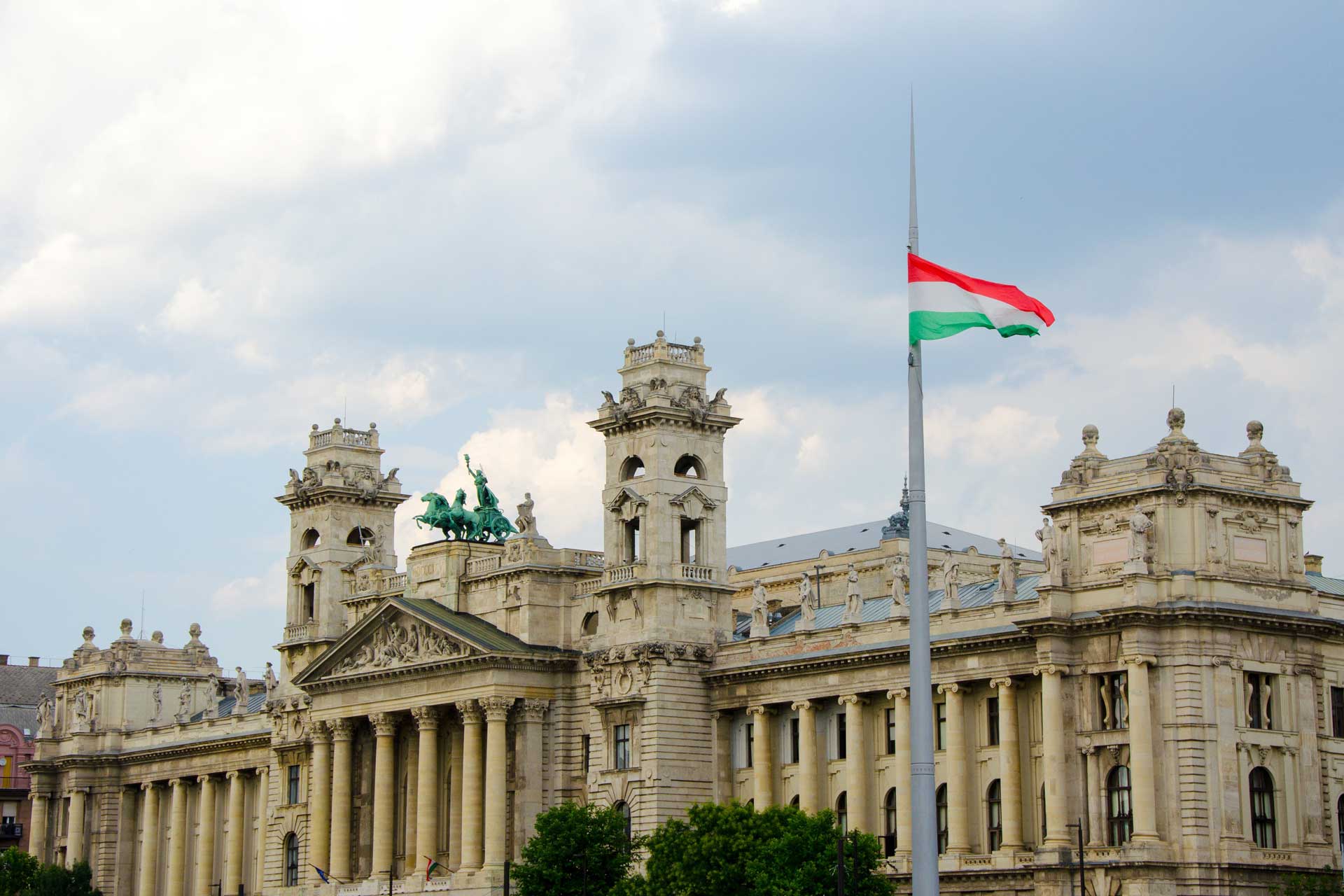
Hungarian citizenship is considered one of the most attractive in Europe due to its status as citizenship of the European Union and all the opportunities that come with it. With a Hungarian passport, you automatically become an EU citizen, which gives you access to live and work in any EU member state. This makes the Hungarian passport highly sought after by various categories of immigrants — from entrepreneurs and investors to students and families with children. Many see it as a way to ensure security, a high standard of living, and freedom of movement for themselves and their loved ones.
Hungarian citizenship offers significantly more opportunities than a temporary or even permanent residence permit. Temporary and permanent residence allow a person to legally stay in the country but do not grant the full range of rights. By contrast, a Hungarian passport provides access to political rights, state social programs, and guarantees the freedom to live and work in any European Union country without additional permits. In terms of rights and privileges, Hungarian citizenship is comparable to citizenship in other EU countries. At the same time, the application process has its own specific features, conditions, and requirements that should be taken into account in advance.
In this article, we take a detailed look at who is eligible for Hungarian citizenship, which pathways are available, how to legally obtain a Hungarian passport, how long the process takes, and what costs to expect. Special attention is given to the practical aspects of 2026, including recent legislative changes, common applicant mistakes, and important tips for achieving a successful outcome.
Advantages of Hungarian Citizenship
Obtaining Hungarian citizenship provides a number of significant advantages both within the country and beyond its borders. Below are the key benefits of holding the status of a Hungarian citizen:
- Visa-free travel worldwide. The Hungarian passport ranks among the strongest in the world in terms of mobility. Its holders can travel visa-free to approximately 170–173 countries, including all Schengen Area states. Starting in 2026, Hungarian citizens will also be able to enter the United States under the ESTA system without obtaining a visa, which is particularly convenient for tourism and business travel. In addition, Hungarian citizenship provides visa-free or simplified entry to countries such as Canada, the United Kingdom, Australia, and a number of other popular destinations.
- The right to live and work in any EU country. Hungary is a member of the European Union, which means its citizens can freely move, reside, and work in any EU country without additional permits. This opens up broad opportunities for careers and business across the EU. In addition, citizenship status is automatically passed on to children: a child born into a family of a Hungarian citizen will also become a citizen (by right of blood). Spouses and even parents of a Hungarian citizen may, over time, obtain a passport through family reunification programs.
- Social guarantees and healthcare. Citizens have full access to the public healthcare system in Hungary and other EU countries. Holders of a Hungarian passport are entitled to a European Health Insurance Card, which allows them to receive medical services free of charge or at a reduced cost in any EU state. Education for citizens is also available on preferential terms: children can study free of charge in public schools, and students can attend Hungarian universities (in the Hungarian language) or participate in Erasmus exchange programs throughout the EU. The state also provides other benefits, including allowances, pensions, and family support — all the entitlements granted to citizens.
- Access to European banking and business. As EU citizens, individuals can freely open accounts with European banks, hold funds in euros and other currencies, invest, and conduct business without additional bureaucratic barriers. Non-EU residents are often denied certain financial services, while Hungarian citizens have access to them. Hungarian citizenship also simplifies obtaining loans, purchasing real estate, and registering companies both within Hungary and in other parts of Europe.
- The possibility of holding multiple citizenships. Under Hungarian law, dual citizenship is permitted, and naturalization does not require renouncing previous citizenship. This means that foreigners can obtain a second Hungarian passport while retaining their original citizenship (provided that the laws of their home country allow it). Hungarian citizenship is compatible with the citizenship of other states, which favorably distinguishes Hungary from countries where dual nationality is prohibited.
As you can see, the advantages of a Hungarian passport make it highly valuable for those who plan to link their lives with Europe. Next, we will look at who exactly may qualify for this status and on what grounds.
Get a free consultation on the Hungarian citizenship application process
Fill in the short form below and a Mycitizenagency specialist will contact you as soon as possible
Who Is Eligible for Hungarian Citizenship
The range of individuals who are entitled to apply for Hungarian citizenship is quite broad. The 1993 Act on Citizenship (with subsequent amendments) sets out the main grounds for acquiring it. In 2026, the following categories of foreign nationals may obtain Hungarian citizenship:
- Descendants of Hungarians by origin. If an applicant has Hungarian roots (ancestors in the direct line were Hungarian citizens or belonged to the Hungarian ethnic group), they may apply for citizenship under a simplified repatriation procedure, even while residing abroad. This is sometimes informally referred to as Hungarian citizenship by descent, as the key requirement is proving Hungarian origin.
- Foreign nationals who have lived in the country for a long period (naturalization). The standard route involves moving to Hungary, obtaining a temporary residence permit, then permanent residence, and after completing the required period of residence, applying for citizenship. As a rule, individuals who have legally resided in the country for at least eight years may be naturalized. Shorter residence periods apply to certain applicants (for example, those married to Hungarian citizens or granted refugee status).
- Spouses of Hungarian citizens. Marriage to a Hungarian citizen does not automatically grant citizenship, but it does make it possible to apply after a certain period of shared life. In such cases, authorities take into account whether the family lives in Hungary or abroad and whether the couple has common children, as these factors affect the required timelines.
- Investors who have contributed to the economy. Hungary does not operate a direct “citizenship by investment” program, but major investors may obtain a residence permit through investment with the possibility of subsequent naturalization. In practice, this is a pathway through permanent residence: the investor first obtains long-term resident status based on economic investment and, after several years of residence in the country, may become a full citizen.
- Children born in Hungary. Unlike a number of countries, particularly in North and South America, Hungary does not apply the principle of full jus soli (right of the soil). This means that a child born to foreign nationals on Hungarian territory does not automatically acquire citizenship. However, the law provides for exceptions: Hungarian citizenship may be granted at birth if the child’s parents are unknown or if both parents are stateless persons permanently residing in the country. In addition, children of foreign nationals who are born in Hungary and have lived there legally for a long period may later qualify for preferential naturalization, with the required residence period reduced from eight to five years.
- Persons with special merits or ties. In certain cases, Hungarian citizenship may be granted by a decision of the authorities outside the standard procedures described above. This may apply, for example, to ethnic Hungarians affected by historical events (such as repression), individuals who previously held Hungarian citizenship and wish to have it restored, or outstanding figures (scientists, athletes) whose naturalization is deemed to be in the interest of the state. Such cases are considered individually, often through a special declaration to the President or upon a specific petition by the government.
If you fall into at least one of the categories listed above, you can move on to selecting the appropriate pathway to citizenship. Below, we will examine all methods of obtaining Hungarian citizenship in more detail from birth and descent to naturalization, marriage, and investment.
Methods of Obtaining Hungarian Citizenship
Hungarian legislation provides several legal ways to acquire citizenship. Each of them has its own conditions and timeframes. Below are the main pathways to becoming a citizen of Hungary, with an explanation of who may be granted citizenship on each basis.
Citizenship by Birth (Right of Blood)
Hungary follows the principle of jus sanguinis (“right of blood”): citizenship is automatically granted to children if at least one of their parents is a Hungarian citizen. It does not matter whether the child is born in Hungary or abroad. The key requirement is that the mother or father (or both) holds a Hungarian passport. In this case, the newborn acquires Hungarian citizenship by descent from the moment of birth.
It is important to understand that the mere fact of a child being born on Hungarian territory does not make them a citizen if the parents are foreign nationals. Hungarian citizenship by the “right of the soil” is automatically granted only in two exceptional cases:
- If the child’s parents are unknown. A newborn found on Hungarian territory whose parents cannot be identified is granted Hungarian citizenship.
- If the parents have stateless status and permanently reside in Hungary. A child born in Hungary to stateless parents cannot acquire citizenship from the parents (as they have none), so Hungary grants its citizenship to ensure the child does not remain stateless.
In all other cases, children of foreign nationals born in Hungary acquire the citizenship of their parents. However, such children may benefit from a simplified naturalization procedure in the future: instead of the standard eight years, they are required to reside in the country for only five years before applying.
If a child is born abroad to a Hungarian parent, citizenship must be formally registered. The procedure is fairly straightforward: parents need to register the birth either with the Hungarian civil registry authorities or through a Hungarian consulate abroad. Typically, this requires documents confirming the identity of the Hungarian parent, the child’s birth certificate (with an official Hungarian translation if necessary), and the parents’ marriage certificate. If the parents are not married, an additional declaration of paternity and a name-selection statement must be submitted. After the documents are verified, a Hungarian birth certificate is issued usually free of charge and within approximately eight days after which it becomes possible to apply for a Hungarian passport for the child.
Note: If Hungarian-citizen parents did not register citizenship for their child immediately for any reason, the child does not lose this right. Even upon reaching adulthood, a descendant of a Hungarian citizen may apply for citizenship through repatriation by providing proof of their origin.

Citizenship by Descent (Repatriation Based on Hungarian Roots)
One of the fastest and most popular ways to obtain a Hungarian passport is repatriation, that is, acquiring citizenship based on Hungarian ancestry. This option is widely used by ethnic Hungarians living outside Hungary (for example, in countries of the former Austro-Hungarian Empire) and their descendants, up to the third, fourth generation, and beyond. The law allows applicants to refer even to great-grandparents when proving family ties. The main goal of this program is to restore the connection with the historical homeland for Hungarians living abroad.
In essence, the repatriation procedure is a simplified form of naturalization for descendants of Hungarians. Its key features include: no requirement to reside in Hungary beforehand, very short processing times (usually up to three months), and no constitutional exam. Nevertheless, there are several strict requirements for applicants seeking citizenship by descent:
- Knowledge of the Hungarian language. The application must be completed in Hungarian, and when submitting it, a consul or official conducts a short interview in the language. The applicant must demonstrate at least an intermediate level of proficiency — enough to explain their biography and answer everyday questions. There is no formal language exam, but without knowledge of Hungarian the application will not be accepted.
- No criminal record and no threat to the country. The applicant must not have any criminal convictions under Hungarian law, and there must be no pending criminal cases against them either in Hungary or abroad at the time of consideration. Possible risks to national security are also assessed — this does not affect ordinary applicants, but individuals linked to terrorist or extremist organizations will be refused.
- Proof of Hungarian origin. Applicants must provide documents confirming that their ancestors were Hungarian citizens or belonged to the Hungarian nation. Acceptable documents include old birth, marriage, or death certificates indicating nationality, extracts from church records, archival certificates confirming ancestors’ residence in the territory of historical Hungary, military records, employment records, and similar documents. Often, information about grandparents or great-grandparents can be found in archival materials dating from before 1945. If a close relative has already obtained citizenship through repatriation, it is possible to refer to their certificate of naturalization or citizenship. All collected evidence must be attached to the application.
- Personal submission of the application. Applications for citizenship through repatriation must be submitted in person, either in Hungary or at a Hungarian consulate abroad. In the application form, the applicant must indicate where they wish to take the oath (in which city in Hungary or at which consulate) after approval. Applicants are also required to handwrite a brief autobiography in Hungarian. The review process usually takes up to three months, provided that no additional documents are requested. After approval by the President, the applicant receives a certificate of naturalization and a Hungarian national identity card. In practice, it is possible to obtain a Hungarian passport just a few months later.
Hungarian authorities note that in recent years the number of passports granted on the basis of descent has decreased, as fraudulent schemes that were previously common have been curtailed and the requirements for applicants have become stricter. Nevertheless, for ethnic Hungarians, repatriation remains the fastest and most realistic way to obtain citizenship. There is no need for many years of waiting — confirming ancestry and language proficiency is sufficient.
Citizenship Through Naturalization (Long-Term Residence)
Naturalization is the standard route to citizenship for foreign nationals who do not have Hungarian ancestors or marital ties to Hungarian citizens. It requires first immigrating to Hungary, obtaining a temporary residence permit, then permanent residence, and only after completing the legally required period of residence applying for citizenship. This is the longest pathway and usually takes at least eight years of continuous residence in the country. However, for many immigrants it is the only available option and therefore the most common.
The minimum residence period for naturalization in the general case is eight years in resident status (as a holder of permanent residence). The calculation usually begins from the moment the applicant receives their first temporary residence permit. In certain situations, the required period is reduced:
- to five years if the applicant was born in Hungary or moved to the country as a child and grew up there (until the age of 18);
- to three years for refugees, recognized stateless persons, or for spouses of Hungarian citizens under specific conditions (marriage is discussed in the next section);
- to three years also for minors adopted by Hungarian citizens and for parents whose children (under the age of 18) already hold Hungarian citizenship and live together with them in Hungary.
It is important to note that these periods refer to continuous residence. The applicant must actually live in Hungary on a permanent basis while maintaining legal status. The law does not explicitly specify allowable periods of absence during these years, but in practice EU resident rules apply. For example, after obtaining permanent residence (an EU residence card) after five years, you must not leave Hungary for more than six consecutive years, otherwise permanent residence may be revoked. In such a case, the residence period is reset and must be accumulated again. Therefore, when planning naturalization, it is important to carefully manage time spent abroad in order not to lose continuity of residence.
Additional requirements for applicants seeking citizenship through naturalization are standard across the European Union:
- Law-abiding conduct. The applicant must have no criminal convictions in Hungary and no pending criminal cases. Violations of immigration rules (such as overstaying visas or illegal residence) may also have a negative impact. In addition, the Ministry of the Interior checks whether the person poses a threat to public order or national security (this is largely a formality unless the applicant is involved in serious criminal or extremist activity).
- Legal income and housing. Applicants must demonstrate that they have sufficient means of subsistence and a place to live in Hungary. By the time of application, this usually means having employment, a business, or other sources of income (such as a pension or investments) sufficient for living expenses. A registered address is also required either owned or rented accommodation registered with the local authorities.
- Integration into Hungarian society. Applicants must have knowledge of the Hungarian language and pass a special exam on the fundamentals of Hungary’s constitutional system, history, and culture. These exams serve to confirm integration. They are discussed in more detail later in the requirements section.
- Renunciation of previous citizenship. Hungarian law itself does not require renunciation of prior citizenship, as Hungary recognizes dual citizenship. However, formally, the naturalization application contains a clause in which the applicant undertakes to make efforts to renounce their previous citizenship if required and possible. In practice, most new citizens are not prevented from keeping their original passport. Exceptions arise when a person is legally unable to renounce their original citizenship or when their home country strictly prohibits dual citizenship, in such cases, a choice may be required, though Hungary itself does not impose this requirement.
The naturalization process consists of several stages. Below is a step-by-step outline of how Hungarian citizenship through residence is typically obtained:
- Immigration and temporary residence. First, the applicant must enter Hungary and obtain a residence permit. Most foreign nationals require a national D visa (long-term, immigration visa) to move to Hungary. This visa is issued by a Hungarian consulate on a specific basis, such as employment, starting a business, study, family reunification, scientific activity, and others. The D visa is usually issued within 15 to 70 days and allows entry for 90 days. After arrival in Hungary, within 30 days the applicant must submit documents for a residence permit card, either through the Enter Hungary online portal or at a migration office. Temporary residence permits are usually issued for one to two years with the possibility of renewal. Some categories (such as investors or financially independent persons) may obtain long-term residence permits valid for five to ten years from the outset.
- Obtaining permanent residence. After several years of temporary residence, applicants may apply for permanent residence. In Hungary, permanent resident status is typically available after three years of residence with a temporary permit, provided the applicant has stayed in the country for at least 183 days per year. Permanent residence is granted indefinitely, but the physical residence card must be renewed every five years. Obtaining permanent residence is a key milestone, after which the applicant is already close to qualifying for citizenship.
- Preparation for citizenship. Once the required residence period has been completed (eight years if no preferential grounds apply), the applicant can begin collecting documents for citizenship. By this stage, the constitutional knowledge exam must be passed (or an exemption obtained), income and housing documentation must be in order, and all necessary documents must be translated and certified. It is also advisable to check whether there have been any violations of residence rules (such as long absences) that could interfere with the application.
- Submission of the application. Applications for naturalization must be submitted in person, either to the Hungarian Ministry of the Interior or to the Unified Government Service Office in Budapest. Applications for general naturalization are not accepted abroad (repatriation is an exception). During submission, the applicant undergoes an interview in Hungarian, during which an official assesses language proficiency. The applicant also signs the application, declares compliance with the law, and undertakes to respect the constitutional order.
- Waiting for a decision. After submission, the Ministry of the Interior begins reviewing and verifying the documents. By law, the procedure may take up to six months; in practice, it usually lasts four to six months. The applicant’s file is reviewed by migration authorities, police, and security services. The Minister of the Interior then issues an opinion and submits the case to the President of the country. Within three months of submission, the minister must present a proposal to the President either to grant or to refuse citizenship. No one can interfere with or “speed up” this process — any promises to resolve the matter for money are fraudulent. If the decision is positive, the President signs a decree granting citizenship.
- Oath and passport issuance. The final stage is the formal oath of allegiance to Hungary. The oath is taken in Hungarian before an authorized official (at a municipal office, county administration, or at a consulate if the applicant chose to take the oath abroad). Citizenship is considered acquired only after the oath is taken. If the oath is not taken within one year after approval without valid reasons, the decision may be annulled. After the oath, the applicant is issued a national identity card and may apply for a Hungarian passport. Shortly thereafter, the long-awaited Hungarian passport is issued. From that moment on, the applicant becomes a full citizen with all rights and obligations.
Naturalization requires patience and persistence, as the path from the first move to obtaining a passport can take many years. Nevertheless, thousands of foreign nationals meet all the requirements and become Hungarian citizens every year. It is a realistic pathway — one simply needs to plan each step in advance and comply with the legal requirements.

Find out how to obtain citizenship faster
Citizenship Through Marriage to a Hungarian Citizen
Marriage to a Hungarian citizen gives a foreign national the right to apply for simplified naturalization, but not immediately it requires a certain waiting period. The law distinguishes between situations where spouses live in Hungary and where they live abroad. The presence of common children also plays a role.
If the marriage is registered and the couple permanently resides in Hungary, the foreign spouse may apply for citizenship after three years of married life following the conclusion of the marriage. It is essential that the applicant has maintained legal residence status (temporary or permanent) throughout this period. Applications are allowed even if the Hungarian spouse has died by that time in such cases, the requirement is not interrupted. The conditions for application are similar to those of standard naturalization: no criminal record, no threat to public order, proof of income and housing, passing the constitutional exam, and knowledge of the Hungarian language.
If the spouses live outside Hungary, the waiting period is significantly longer. In this case, the foreign spouse may be naturalized after ten years of marriage. However, if the couple has a common child, the required period is reduced to five years of marriage. The remaining conditions are the same: the applicant must prove the genuineness of the marriage, submit documents confirming the absence of legal issues, and demonstrate conversational-level language proficiency. The application is still submitted in person, but through a Hungarian consulate in the country of residence.
It should be emphasized that sham marriages do not lead to citizenship. The authorities carefully examine the authenticity of marital relationships and may request additional evidence (joint bank accounts, shared property, photographs, correspondence) or even conduct separate interviews with the spouses. If the marriage ends before the citizenship application is submitted, the right to the simplified procedure is lost.
Overall, marriage is a relatively fast route: for couples living in Hungary, it is possible to obtain a passport in approximately 3.5 years (including around six months for processing). By comparison, standard naturalization takes at least eight years. Of course, this pathway is not available to everyone, but only to those whose spouse is a Hungarian citizen. Still, life is unpredictable, and many foreign nationals start families in Hungary and successfully become citizens through this route.
Citizenship Through Investment (What Is Possible in 2026)
Many high-net-worth individuals are interested in whether it is possible to obtain Hungarian citizenship through investment that is, effectively to buy a passport by investing money in the economy. As of 2026, there is no direct “citizenship by investment” program in Hungary. Hungary does not sell its passports, unlike some Caribbean countries or, in the past, Cyprus and Malta. Therefore, it is not possible to obtain a Hungarian passport immediately in exchange for money. Be cautious: advertisements promising to “guarantee Hungarian citizenship” for a certain fee are fraudulent.
However, since 2024 Hungary has relaunched the “Golden Visa” program, which grants long-term residency to investors. This program makes it possible to obtain a guest investor visa and a 10-year residence permit relatively quickly (within a few months) and then, after completing the required eight years of residence, apply for citizenship under the general rules. In other words, investment facilitates entry and residence in the country but does not eliminate the naturalization stage.
Currently, investors are offered two main investment options that allow them to obtain a residence permit in Hungary:
- An investment of at least €250,000 in a special real estate investment unit issued by a real estate fund approved by the Hungarian National Bank. The funds must remain invested in the economy for at least five years, after which the unit may be sold.
- A non-refundable donation of at least €1 million to one of the Hungarian universities financed by public foundations. Essentially, this is a charitable contribution to the education sector.
When applying for an investor residence permit, the applicant must prove the origin of funds (the legality of the capital) with documents such as income statements, proof of business ownership, and tax payment records. The applicant must also complete a declaration of investment intentions and provide bank statements confirming the availability of the required amounts.
The process works as follows: the applicant receives a special six-month investor guest visa and enters Hungary. Within the first month after entry, they must apply for a residence permit card either through the National Directorate-General for Aliens Policing or via the Enter Hungary portal. The investor residence permit is usually issued immediately for 10 years (this is effectively permanent residence, but without voting rights). This status allows the holder to live and work in the country; the investor’s family members may also relocate under the family reunification program.
From this point, the eight-year countdown to citizenship begins. The investor and their family live in Hungary, renew documents if necessary, and after eight years may apply for citizenship through naturalization (see the relevant section). They will also need to demonstrate knowledge of the language, pass the required exams, and meet all other conditions. No special privileges are granted to investors during the citizenship review process, everyone is equal before the law.
Thus, investments can lead to Hungarian citizenship only indirectly. This is essentially the purchase of resident status with the prospect of citizenship in the future. If the goal is specifically an EU passport, one must be prepared to follow the standard naturalization path. At the same time, the Hungarian investment program is attractive due to the absence of strict residence requirements (it is sufficient to visit once a year) and the rapid acquisition of long-term status. As alternatives, investors often consider other countries: for example, a Latvian passport also cannot be obtained directly through investment, but Latvia, Portugal, and Greece offer residence permits for investment at significantly lower amounts. Direct citizenship by investment without long waiting periods is offered by some non-European countries, such as Turkey, Montenegro, Saint Kitts and Nevis, and others.
Citizenship for Special Merits and Through Restoration
It is also worth mentioning cases in which citizenship is granted by an exceptional decision of the authorities. The Constitution of Hungary gives the President the right to naturalize a foreign national under an accelerated procedure, bypassing standard residence requirements and even without exams, if there are compelling grounds (for example, reasons of state interest or humanitarian considerations).
Such situations include:
- Restoration of citizenship (repatriation of former citizens). Individuals who previously held Hungarian citizenship and lost it (or their direct descendants) may submit a special declaration to the President requesting restoration of citizenship. This particularly applies to those who lost their passport for political reasons between 1946 and 1990 (emigration, border changes, and similar circumstances). As a rule, residence in the country is not required, and language proficiency is not tested for this category.
- Historical gender-based discrimination. For example, individuals born before 1957 into families where the mother was Hungarian and the father was a foreign national were unable to obtain Hungarian citizenship under earlier laws (at that time, citizenship was transmitted only through the father). Today, such applicants are given the opportunity to restore justice and obtain a passport through a declaration procedure, without examinations.
- Persons born in Hungary who remained stateless. If a person was born on Hungarian territory but did not acquire citizenship either of Hungary (as there is no full jus soli) or of their parents (for any reason), they have the right to apply for citizenship by declaration after five years of residence. The application must be submitted before reaching the age of 19.
- Outstanding individuals. In theory, the government may petition for citizenship for a foreign national who has made an exceptional contribution to the country, for example, a renowned scientist, artist, or athlete. In Hungary’s history, there are known cases of talented athletes being naturalized in order to compete for the national team. The law does not define clear criteria for “special merits”; such decisions are made individually at the highest level.
In these cases, the procedure is simplified: it is often not necessary to meet residence requirements (years of living in the country) or to pass language or constitutional exams. It is sufficient to submit a declaration application. Review timelines may be flexible, as the law does not strictly limit them, but after approval by the President, a certificate of citizenship is issued within 60 days, and citizenship is considered acquired from the date the petition is submitted.
Naturally, such exceptional pathways are available to only a limited number of individuals. For the vast majority of immigrants, the usual routes: naturalization, marriage, or repatriation remain the primary options. However, if you have unique circumstances or historical rights, it is worth taking advantage of them.
Procedure for Obtaining Hungarian Citizenship
Different ways of acquiring citizenship have their own nuances, but the overall application process is largely similar. Careful document preparation and strict compliance with procedures and deadlines are essential. Below is a general algorithm showing how the process typically works from checking eligibility to receiving the long-awaited passport:
- Assessing eligibility and your rights. At the first stage, it is important to objectively determine on what basis you can apply for citizenship, as this will define your entire plan. Review the categories described above: do you have Hungarian ancestors? are you married to a Hungarian citizen? how many years have you lived in the country? You may have more than one basis (for example, both marriage and sufficient residence history) in that case, choose the option that offers advantages (shorter timelines or fewer requirements). If you do not yet meet any grounds, it is more reasonable to obtain a residence permit and accumulate the required period of legal residence rather than looking for loopholes.
- Collecting and preparing documents. Each pathway has its own set of required documents, but some certificates are universal. You will almost certainly need: a foreign passport, a birth certificate, marital status documents (marriage/divorce certificate, if applicable), criminal record certificates from your home country and from Hungary, documents confirming income and housing (employment contract, bank statement, rental agreement or proof of ownership), a passport photo in the required format, and so on. Repatriation requires documents proving origin; marriage requires marriage and children’s birth certificates; investment requires financial documentation. All foreign documents must be translated into Hungarian by a certified translator and notarized or apostilled. Keep in mind that preparing the file may take several months, especially if archival certificates are needed or a large volume of documents must be translated.
- Submitting the application and interview. Once all documents are ready, an appointment is scheduled with the relevant authority. In Hungary, citizenship applications are accepted by the departments of the Ministry of the Interior (in Budapest — by a special Unified Citizenship Office). Abroad, consulates handle repatriation and restoration cases. Submitting the application is free of charge — no state fee is charged for review. The applicant must appear in person (submitting through a representative or by mail is not permitted). An interview is conducted at the time of submission: an official will ask questions in Hungarian to assess the applicant’s language proficiency. They may also ask about the motivation for seeking citizenship and about the applicant’s biography. There is no need to worry this is not a university-style exam, but rather a formal part of the procedure. The key is to demonstrate sincerity and a sufficient understanding of the language.
- Exams and tests. For most applicants, passing an exam on the fundamentals of Hungary’s Constitution (in Hungarian) is mandatory. It must be completed before citizenship is granted. In practice, passing this test is a condition for approving the application. The exam is administered by the government authorities BFKH (the Government Office); it includes written and oral components assessing knowledge of the political system, history, culture, and key laws of the country. Sample questions and answers for Hungarian citizenship are published on the authority’s website and can be used for preparation. In addition, language proficiency is confirmed both through the interview and through the ability to complete the application and write a short autobiography in Hungarian. A separate formal language exam is usually not required it is enough to demonstrate the necessary level of proficiency during communication. Certain categories are exempt from these exams (children, people over 60, persons with disabilities, and those who studied in Hungarian educational institutions). If you fall into a preferential category, you must submit supporting documents to obtain an exemption.
- Waiting for review. Once all formalities are completed, you must wait for a decision. Processing time depends on the category: for naturalization it is usually up to six months, for repatriation around three months, and for declarations or special-merit cases it varies. During this period, the Ministry of the Interior may request additional information. For example, applicants may be asked to provide updated certificates if older ones have expired, or to clarify biographical details. It is recommended to stay in contact with the authorities and respond promptly to requests. Application status can be tracked through the Enter Hungary online service or clarified by phone with the relevant office. Keep in mind that it is not possible to officially “speed up” the process: the law does not provide paid “express options,” and any promises to “solve it through connections” are fraudulent.
- Decision and oath. Once a decision has been made, the applicant is notified to appear to take the oath. In case of refusal, a reasoned notice is issued (it can be appealed, or a new application can be submitted later after addressing the reasons for refusal). If the decision is positive, a ceremony date is scheduled. The oath can be taken in Hungary (at the local municipal office at the place of residence) or at a consulate abroad if the documents were submitted there. During the ceremony, the applicant takes an oath in Hungarian to respect the Constitution and laws and to faithfully serve Hungary. The applicant is issued a certificate of citizenship and a national ID card. After that, Hungarian citizenship is officially acquired. A Hungarian international passport can then be obtained (this is a separate procedure but usually quite fast typically issued within 1–2 weeks).
This process may seem complex, but when broken down into stages, it becomes easier to plan and manage. The key is to prepare thoroughly for each step — then everything will work out.
Requirements for Applicants
To successfully obtain Hungarian citizenship, having a formal legal basis alone is not enough — you must also meet a number of requirements. These are intended to ensure that the new citizen is integrated into society, financially independent, and law-abiding. Below are the main conditions that an applicant must fulfill (most of which have already been mentioned above):
- Residence requirement (length of stay). Naturalization requires residing in the country for a legally established minimum period — generally 8 years of continuous residence in resident status. Reduced periods (3 or 5 years) apply to certain categories, such as spouses, refugees, and individuals who arrived as children. For repatriation and some declarative cases, prior residence is not required at all. What matters is actually living in Hungary for most of the year long absences may prevent meeting the continuity requirement.
- Knowledge of the Hungarian language. In almost all cases, the applicant must demonstrate conversational proficiency in Hungarian. This is assessed during the interview at the time of document submission: applicants are asked about their family, work, hobbies, and may be asked simple questions about culture and holidays. A separate language exam for Hungarian citizenship is usually not required — the communication during the procedure itself serves as the assessment. The required level is intermediate (the ability to understand questions and respond coherently). Speaking with an accent or in a dialect is acceptable — officials do not expect academic fluency; what matters is the ability to communicate effectively. If the language is still difficult, it is advisable to take courses or work with a tutor in advance, and to use practice materials (there is an unofficial online test for Hungarian citizenship based on typical interview questions).
- Exam on the fundamentals of the Constitution. All applicants for naturalization (except repatriates and certain preferential categories) are required to pass a test on knowledge of Hungary’s constitutional system. This exam checks basic knowledge of the country’s history, state symbols, and the rights and obligations of citizens. It is conducted in Hungarian and consists of written tasks and an oral interview based on exam tickets. Preparation is possible using a dedicated textbook (for example, Alkotmányos alapismeretek by Mária Ugróczky) and the list of questions published by the relevant government authority. Many applicants attend consultations or preparatory courses. Exemptions from the test are granted if you are under 18 or over 60 years old, a graduate of a Hungarian school or university, or have medical documentation confirming serious permanent health issues. All others must pass the exam. Fortunately, it can be retaken — if the first attempt is unsuccessful, you may prepare and try again later.
- Clean record and law-abiding conduct. Hungary thoroughly reviews the applicant’s background. A criminal record (especially for serious offenses) almost certainly leads to refusal. Even an expunged conviction may be an obstacle if too little time has passed or if the offense was serious. Individuals under investigation or wanted by authorities are also excluded. During the review, the Ministry of the Interior requests information from the police and Interpol, and the applicant must provide an official criminal record certificate from their home country. Compliance with immigration rules is also checked: if during the years of residence you overstayed abroad, lost residence status, or committed violations (such as deportations or fines), this may complicate the application. All such factors are assessed cumulatively: a single minor fine is unlikely to cause refusal, but violations of residence requirements may.
- Financial self-sufficiency and housing. Applicants must prove that they will not become a burden on the state. This usually requires documents confirming legal income (for example, an employment salary certificate, an entrepreneur’s declaration, or a bank statement showing sufficient funds). The law does not set a strict minimum income threshold; the key is to demonstrate stable earnings or sufficient means of support. Applicants must also show proof of accommodation, such as a rental agreement or a property ownership certificate. If living with relatives or friends, written confirmation from them providing accommodation is required. In some cases, a certificate of tax compliance in Hungary or a statement from the tax authority may also be requested to confirm the absence of debts to the state.
- Loyalty to the state and absence of security threats. By taking the oath to Hungary, a new citizen is expected to respect its laws and have no hostile intent. In practice, this means background checks by security services to ensure the applicant is not linked to terrorist or extremist organizations and has not engaged in activities threatening national security. For the vast majority of immigrants, this is not a concern. However, for example, involvement in activities of an organization deemed undesirable by Hungary may result in refusal. In recent years (2023–2025), this issue has gained particular attention, and legislation was adopted allowing the suspension of citizenship of naturalized persons who hold another citizenship outside the EEA and engage in illegal or subversive activities (such as voluntarily joining the armed forces of a hostile state or involvement in terrorism). In such cases, the validity of a Hungarian passport may be suspended for up to 10 years by decision of the authorities. For law-abiding applicants, however, this remains largely a theoretical issue and does not affect standard requirements.
- Renunciation of previous citizenship (if required). As noted, Hungary is generally permissive regarding dual citizenship and does not automatically require renunciation of previous nationality. Nevertheless, the application text includes a clause stating the applicant’s readiness to renounce another citizenship if required by law. In practice, Hungarian authorities do not monitor whether renunciation has actually taken place — this is a matter for the applicant’s home country. However, citizens of countries that prohibit dual citizenship (such as China, India, or Kazakhstan) may have to choose or negotiate with their home authorities. In any case, this point cannot be considered a strict requirement of Hungary—it is more of a formality. Many new Hungarian citizens continue to use their original passport without any issues.
Overall, these requirements are in line with the standards of most European countries. Hungary does not impose excessive conditions — applicants must reside for the required period, learn the language, comply with the law, and be financially self-sufficient. Once all criteria are met, obtaining citizenship is highly likely. The next section focuses on how much time and money the process requires.
Check your chances of getting a passport in Turkey free of charge
Leave a request for a free consultation with an immigration specialist at your convenient time
Processing Times and Costs
How long does it take to obtain Hungarian citizenship? The answer depends on the chosen pathway. The fastest option is repatriation based on Hungarian roots: in this case, prior residence in the country is not required, so the entire process (document preparation plus review) usually takes about 3–6 months. An exceptional case based on a declaration may be even faster, for example, restoration of citizenship for a former citizen can take around 2 months, but such situations are rare and not available to everyone.
For most immigrants, however, timelines are measured in years. In the case of marriage and family, if the couple resides in Hungary, it is possible to complete the process in approximately 3.5 years (3 years of marriage plus about six months for review). Naturalization through residence is the longest route: 8 years of residence plus approximately 0.5 years for review, totaling around 9 years from the time of relocation. Even under accelerated scenarios (5 years if born in Hungary, 3 years for refugees), the waiting period still amounts to several years. As a result, many people simultaneously obtain permanent residence in other EU countries or choose faster citizenship programs elsewhere if Hungary is not essential to them. Nevertheless, as a second EU citizenship, a Hungarian passport is highly valuable, and those focused on it are often willing to wait.
Now regarding the financial aspect. Submitting a citizenship application itself is free of charge (there is no government fee for review). However, related stages and documentation do involve certain expenses. Below are the main cost items and the approximate cost of the naturalization process:
- Immigration D visa and obtaining a residence permit: ~€110 (consular visa fee and the fee for issuing the residence permit card).
- Permanent residence (PR) application: ~€68 (government fee for the permanent resident card).
- Constitution exam: €379 (state fee for taking the test and issuing the certificate).
- Culture test (if required): ~€52 (some sources list a separate fee for a cultural knowledge test, although it is often combined with the main exam).
- Issuance of citizenship documents: €8 for the citizenship certificate and approximately €20 for the national ID card.
- Biometric international passport: ~€44 government fee for issuing a 10-year passport.
Additional significant costs may arise from translation and notary services. Translating documents into Hungarian by a sworn translator typically costs around €30–40 per page (the price depends on the source language). Certification of copies and apostilles are also paid services: legalization of a copy at a consulate is about €15 per document, and notarization of a signature costs €30–40. If many documents are involved, the total cost for translations and certifications can amount to several hundred euros.
If you engage immigration lawyers or intermediaries to support the process, this represents a separate expense category. Professional assistance in obtaining Hungarian citizenship from specialized firms may cost €1,000–2,000 for consultations and file review, and €5,000 or more for full-service support covering all stages. Prices vary widely depending on the company and service package. In relatively straightforward cases, however, many applicants manage without paid intermediaries by using publicly available information and personal consultations.
Overall, the cost of obtaining Hungarian citizenship consists of many small payments. When added together: immigration fees, translations, exams, and passports the standard case amounts to approximately €500–700 in direct expenses (excluding legal services). This is not a particularly large sum given the length of the process. The primary “investment” is time and effort rather than money.
Is Dual Citizenship Allowed in Hungary?
The issue of dual citizenship concerns many immigrants. The good news is that the Hungarian Citizenship Act allows individuals to hold multiple citizenships. When you naturalize in Hungary, you keep your first passport — Hungarian authorities do not require an official renunciation of your previous citizenship. Moreover, since 2011 Hungary has actively granted passports to ethnic Hungarians living abroad without forcing them to give up the citizenship of their country of residence. Therefore, from Hungary’s side, there are no obstacles to dual citizenship.
However, you should take into account the laws of your home country. Each state decides for itself whether it recognizes dual nationality for its citizens. There are several scenarios:
- Countries that allow dual citizenship. Fortunately, most developed countries (including EU countries, the United States, Canada, and others) allow their citizens to hold a second passport or at least do not prosecute them for it.
- Countries that prohibit dual citizenship. Some states legally require citizens to renounce their previous citizenship when acquiring a new one. For example, in China or India you will lose citizenship if the authorities find out that you have obtained another passport. Among European countries, Austria takes a strict position: in order to acquire another citizenship, one must obtain permission; otherwise Austrian citizenship is lost. If your country is among these, you will either have to renounce it in favor of Hungary or refrain from obtaining Hungarian citizenship until the laws change. Fortunately, such states are a minority.
- Countries that allow it with restrictions. There are countries where dual citizenship is permitted only under certain conditions (for example, for citizens of specific countries or in special situations). Spain is one such example (Spanish citizens may hold a second citizenship only with Latin American countries or the Philippines). Latvia is another: historically, it was not possible to keep a Latvian passport when naturalizing in another country, but the laws were later softened, and now Latvia allows multiple citizenship in a number of cases. It is always worth checking the current rules of your country.
Hungary itself is generally loyal to dual citizenship, but it has recently introduced amendments related to security. In 2026, the President signed a law allowing the suspension of citizenship for naturalized persons if they also hold the citizenship of a country outside the EEA and their actions threaten Hungary’s security. For example, if a dual citizen is involved in terrorism, genocide, treason, or goes to serve in the armed forces of a state hostile to Hungary, their Hungarian citizenship may be temporarily suspended for up to 10 years. These are extreme measures applied only in isolated cases, but they demonstrate that the state monitors the loyalty of new citizens. Law-abiding people who do not break the law will not be affected by this rule.
To summarize: dual citizenship in Hungary is allowed. After obtaining a Hungarian passport, in most cases you will be able to keep your original passport as well. Nevertheless, always study the legislation of your home country so you do not accidentally lose its citizenship if it matters to you. And if you hold two passports, remember your obligations to both states. For example, you should enter and leave Hungary using your Hungarian passport, and use the second one outside Hungary. Otherwise, dual status brings more advantages than inconvenience.
Hungarian citizenship opens enormous opportunities for a foreign national — from freedom of movement around the world to strong social protection within the European Union. A Hungarian passport is an investment in the future for you and your children. However, the path to it requires time, knowledge, and careful preparation. Summing up, several key points can be highlighted:
First, assess your chances and the grounds for obtaining citizenship. If you have Hungarian roots, use the repatriation program — this will save years. If you are married to a citizen, plan how to meet the conditions for living together. If you do not yet have any privileges, start small: relocate for work or study, obtain a residence permit, and citizenship will come later.
Second, thoroughly study the requirements and the procedure. Most refusals and problems arise from applicants’ inattention: the wrong document is attached, the residence period is calculated incorrectly, or the language requirement is underestimated. Typical mistakes include missing certificates, errors in the application form, inaccurate information, or incomplete data. For example, incorrectly stated dates or typos in a name can delay the process or even lead to refusal. Careful review of the entire file and a consultation with a specialist can help avoid this.
Third, prepare for integration. Do not postpone learning the language until the last moment it is better to start even before relocation or in the first years of residence. Take an interest in Hungary’s history and culture so you feel confident during the exam and in communication. This is not only for the passport but also for your comfortable life in the country.
Fourth, be patient and comply with the law. Do not try to look for dubious shortcuts or pay fraudsters for “magic” acceleration. For example, some advertisements promise to buy Hungarian citizenship in 2026 for money, remember that this is illegal. Document forgery or bribing intermediaries can lead to imprisonment and deportation. By contrast, lawful conduct and patience will reliably lead to success. Even if the process seems long, every completed step brings you closer to your goal.
Finally, do not hesitate to seek professional help. Immigration lawyers and consultants can help you understand the nuances, check your document package, and prepare for exams. Yes, assistance in obtaining Hungarian citizenship costs money, but it can protect you from costly mistakes and save time. According to the reviews of many new citizens, qualified support at the stages of document preparation and dealing with bureaucracy significantly made their lives easier.
Obtaining a second citizenship is a responsible step. Approach it with full seriousness. Analyze your situation, gather as much information as possible (including from official websites and the experience of other immigrants), and create a step-by-step plan. Hungary is a hospitable state, and if you meet all the conditions, it will gladly welcome you as one of its citizens.
Frequently Asked Questions about Hungarian citizenship
We have compiled answers to the most common questions about obtaining Hungarian citizenship. If you did not find the information you were looking for or want to learn more about the requirements, timelines, and benefits of a Hungarian passport, contact us for a free consultation.
No, citizenship applications must be submitted in person only. The law requires the applicant’s personal presence when filing the request either at the Ministry of the Interior in Hungary or at an appointment at a Hungarian consulate. Online services (such as Enter Hungary) make it easier to apply for residence permits, but you cannot apply for citizenship through the internet. You must appear personally, sign the form by hand, and attend an interview.
You must confirm knowledge of the Hungarian language and the basics of the state system. There is no separate official language exam your speaking level is assessed during the application process (you must understand questions and answer in Hungarian). However, the Constitution exam is an official requirement for everyone aged 14 to 60 who applies through naturalization. The exam includes questions about the structure of the state, history, and culture. Passing it is a mandatory condition for approval. Those who studied in Hungarian educational institutions or have reached an advanced age are exempt from this test.
After becoming a Hungarian citizen, you are not required to live in Hungary permanently. A citizen has the right to freely leave and re-enter and to stay abroad for long periods this does not affect citizenship status. Your Hungarian ID card and passport remain valid regardless of where you live. In other words, once you obtain a Hungarian passport, you are free to choose your place of residence. Many people treat citizenship as a “backup option” and live outside Hungary while using visa-free travel and the right to return at any time. This is your right as an EU citizen.
No, it is not possible to obtain Hungarian citizenship directly in exchange for money. You cannot “buy Hungarian citizenship” in the literal sense neither in 2026 nor earlier because Hungary does not have a passport-sale program. Only investment-based residence programs exist. By investing from €250,000 or €1,000,000 in the economy, an investor can obtain long-term residence and, after eight years of residence, apply for citizenship under the general rules.
Timelines depend on the basis: by descent (repatriation) it usually takes about 3–6 months if the documents are complete and the applicant knows the language; by naturalization (residence) it typically takes 8+ years of residence plus around six months of processing; through marriage the timeline is shorter but still requires living together and meeting the conditions (usually several years of marriage and residence).
Yes — through descent (repatriation). If you can prove Hungarian roots (ancestors were Hungarians or Hungarian citizens), you may obtain a passport without prior residence in Hungary, although language and other requirements still apply.
In case of refusal, you will receive a reasoned decision explaining the grounds. You can address the issues (for example, provide additional documents or correct mistakes) and reapply. If necessary, you may also challenge the decision through the relevant authorities or in court. It is important to prepare the documents carefully and verify everything before submission.